About this artwork
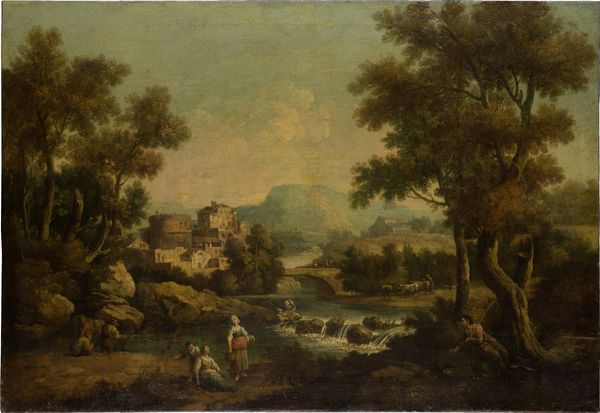
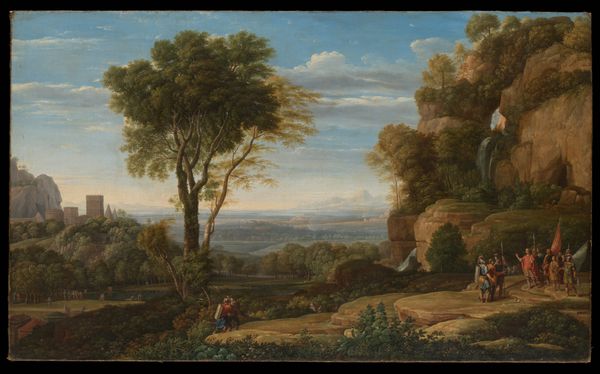
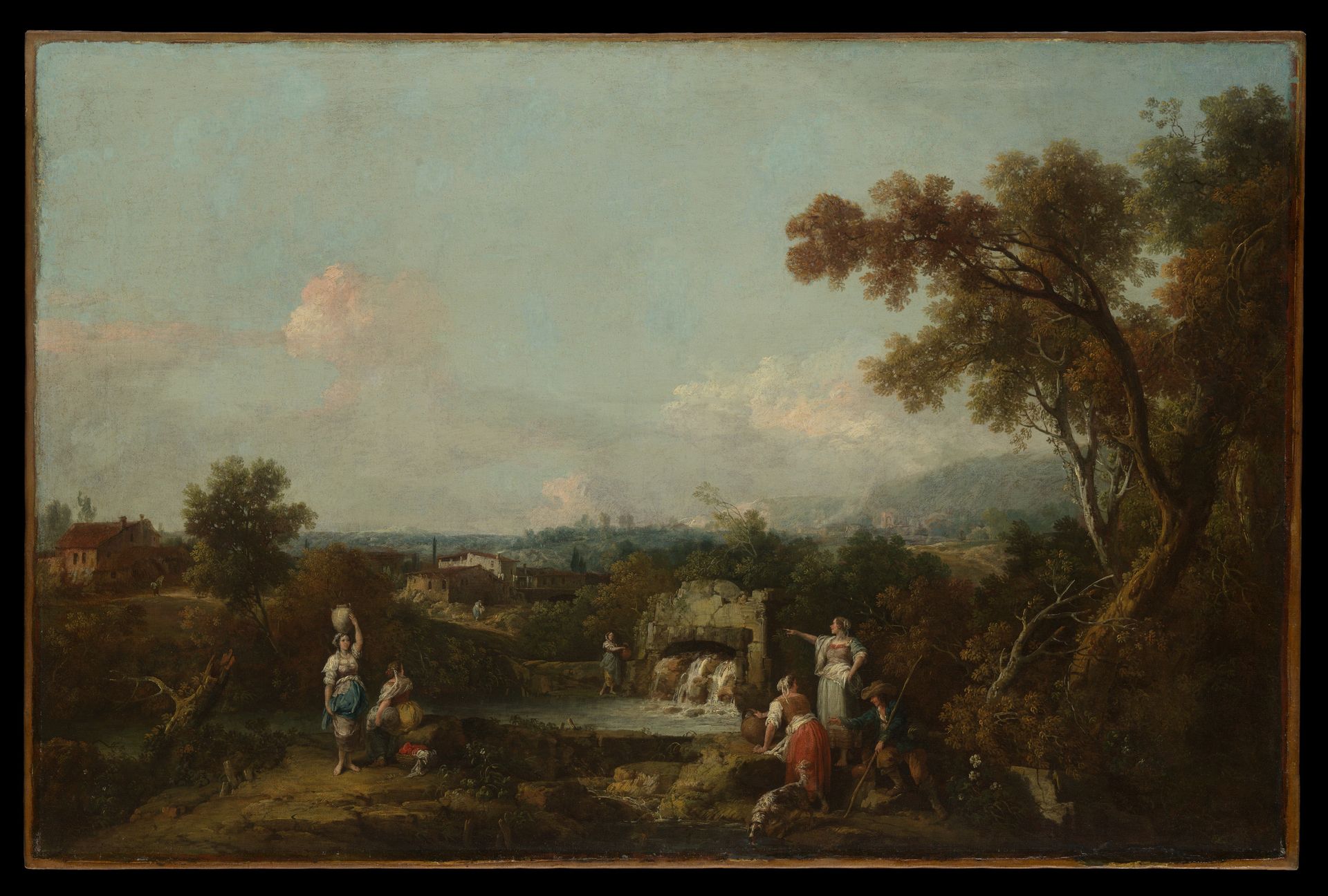
Francesco Zuccarelli painted this oil on canvas, "Landscape with Peasants at a Fountain," sometime in the mid-18th century. It’s a charming scene, but we should ask ourselves, what does an image of rural leisure mean at this moment in European history? Zuccarelli was Venetian, but he spent a long time in England, and he catered to the tastes of wealthy English tourists who were visiting Italy on the Grand Tour. This painting is an idealised fantasy of Italian country life: the peasants are clean and happy, and the landscape is beautiful and serene. But this image papers over the massive social inequalities of the time. It sentimentalizes rural poverty for the entertainment of an aristocratic class that profited from it. To fully understand a painting like this, we have to look beyond the surface and consider the social and economic context in which it was made. We can research the history of the Grand Tour, the art market in Venice and London, and the social conditions of rural life in 18th century Italy.
Landscape with Peasants at a Fountain 1722 - 1788

Francesco Zuccarelli
1702 - 1788
The Metropolitan Museum of Art
Metropolitan Museum of Art, New York, NYArtwork details
- Medium
- painting, oil-paint
- Dimensions
- 31 1/4 x 47 1/2 in. (79.4 x 120.7 cm)
- Location
- Metropolitan Museum of Art, New York, NY
- Copyright
- Public Domain
Tags
baroque
painting
oil-paint
landscape
figuration
genre-painting
rococo
Comments
No comments
About this artwork
Francesco Zuccarelli painted this oil on canvas, "Landscape with Peasants at a Fountain," sometime in the mid-18th century. It’s a charming scene, but we should ask ourselves, what does an image of rural leisure mean at this moment in European history? Zuccarelli was Venetian, but he spent a long time in England, and he catered to the tastes of wealthy English tourists who were visiting Italy on the Grand Tour. This painting is an idealised fantasy of Italian country life: the peasants are clean and happy, and the landscape is beautiful and serene. But this image papers over the massive social inequalities of the time. It sentimentalizes rural poverty for the entertainment of an aristocratic class that profited from it. To fully understand a painting like this, we have to look beyond the surface and consider the social and economic context in which it was made. We can research the history of the Grand Tour, the art market in Venice and London, and the social conditions of rural life in 18th century Italy.
Comments
No comments