About this artwork
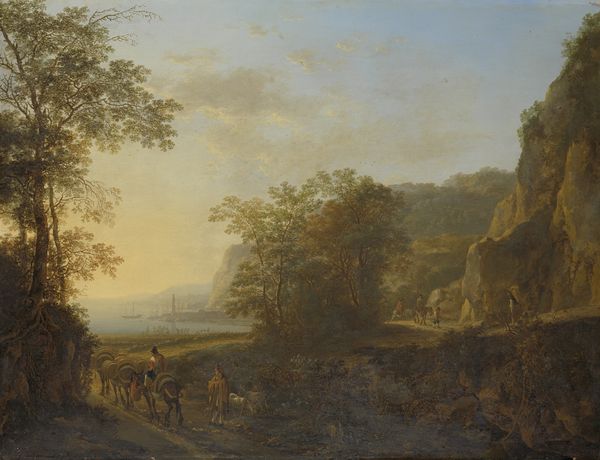
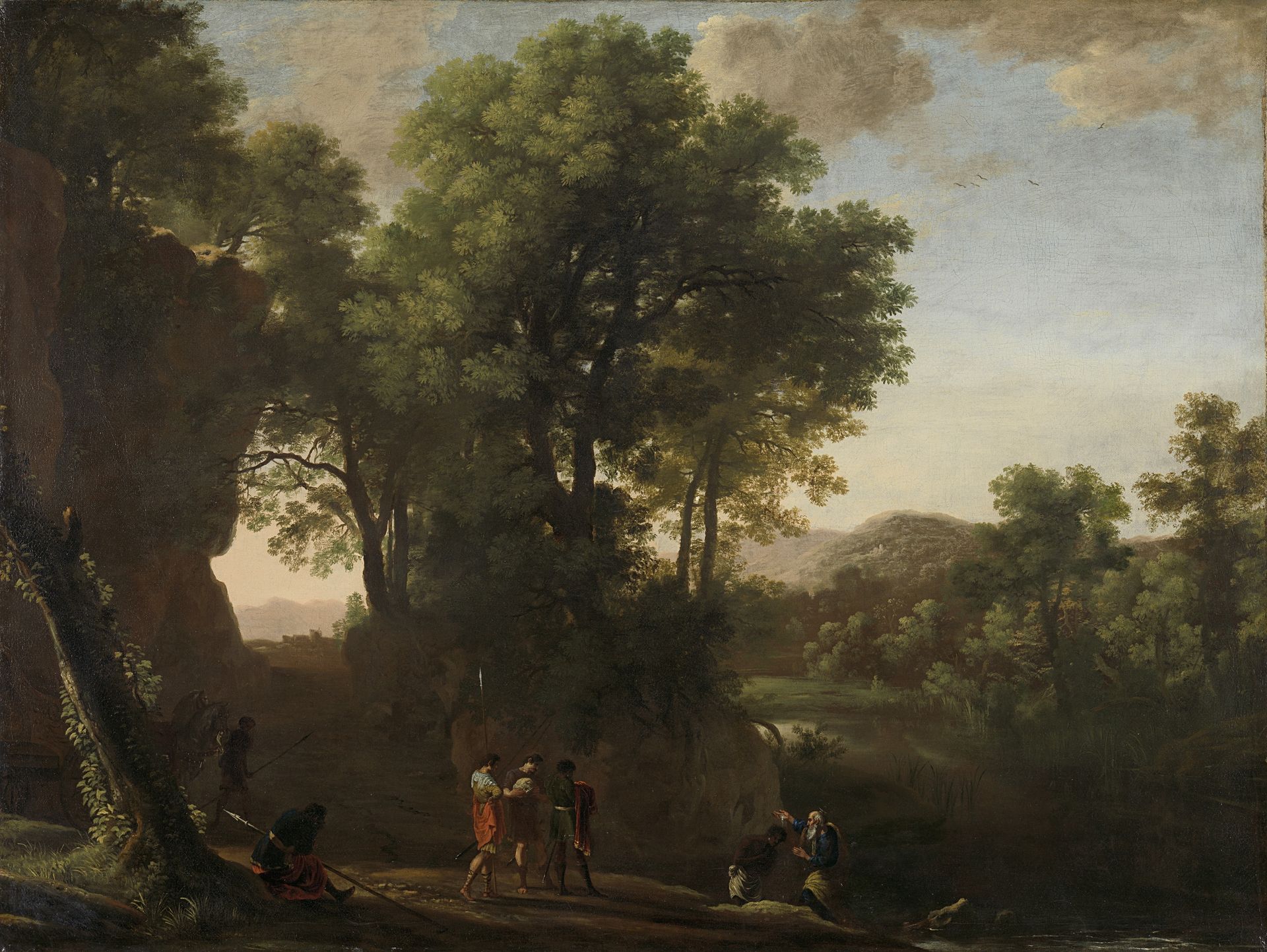
Herman van Swanevelt painted this landscape with the baptism of the eunuch during the Dutch Golden Age, a period marked by a burgeoning interest in landscape as a genre. Against a backdrop of rolling hills, Swanevelt stages a biblical scene: the baptism of an Ethiopian eunuch by the Apostle Philip. The figure of the eunuch—often marginalized due to his ambiguous gender identity—is here embraced, welcomed into the Christian community. In the 17th century, Dutch society was grappling with questions of identity, tolerance, and inclusion, and, through this painting, Swanevelt creates a space where the margins meet the mainstream. The emotional heart of the painting resides in its quiet affirmation of faith and belonging, extending even to those on the periphery.
Landscape with the baptism of the eunuch
1630s

Herman van Swanevelt
1603 - 1655Location
RijksmuseumArtwork details
- Medium
- painting, oil-paint
- Dimensions
- height 98.1 cm, width 130.2 cm, thickness 3.7 cm, depth 7.1 cm
- Location
- Rijksmuseum
- Copyright
- Rijks Museum: Open Domain
Tags
narrative-art
baroque
dutch-golden-age
painting
oil-paint
landscape
figuration
Comments
Be the first to share your thoughts about this work.
About this artwork
Herman van Swanevelt painted this landscape with the baptism of the eunuch during the Dutch Golden Age, a period marked by a burgeoning interest in landscape as a genre. Against a backdrop of rolling hills, Swanevelt stages a biblical scene: the baptism of an Ethiopian eunuch by the Apostle Philip. The figure of the eunuch—often marginalized due to his ambiguous gender identity—is here embraced, welcomed into the Christian community. In the 17th century, Dutch society was grappling with questions of identity, tolerance, and inclusion, and, through this painting, Swanevelt creates a space where the margins meet the mainstream. The emotional heart of the painting resides in its quiet affirmation of faith and belonging, extending even to those on the periphery.
Comments
Be the first to share your thoughts about this work.