About this artwork
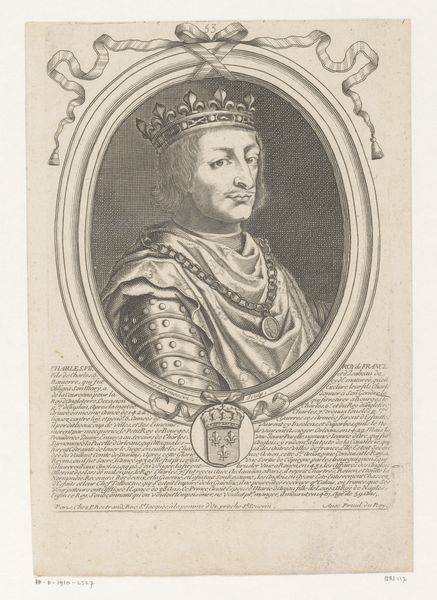
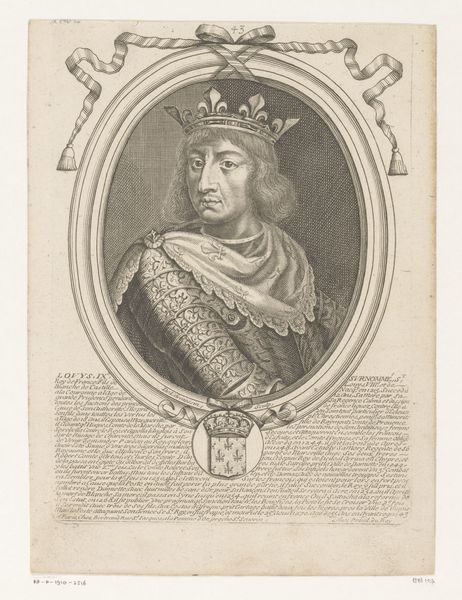
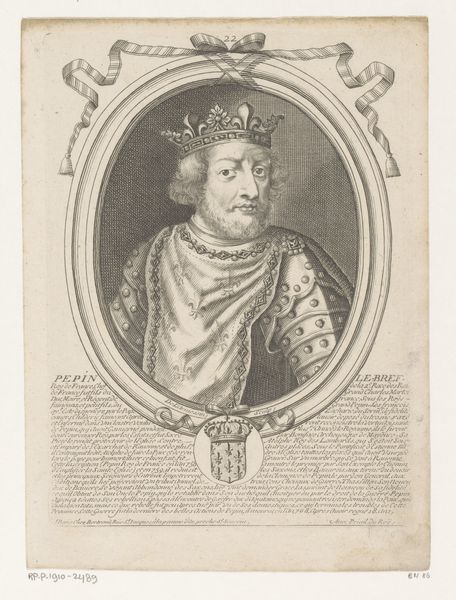
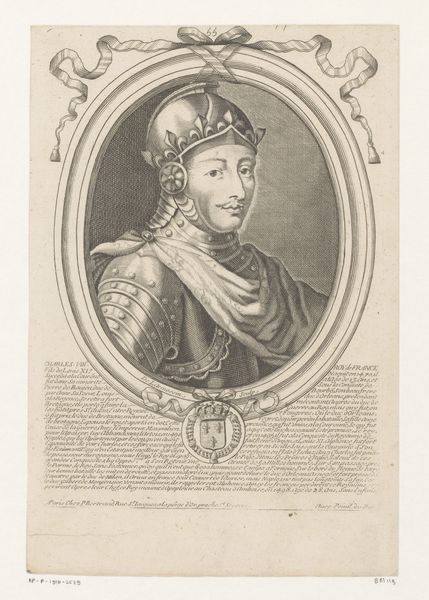
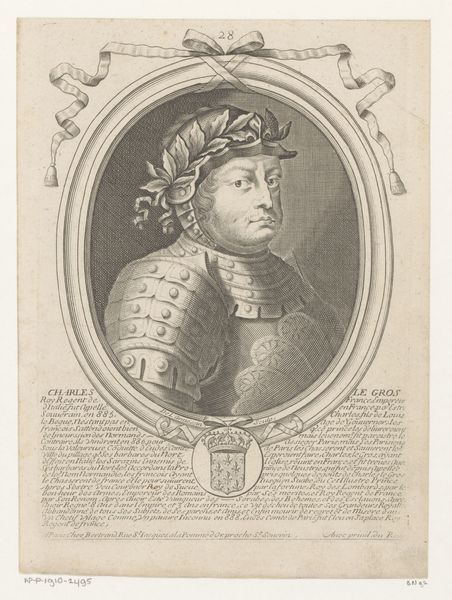
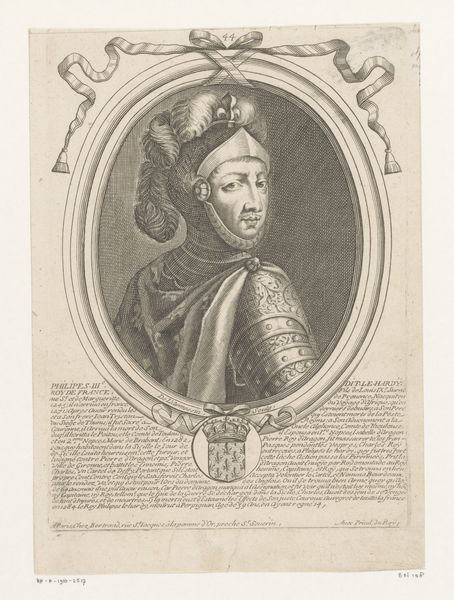
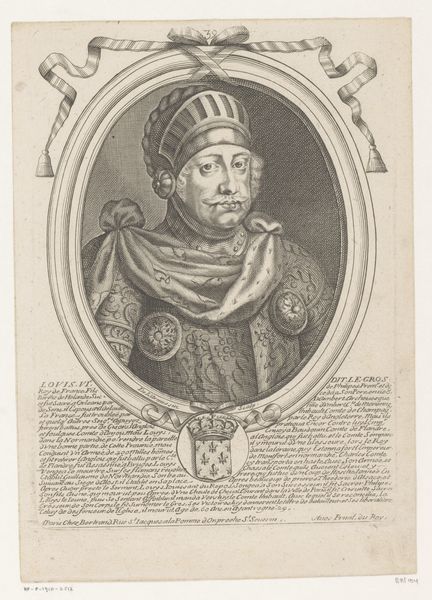
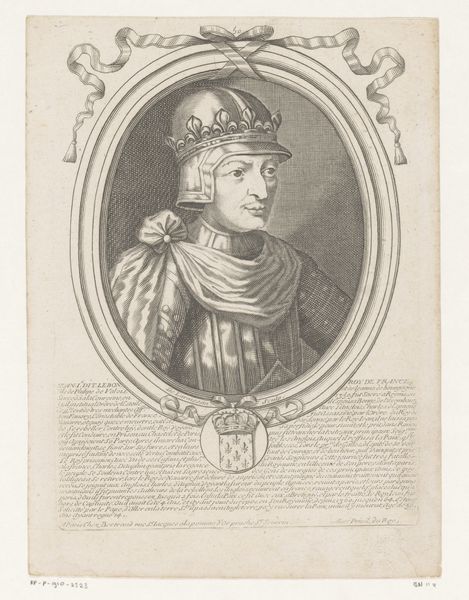
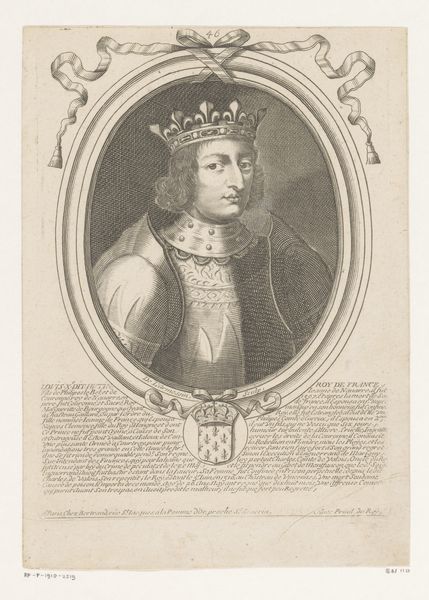
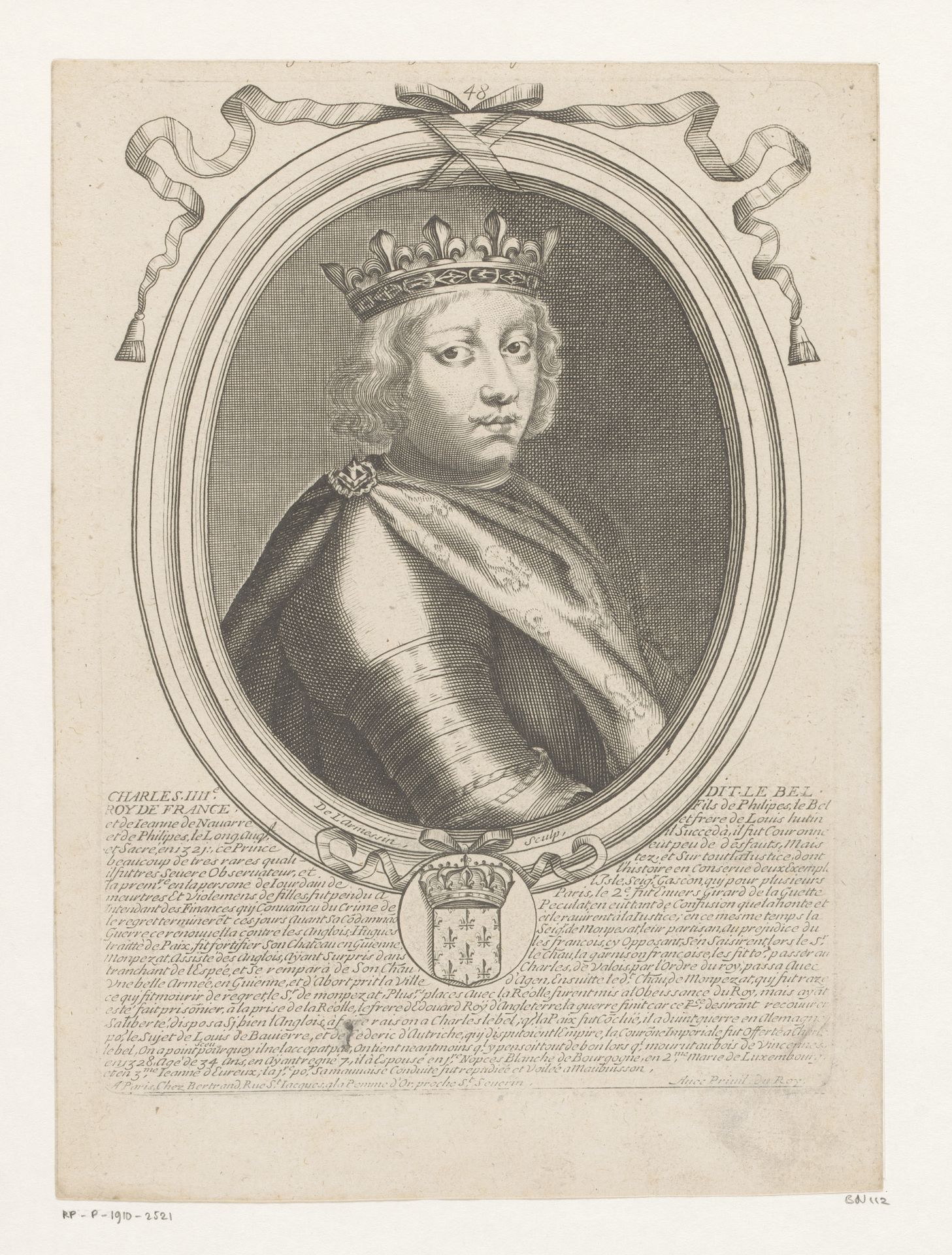
Nicolas de Larmessin I created this portrait of Charles IV, King of France and Navarre, using etching techniques. Portraits of royalty are rarely just about the individual; they reflect the politics and social structures of their time. Charles is depicted with symbols of power: the crown, ermine cape, and suit of armor, all communicating his elevated status and authority. Yet, consider the gaze, which seems almost vulnerable, hinting at the complexities of leadership and the burdens of power. This image was created during the age of absolutism, when French monarchs sought to consolidate power and project an image of divine right. But what does it mean to portray a king? Is it a celebration of power, or a comment on its isolating effects? Consider how Larmessin's work invites us to reflect on the relationship between identity, power, and representation during the 17th century.
Portret van Karel IV, koning van Frankrijk en Navarra 1642 - 1678

Nicolas de (I) Larmessin
1632 - 1694Location
RijksmuseumArtwork details
- Medium
- print, engraving
- Dimensions
- height 229 mm, width 166 mm
- Location
- Rijksmuseum
- Copyright
- Rijks Museum: Open Domain
Tags
portrait
baroque
old engraving style
history-painting
academic-art
engraving
Comments
No comments
About this artwork
Nicolas de Larmessin I created this portrait of Charles IV, King of France and Navarre, using etching techniques. Portraits of royalty are rarely just about the individual; they reflect the politics and social structures of their time. Charles is depicted with symbols of power: the crown, ermine cape, and suit of armor, all communicating his elevated status and authority. Yet, consider the gaze, which seems almost vulnerable, hinting at the complexities of leadership and the burdens of power. This image was created during the age of absolutism, when French monarchs sought to consolidate power and project an image of divine right. But what does it mean to portray a king? Is it a celebration of power, or a comment on its isolating effects? Consider how Larmessin's work invites us to reflect on the relationship between identity, power, and representation during the 17th century.
Comments
No comments