About this artwork
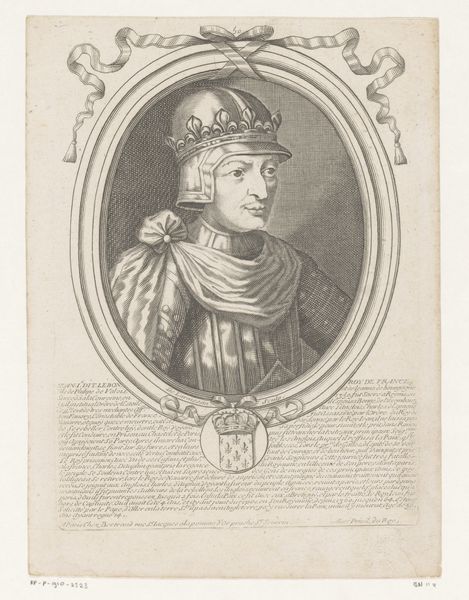
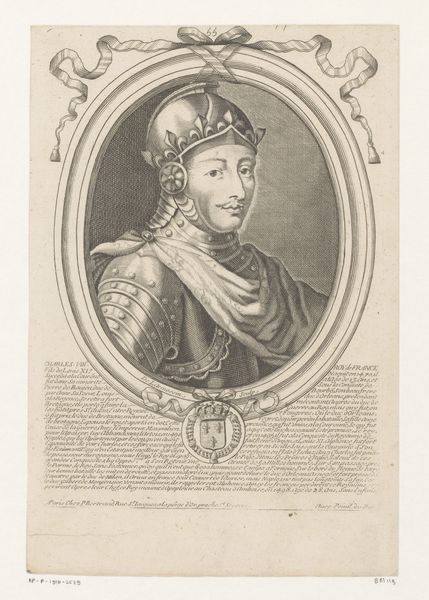
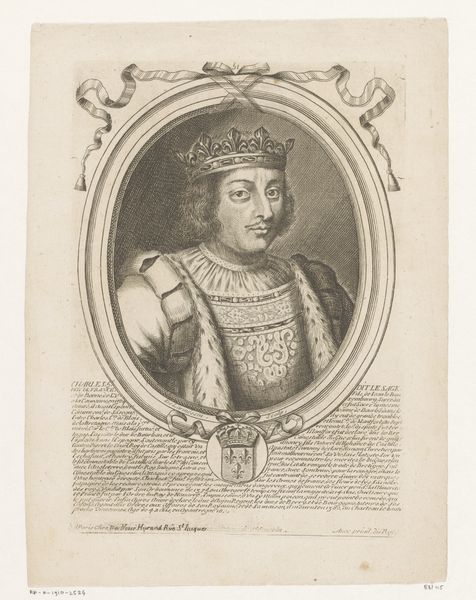
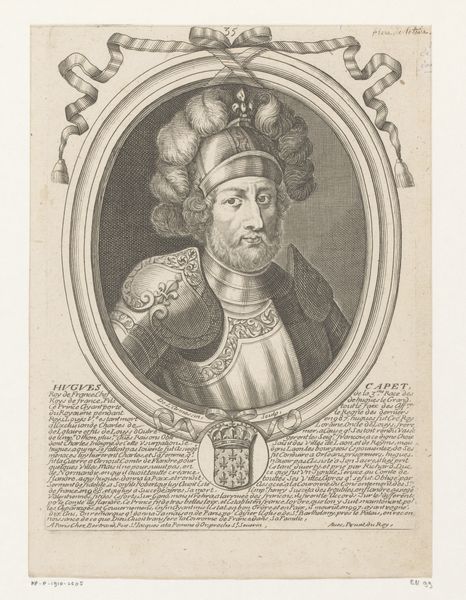
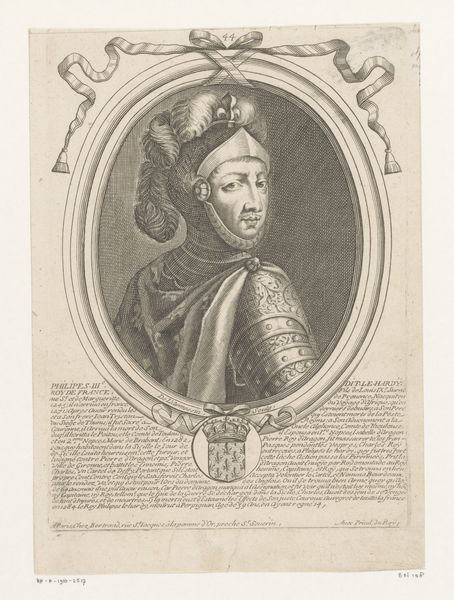
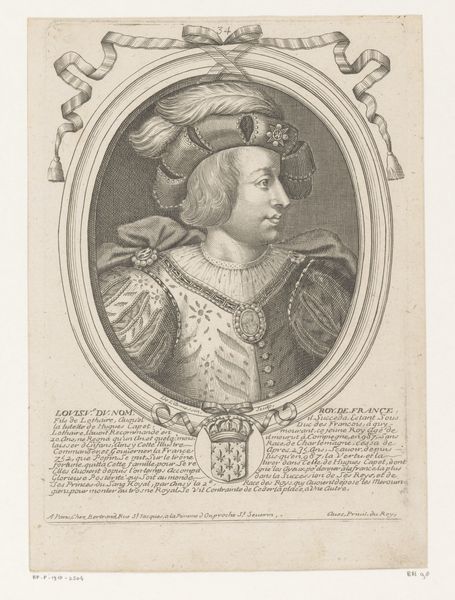
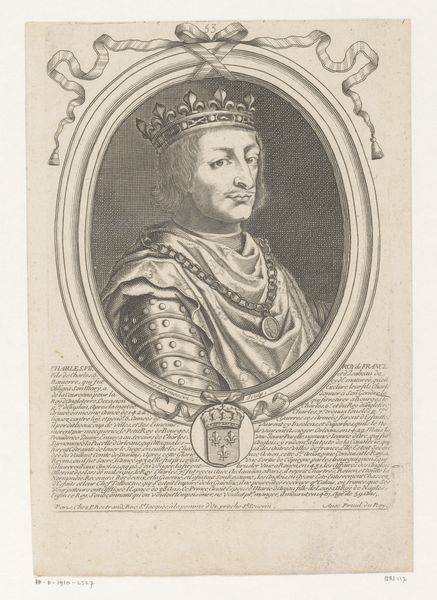
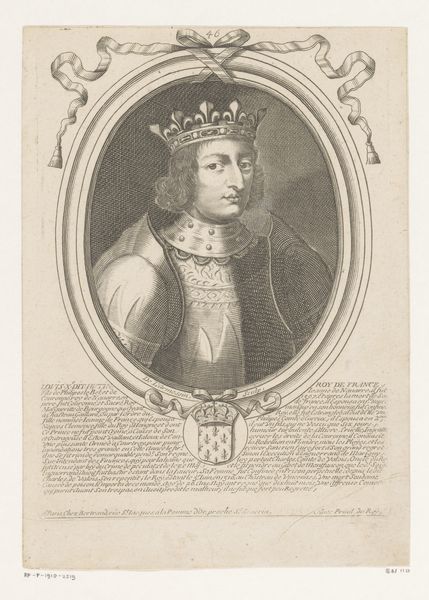
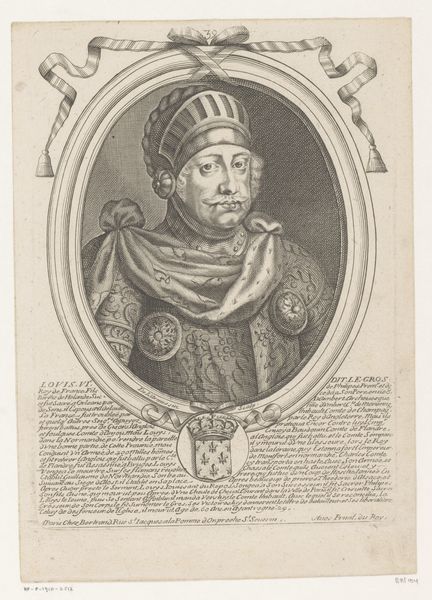
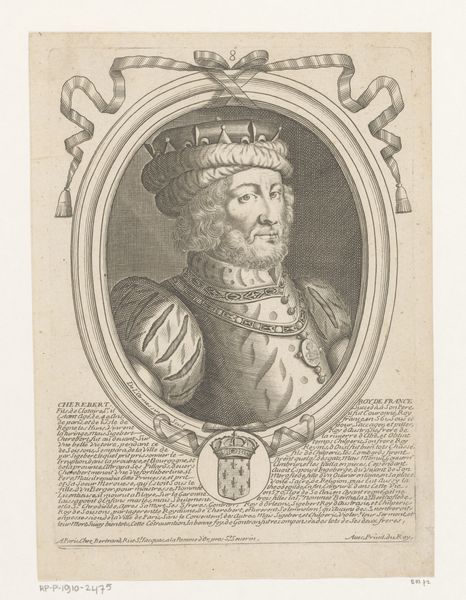
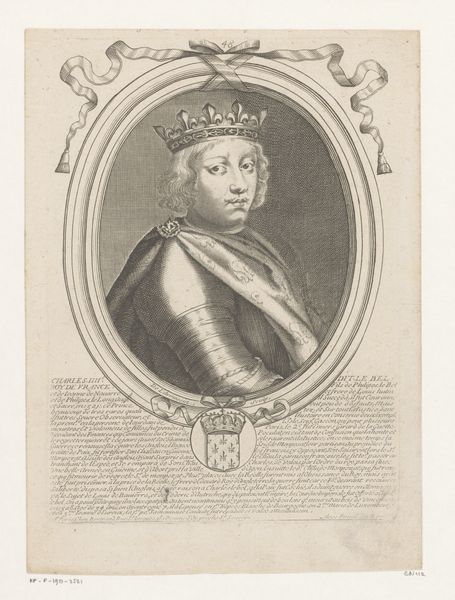
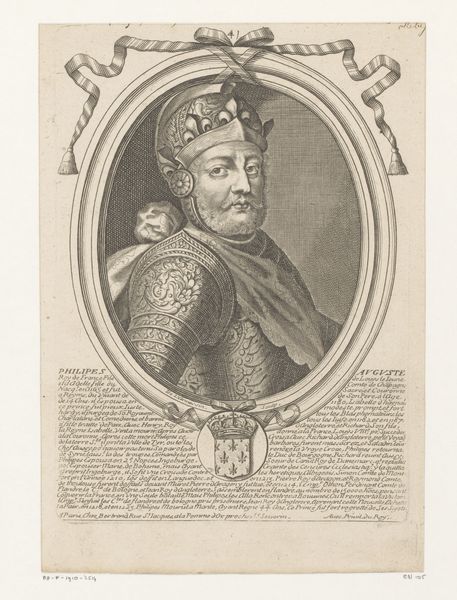
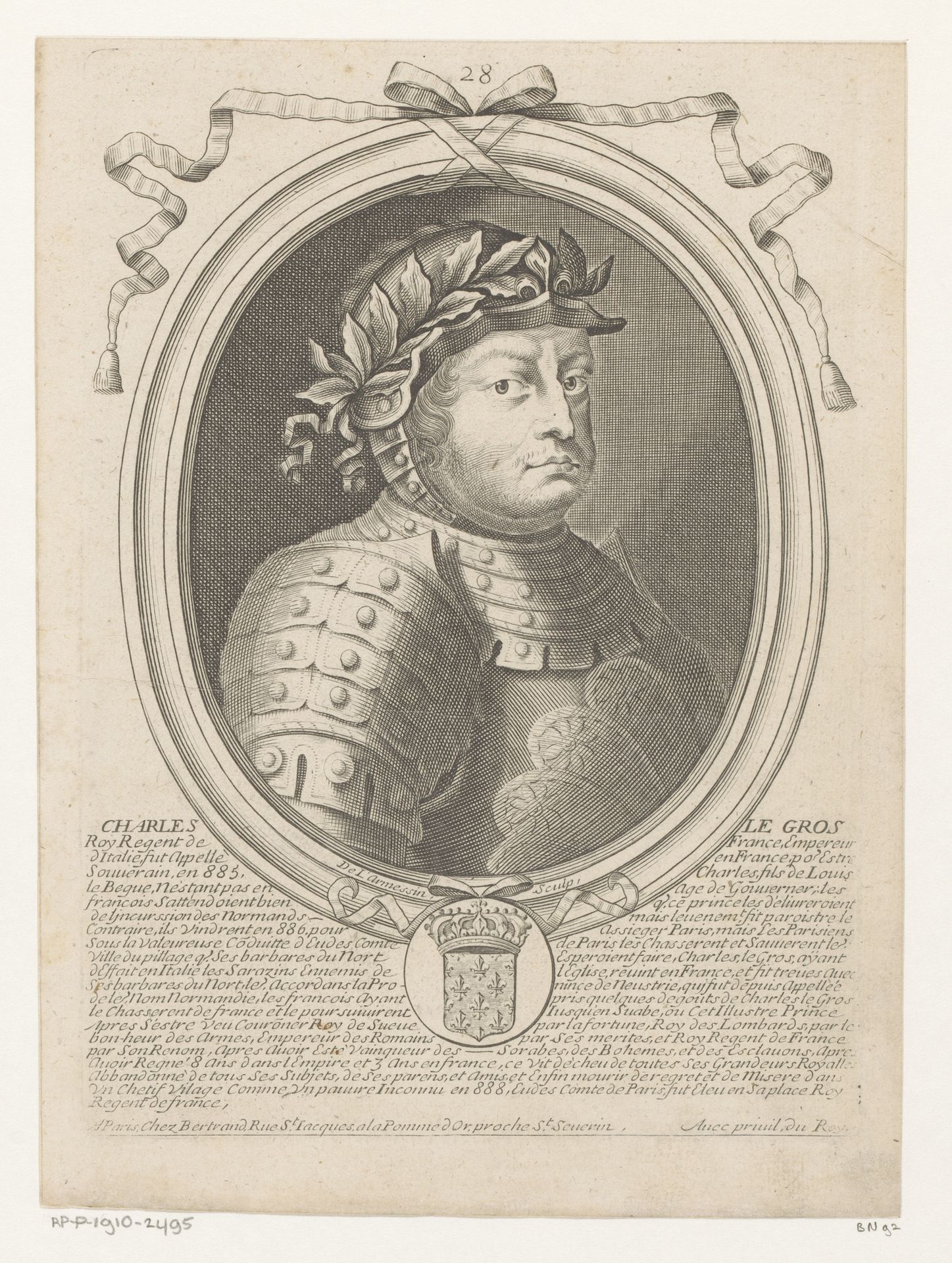
Here we see Nicolas de Larmessin’s portrait of Charles the Third, also known as Charles the Fat, rendered as an engraving. We can contextualize this portrait with the decline of the Carolingian Empire and the fragmented political landscape of 9th-century Europe. Charles the Fat, who briefly reunited the empire, was later deposed due to his perceived incompetence. Larmessin, working centuries later, presents Charles in a traditional, heroic mode: armored, crowned with laurels, an emblem of power and victory. But the image is also infused with a sense of melancholy. Charles's reign was marked by internal strife and external threats, capturing the fragility of leadership amid crisis. The portrait reflects the weight of his crown, and the isolation of power. In representing Charles this way, Larmessin offers a commentary on the nature of authority and the burdens of leadership.
Portret van Karel III de Dikke
1647 - 1678

Nicolas de (I) Larmessin
1632 - 1694Location
RijksmuseumArtwork details
- Medium
- print, engraving
- Dimensions
- height 238 mm, width 170 mm
- Location
- Rijksmuseum
- Copyright
- Rijks Museum: Open Domain
Tags
Comments
Share your thoughts
About this artwork
Here we see Nicolas de Larmessin’s portrait of Charles the Third, also known as Charles the Fat, rendered as an engraving. We can contextualize this portrait with the decline of the Carolingian Empire and the fragmented political landscape of 9th-century Europe. Charles the Fat, who briefly reunited the empire, was later deposed due to his perceived incompetence. Larmessin, working centuries later, presents Charles in a traditional, heroic mode: armored, crowned with laurels, an emblem of power and victory. But the image is also infused with a sense of melancholy. Charles's reign was marked by internal strife and external threats, capturing the fragility of leadership amid crisis. The portrait reflects the weight of his crown, and the isolation of power. In representing Charles this way, Larmessin offers a commentary on the nature of authority and the burdens of leadership.
Comments
Share your thoughts