1728
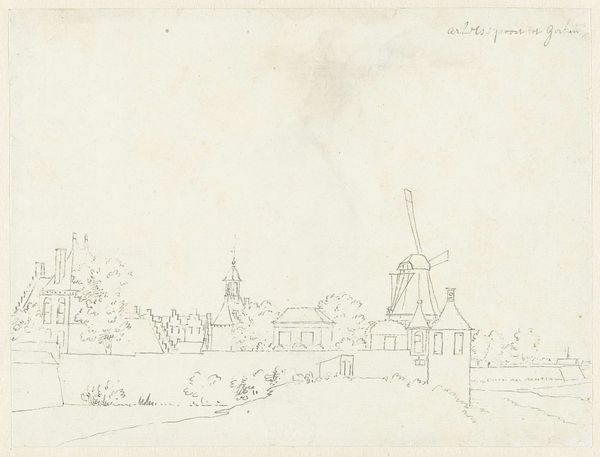
Poort en stadswallen van Gorinchem

Cornelis Pronk
1691 - 1759Location
RijksmuseumListen to curator's interpretation
Curatorial notes
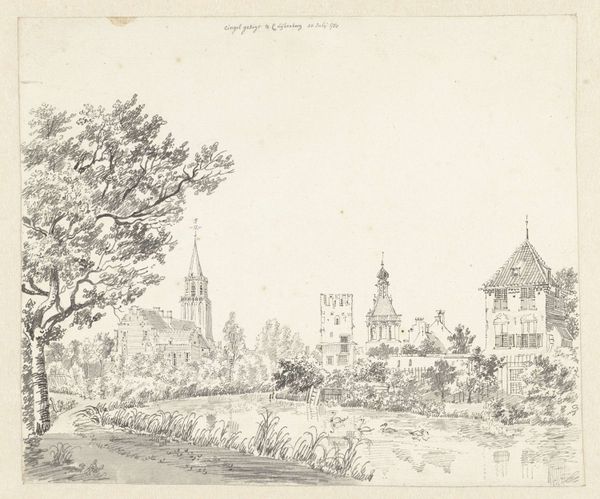
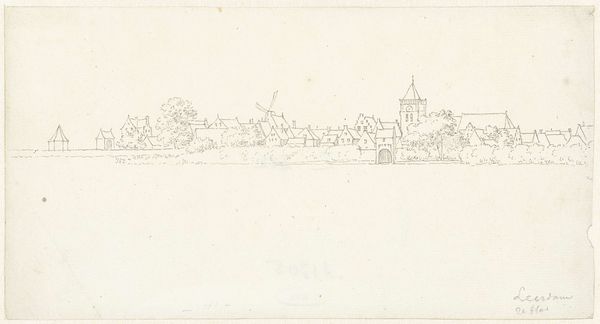
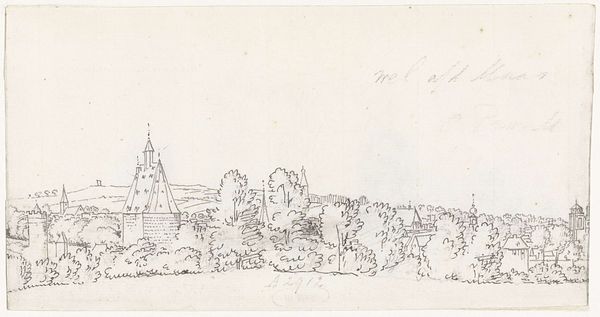
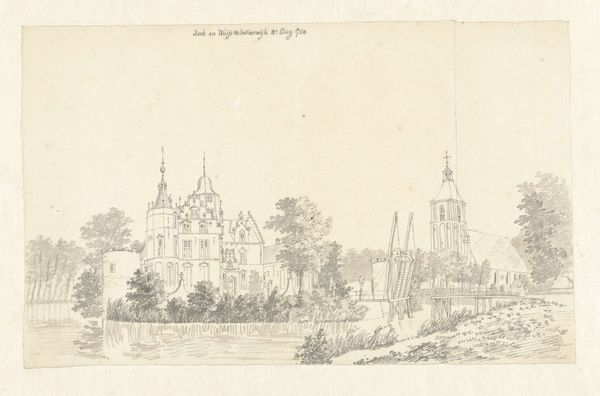
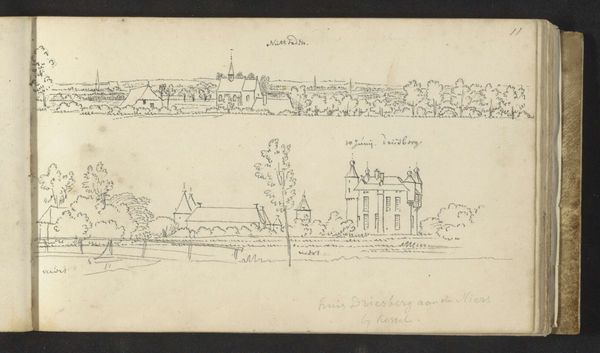
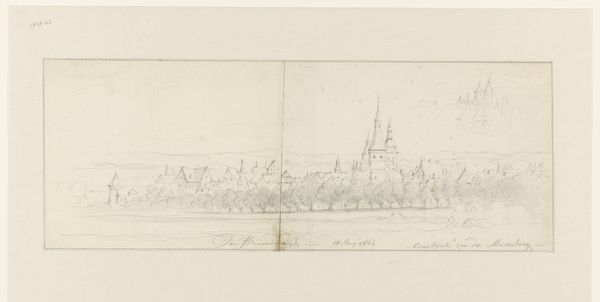
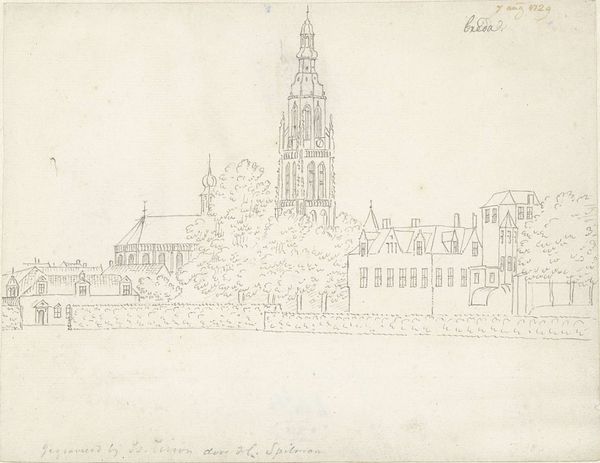
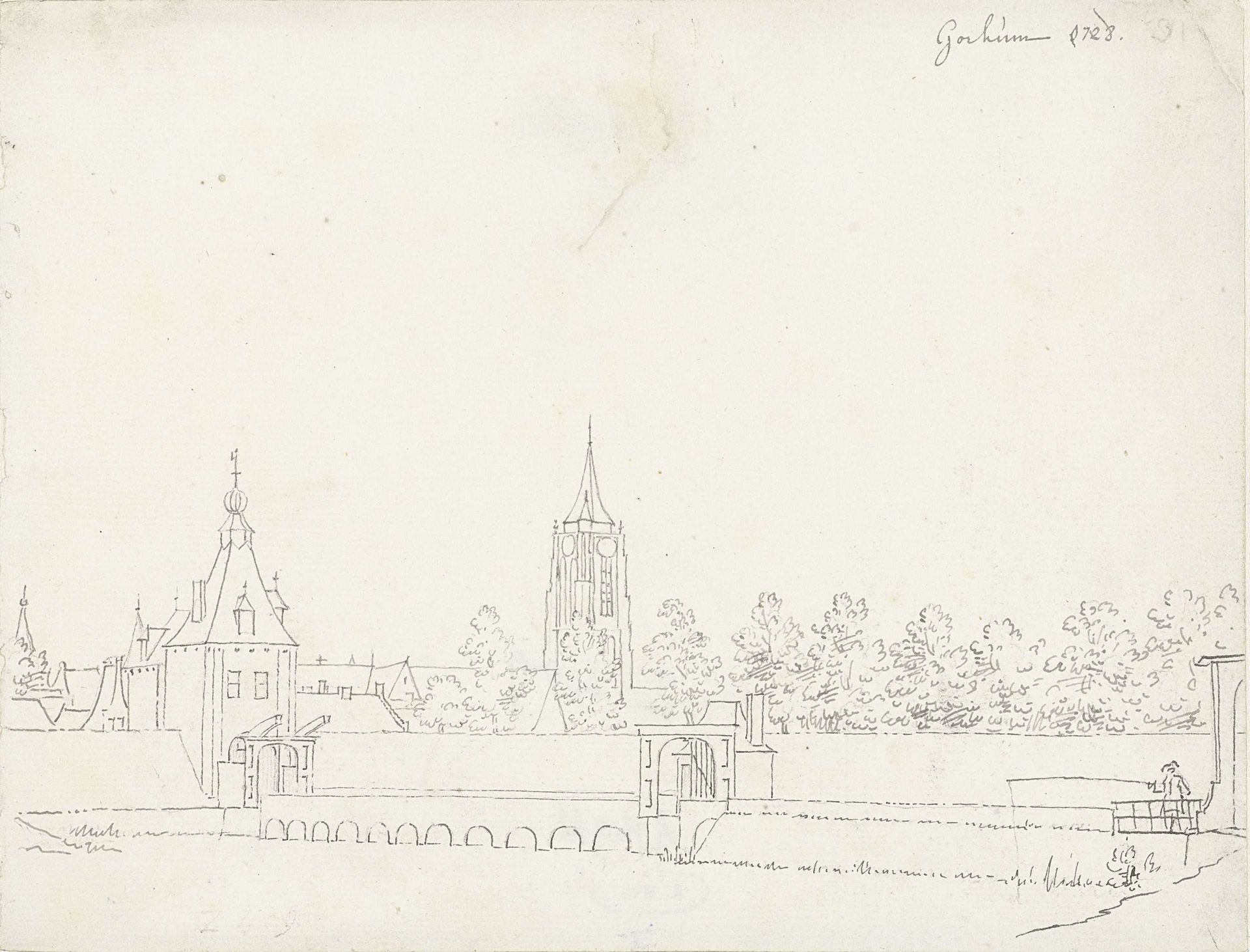
Curator: Cornelis Pronk’s "Poort en stadswallen van Gorinchem," created in 1728, presents a compelling study in linear perspective, capturing the architectural and spatial dynamics of the Dutch cityscape with precise detail. Editor: It’s almost ghostly, isn't it? Like a memory sketched in whispers. I find myself drawn to the subtlety—the stark simplicity. It has this serene, almost melancholic aura that makes me wonder about the artist's state of mind. Curator: Well, Pronk, primarily working with pen and ink, shows a meticulous use of line to delineate the ramparts, gate, and surrounding buildings. Note the geometric clarity – he uses it to structure the composition, adhering to Baroque conventions yet foreshadowing aspects of topographical drawing that would become increasingly prevalent. Editor: The towers look incredibly majestic, yet rendered with such delicate lines, almost like he's capturing their essence rather than just their appearance. There’s a quiet grandeur about them that’s surprisingly moving, knowing they’re captured centuries ago. It's a little poignant how time seems to dissolve in those lines. Curator: Pronk's strategic arrangement, placing architectural features along a horizontal axis, highlights the civic importance of Gorinchem’s defenses. His skillful hatching creates areas of tone suggesting three-dimensionality despite the medium's limitations. Editor: Absolutely. It almost feels incomplete in the best way – inviting us to fill in the details, the sounds, the stories of the people who walked those ramparts. There's so much potential energy simmering beneath that seemingly simple surface, I think. Curator: Indeed. Through rigorous technique and strategic deployment of artistic resources, he provides a valuable visual record while implicitly inviting deeper reflections on urban life in the 18th century. Editor: Which brings it back to feeling more timeless than something pinned down to 1728. You can almost smell the water and hear the bustle even now.