1841 - 1910
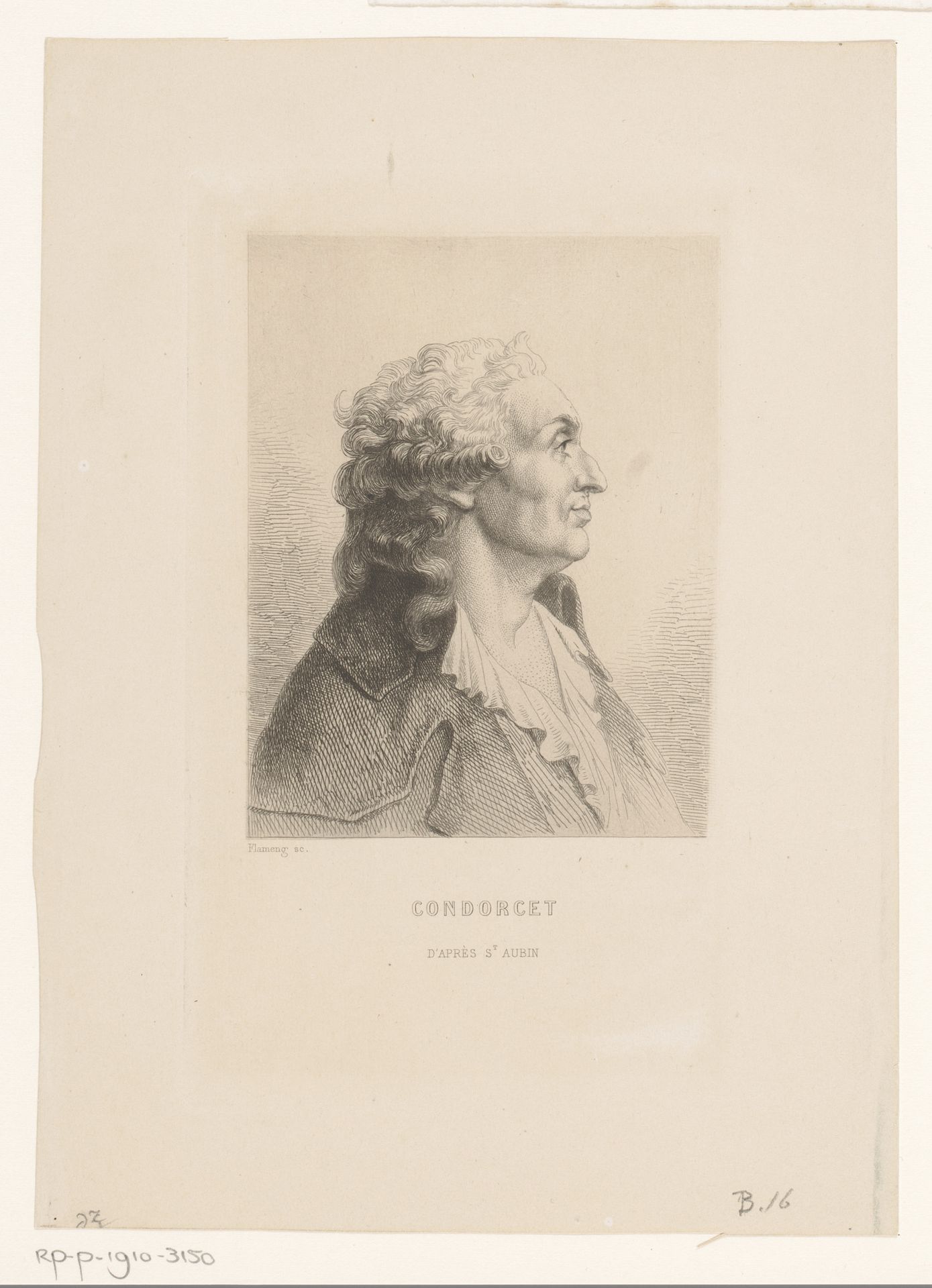
Portret van Nicolas de Condorcet

Listen to curator's interpretation
Curatorial notes
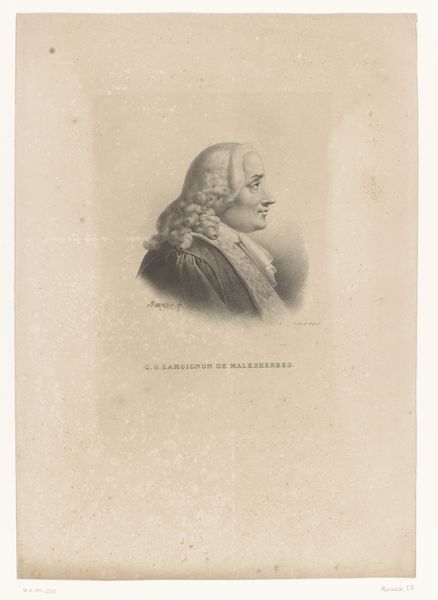
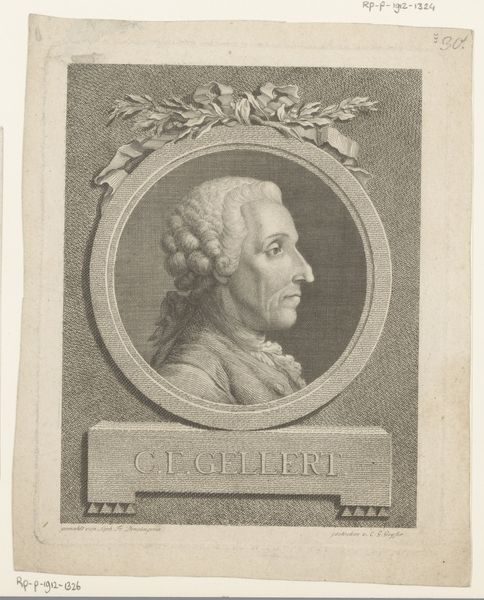
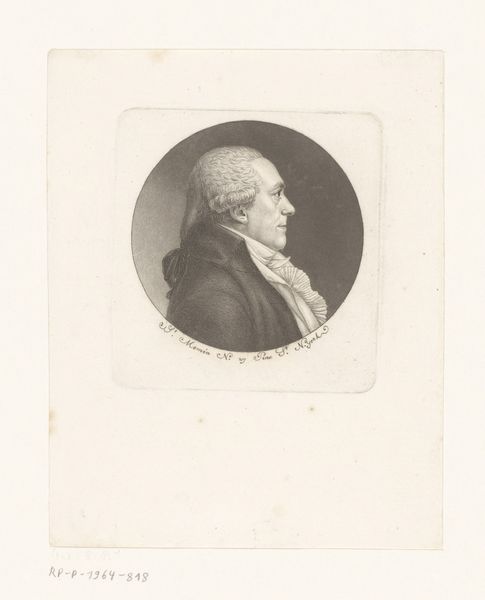
Editor: This is a portrait of Nicolas de Condorcet by Léopold Flameng, made sometime between 1841 and 1910 using etching and engraving on paper. There's something austere, almost severe, in the subject's profile. How do you interpret this work? Curator: The profile view itself is significant. It’s a visual language harking back to ancient coins and busts – immediately aligning Condorcet with a lineage of classical thought and Enlightenment ideals. Do you see how the artist uses line? Editor: Yes, the lines are very precise and create a strong sense of form. There isn’t much shading, but somehow, Flameng gives depth to the face and clothes through these fine lines. Curator: Indeed, the lines speak to something beyond the man’s physical appearance, wouldn’t you agree? Note the detailed rendering of the hair, juxtaposed with the sharp angle of his jawline. This could suggest an era in transition, where older social structures intersect with radical, newer ideas about logic, liberty and social reform. It’s the man of reason, idealized yet also grounded. Is he presented with the gravitas he deserves? Editor: That makes a lot of sense. So the artist uses Condorcet’s image to portray particular values rather than simply creating a likeness? Curator: Precisely. It also brings to mind the tumultuous events he was involved with, like the French Revolution and his advocacy for a constitutional government and equal rights. And notice how this portrait evokes a sense of enduring intellect and perhaps, a degree of melancholic reflection. It's not merely about capturing a face, but evoking a history. It’s visual biography, not documentation. Editor: This has totally reshaped how I see the portrait, and it has helped me consider ways symbols build larger stories. Thank you. Curator: A pleasure! I am struck by how the piece speaks to historical narratives that stay with us even today, as we are continuing this dialogue on symbolism and imagery.