print, engraving
#
portrait
#
baroque
# print
#
old engraving style
#
pen work
#
engraving
#
calligraphy
Dimensions: height 448 mm, width 296 mm
Copyright: Rijks Museum: Open Domain
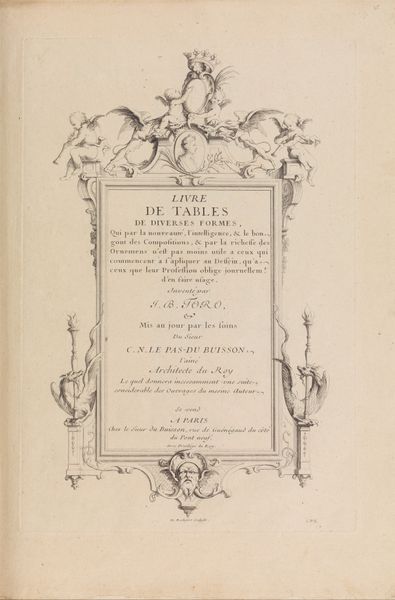
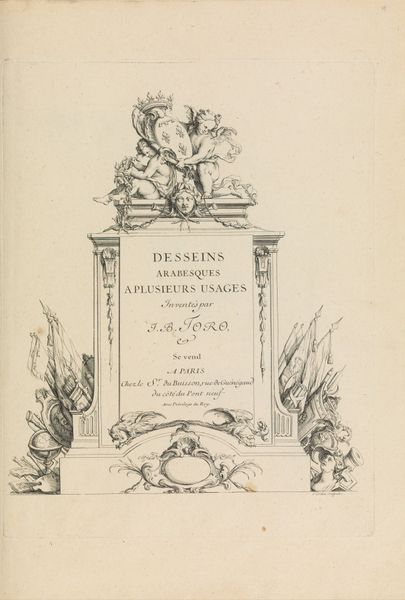
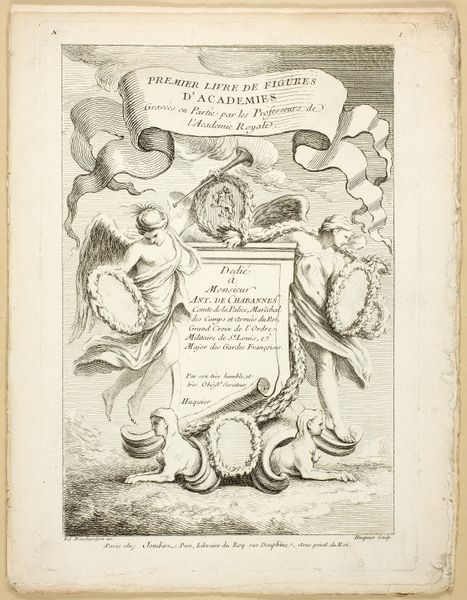
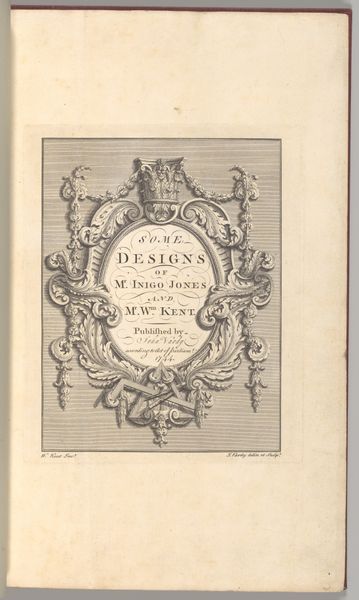
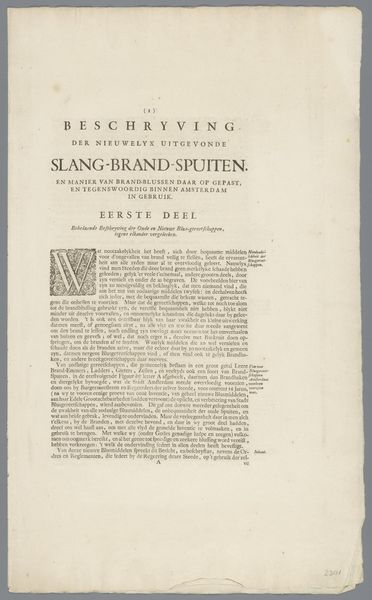
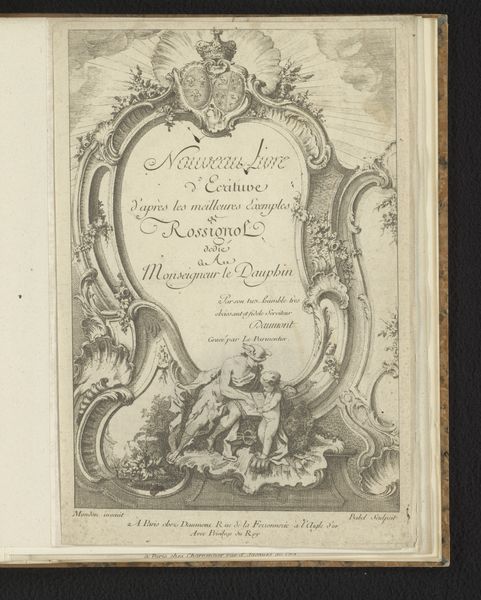
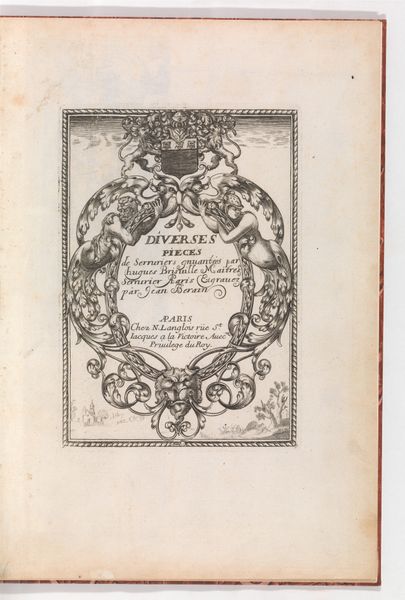
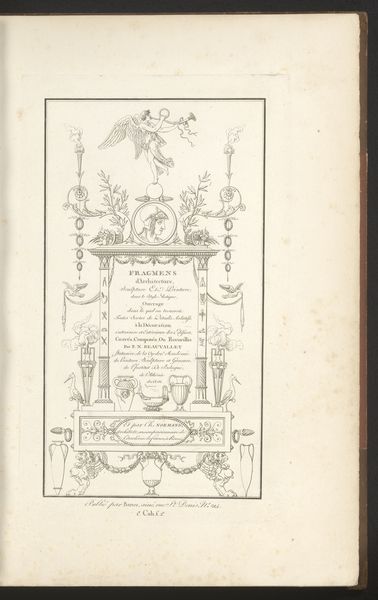
Curator: This is the title page to "The Tapestry Hangings of the House of Lords," created in 1739 by John Pine. Editor: It strikes me immediately as incredibly ornate. The lettering is almost overwhelmed by the surrounding figures and heraldry. So much pen work for a print! Curator: Pine was a skilled engraver, and here he's advertising his documentation of the House of Lords tapestries commemorating the battles between the English and Spanish fleets in the 16th century. Note how the title promises not only the depiction of tapestries but also portraits of admirals and charts for navigation. It seems he understood the value of offering a multifaceted historical document. Editor: Absolutely. And the choice of engraving replicates the woven texture of the original tapestries in a way. The layering of inks to create depth mimics the act of physically building up threads to form an image. Curator: True. We can’t ignore the socio-political context either. Pine published this for a London audience keen on patriotic imagery and celebrating Britain’s naval history. This wasn’t simply about recreating artwork, but shaping public memory. The print acts as a souvenir almost, of British military power. Editor: Yes, but its wider distribution through print meant a wider reach for this commemoration of maritime history than the actual tapestries enjoyed. Also the price point on prints compared to a giant wall hanging put images into more hands. What this makes me consider is the skilled labor of engravers like Pine, the means of production to create affordable images on paper, and its function to build patriotic narratives. Curator: An excellent point. And in that mass reproduction, the power of the image grows, fostering a sense of shared history. Editor: Exactly. It is important to remember that skilled labor goes into making it. All those hours using engraving tools on plates that transferred ink, that produced this beautiful pen work, that captured a moment of history and pride. Curator: So, what started as a reproduction became an instrument in shaping British identity in the 18th century. Editor: And hopefully it provides us a perspective on labor, materiality and making of history.
Comments
No comments
Be the first to comment and join the conversation on the ultimate creative platform.
 Collect
 React
React Comment
More like this