print, etching, engraving
#
portrait
#
baroque
# print
#
etching
#
old engraving style
#
genre-painting
#
engraving
Dimensions: height 335 mm, width 260 mm
Copyright: Rijks Museum: Open Domain
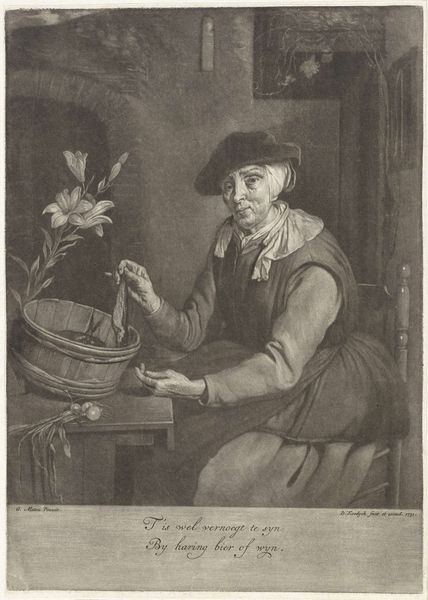
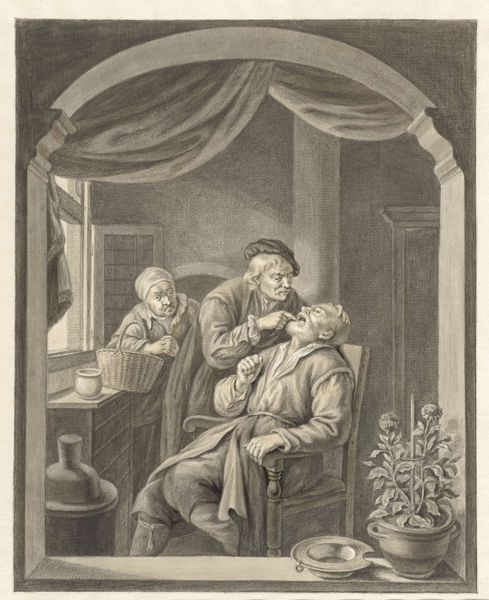
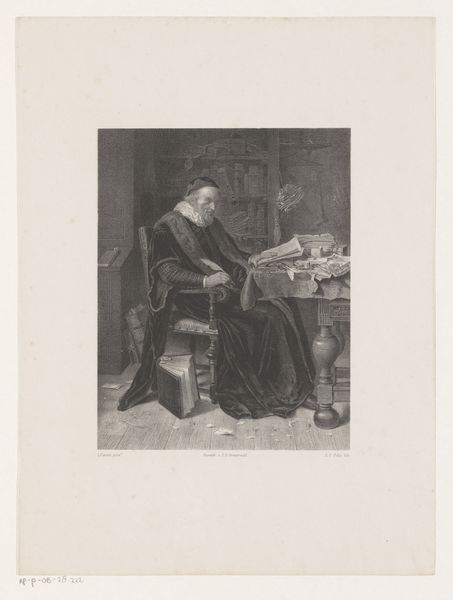
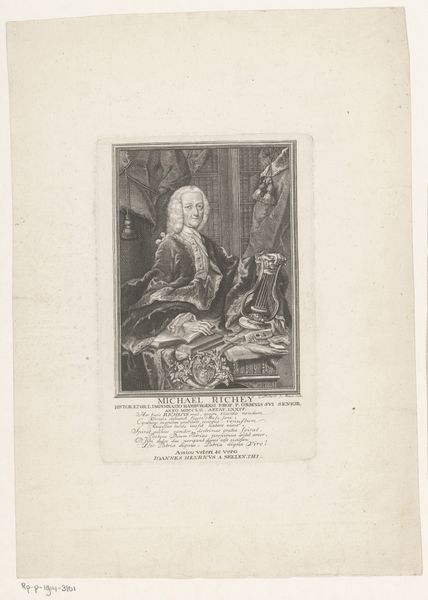
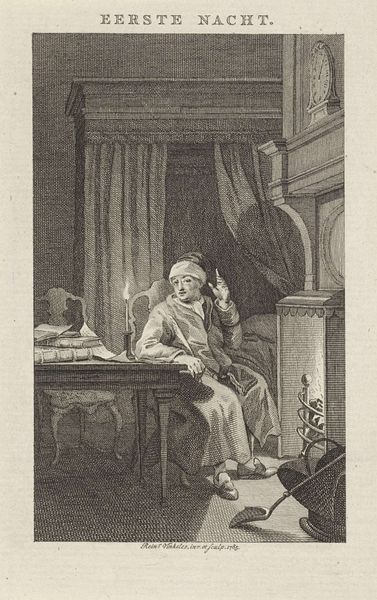
Curator: This piece is titled "The Old Violinist" created around 1720-1730 by Cornelis-Henricus van Meurs. It's a Baroque-style print, combining etching and engraving techniques. Editor: Ah, yes. What a scene! There's something deeply melancholic about it, isn't there? That lone figure at the table with the wine and a violin laying aside, not in his hands. Feels like a snapshot of isolated reflection, of art laid aside. The window almost a theatrical frame of it all. Curator: Precisely. Note how Van Meurs uses genre painting tropes to engage with themes of aging, leisure, and perhaps, even social commentary. The very structure, including the large 'MDCLX' date marking right there. We are clearly meant to interpret the text and imagery as inextricably related. How do you understand that to add meaning, then? Editor: Oh, gosh, I have to decipher Latin now, do I? I just liked the vine hanging around it. You know it does have a rustic charm. A little dark for my taste. But I get the feeling that it's all about embracing the simple things—good company, good wine. You know...maybe making do, even though he's kind of glum about it? Curator: Your intuition's insightful. Van Meurs layers these seemingly casual settings with complex signifiers of class, artistic labor, and even societal expectations, that melancholy being part of those considerations. Remember that in genre scenes we tend to view the individual as standing in for something far bigger than himself. The aging artist then must suggest an aging class of cultural gatekeepers, perhaps... Or the Roman number is simply 1660 and marking some real, specific event? The date could be part of the visual joke or historical allusion, in other words, one with deep significance that isn't evident without doing your history homework. Editor: Hmmm, homework....Still, there is a little joy tucked into the image— maybe even self-parody? But okay, whatever, if you're really wanting me to look more carefully I suppose I see more here to think about than I would have imagined at first. Curator: Ultimately, "The Old Violinist" opens up important conversations on value systems, the lives of creative practitioners, and how our understandings of these figures are embedded within power dynamics of 18th-century society. Thanks for those spontaneous interpretations; your reading allowed us to explore new angles in relation to this genre piece by van Meurs.
Comments
No comments
Be the first to comment and join the conversation on the ultimate creative platform.
 Collect
 React
React Comment
More like this