drawing
portrait
drawing
charcoal drawing
figuration
11_renaissance
cross
line
crucifixion
history-painting
northern-renaissance
christ
Copyright: Public domain
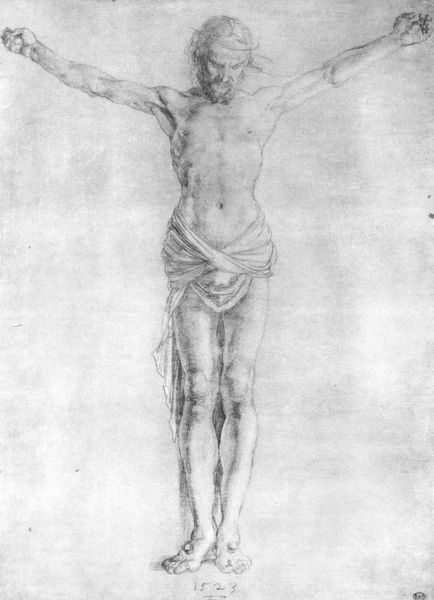
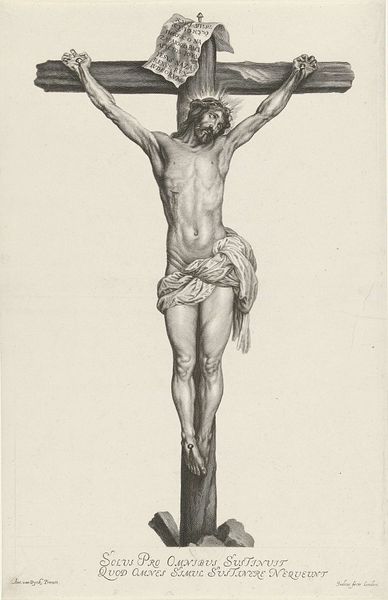
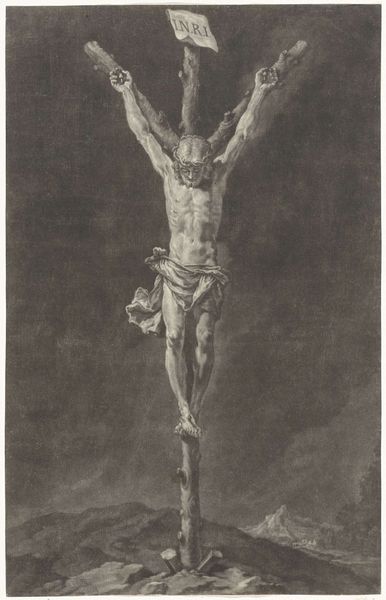
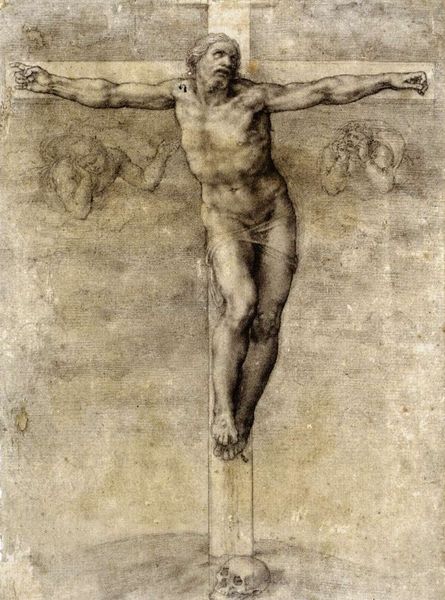
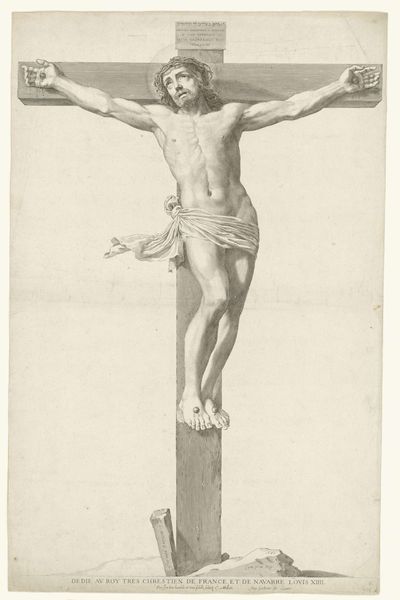
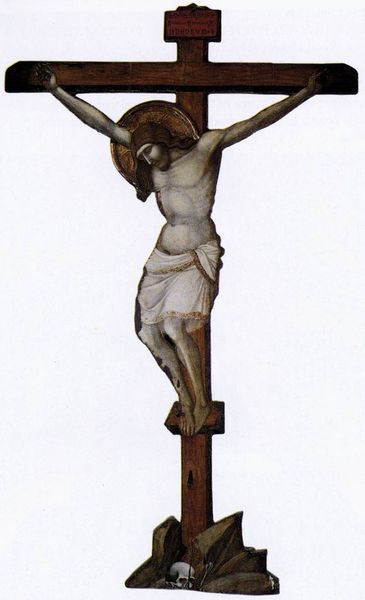
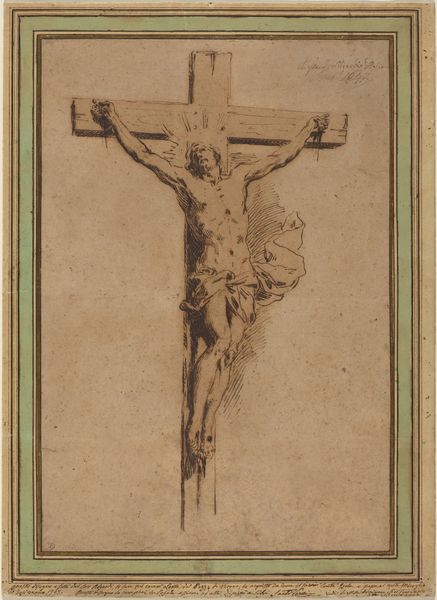
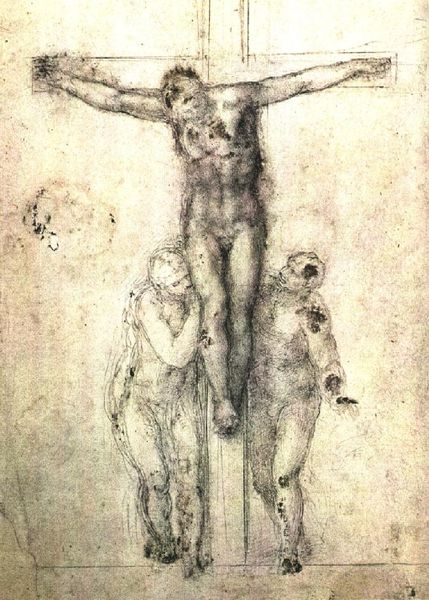
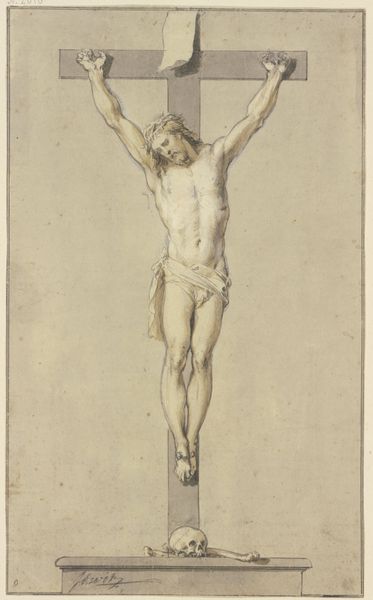
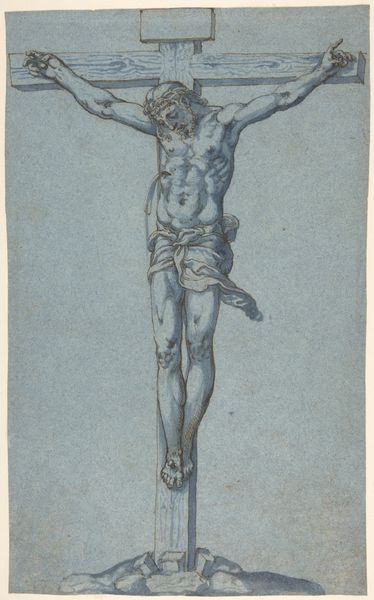
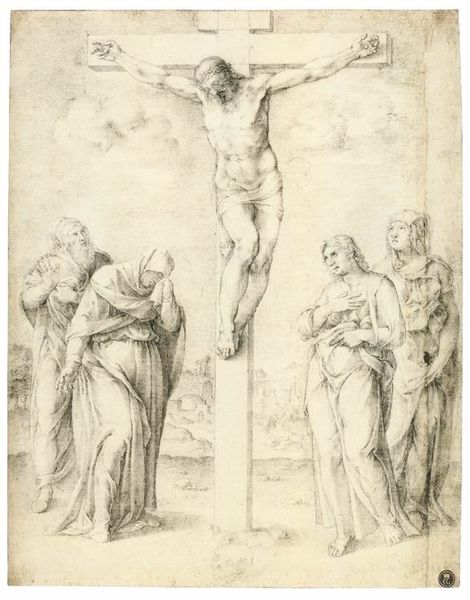
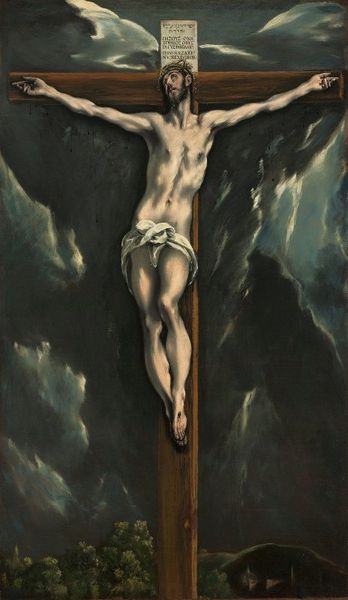
Albrecht Dürer rendered this drawing, “Christ on the Cross,” around 1505, using pen and ink on paper. Dürer's meticulous application of hatching and cross-hatching showcases the qualities of ink as a medium to create form and texture. Through his skilled hand, the inherent fluidity of ink translates into precise lines that define the suffering figure of Christ and the rough-hewn texture of the wooden cross. The labor-intensive process, typical of early 16th-century printmaking, imbues the artwork with a sense of devotion and craftsmanship. Dürer's work exists in a complex relationship with the rise of print culture and capitalism, producing images for broader consumption. "Christ on the Cross" speaks to the intersection of faith, artistry, and commerce, reflecting a society undergoing profound social and economic transformations. The image is more than just a religious scene; it's a testament to the artist's skill, the material's potential, and the era's shifting cultural landscape.
Comments
No comments
Be the first to comment and join the conversation on the ultimate creative platform.
 React
React Comment