About this artwork
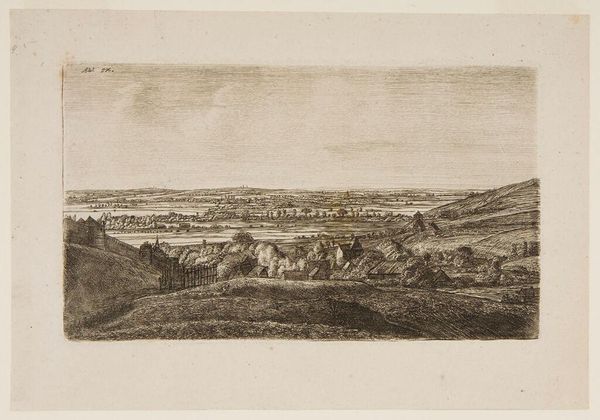
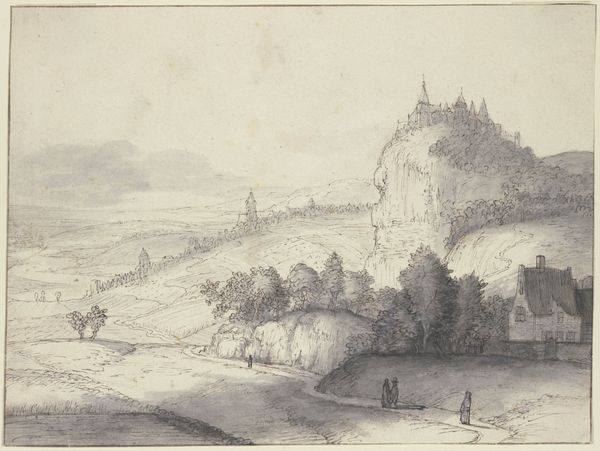
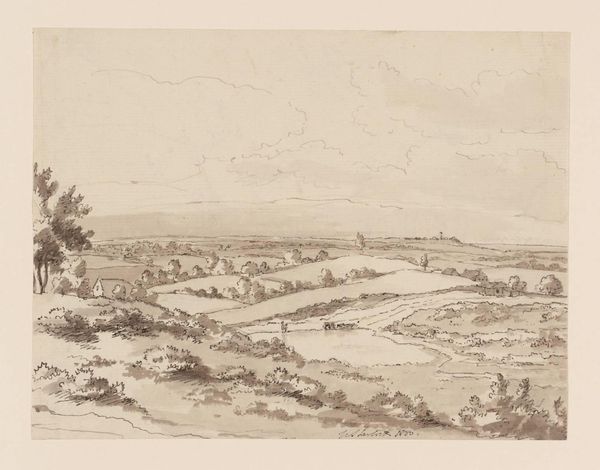
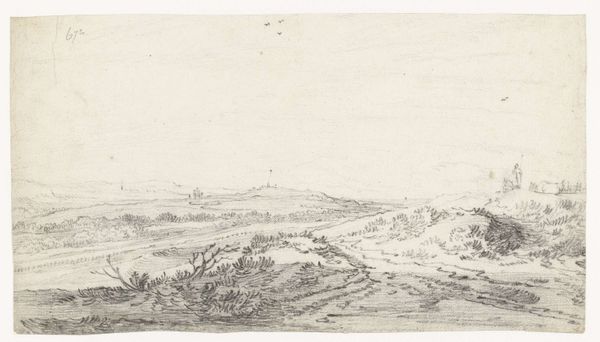
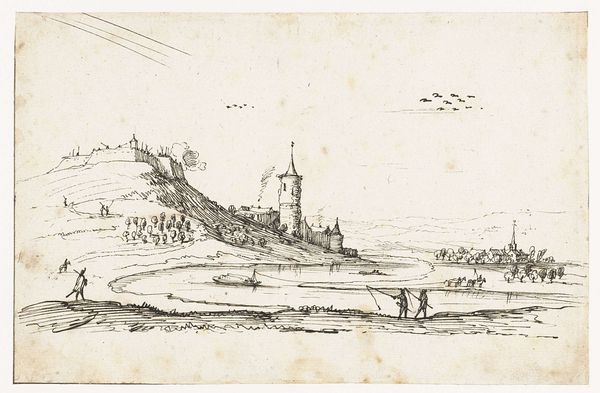
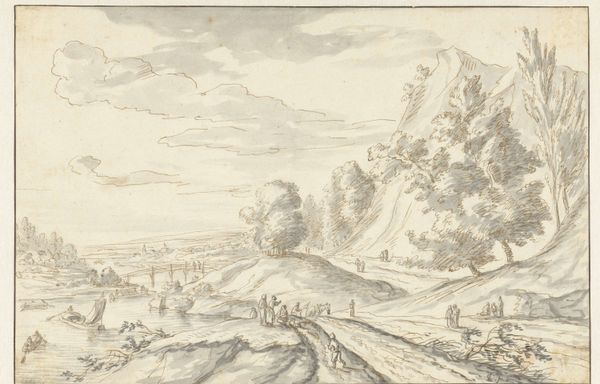
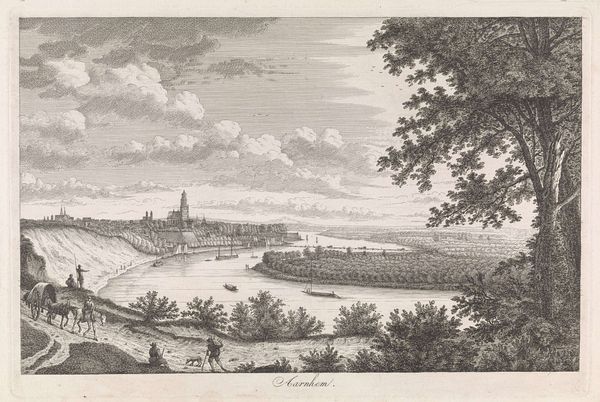
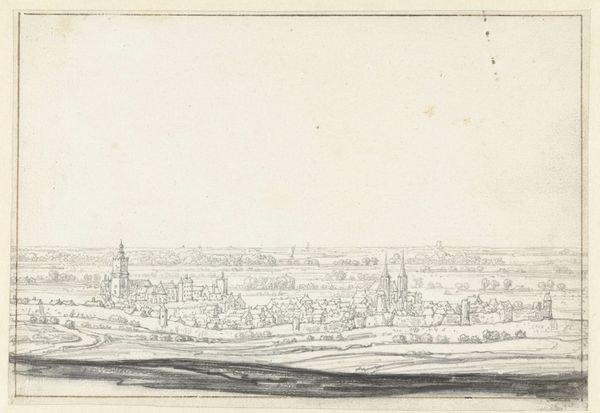
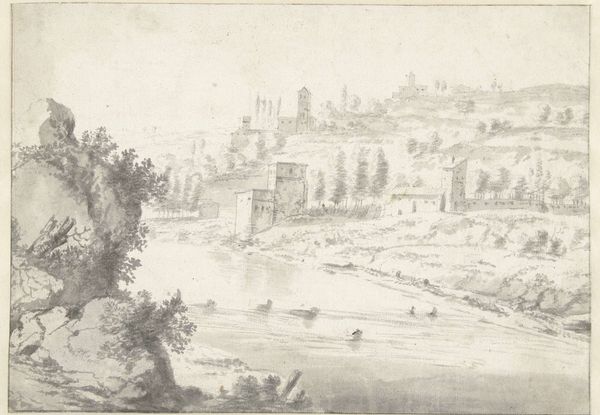
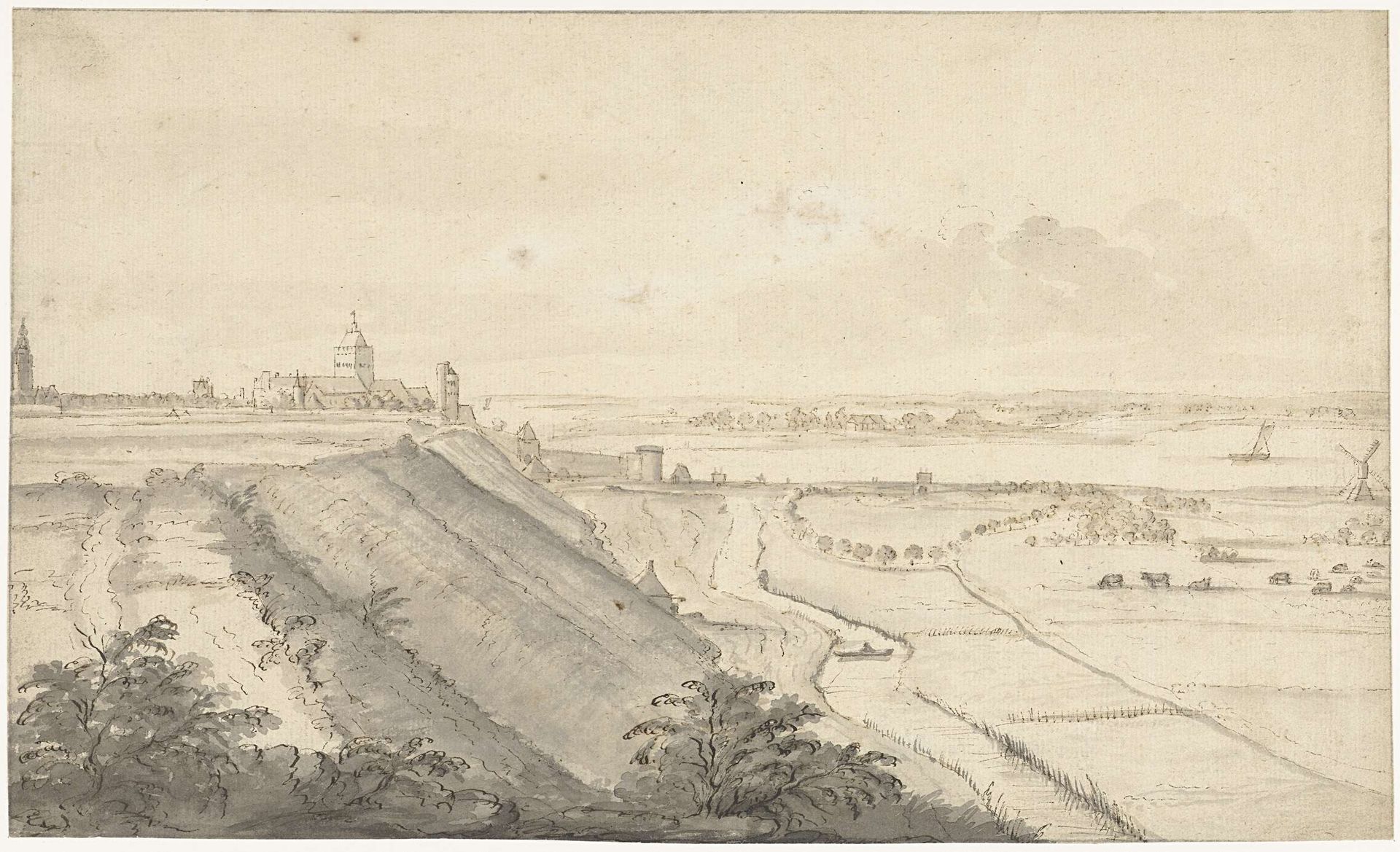
Curator: This is "Gezicht op Nijmegen" or "View of Nijmegen," a drawing in ink on paper made around 1710 by Jacob van Eynden the elder. Editor: Ah, my first thought? Dutch tranquility, even though it's just a drawing. There’s this calm about it. It reminds me of slowly waking up in the countryside and hearing birds. Curator: Van Eynden, working firmly within the Dutch Golden Age and Baroque traditions, offers us more than just pretty scenery. His cityscapes often served a political purpose. Depictions of towns and cities reinforced civic pride and identity. Editor: I see it! So it's like a 17th-century municipal billboard? Seriously though, looking at those cows placidly grazing way over there it just seems so carefully, almost painstakingly composed, you know? It looks quite bucolic for a city portrait. Curator: Absolutely, the strategic angle isn’t random. Note how prominent the city’s defenses are – it would have visually broadcasted Nijmegen's strength and stability. The inclusion of daily life is an invitation for everyone. This perspective is a visual claim of its importance. It also gives the ruling elites power, literally above its citizen. Editor: I like that tension between the power statement and the seeming tranquility of a market town that van Eynden captures, that almost photo-realistic rendering with ink on paper! He makes the defenses – that massive sloping wall—a striking, almost abstract design element! Curator: Well said. By situating the viewer *outside* the walls and simultaneously above the citizen’s, van Eynden subtly places the consumer of this image into a position of privilege, re-emphasizing existing social relations through aesthetic experience. The perspective is critical. Editor: Yes, yes, and, ultimately, the perspective lets us bask in that hazy, low-contrast world of van Eynden! Thanks for untangling some of its complexity and putting me, in my mind's eye at least, into 1710 Nijmegen for a bit. Curator: Indeed. These landscape views are vital pieces to reconstruct the values and anxieties of their time, prompting us to reconsider whose perspectives truly dominate.

Artwork details
- Medium
- drawing, paper, ink
- Dimensions
- height 188 mm, width 312 mm
- Copyright
- Rijks Museum: Open Domain
Tags
Comments
Share your thoughts
About this artwork
Curator: This is "Gezicht op Nijmegen" or "View of Nijmegen," a drawing in ink on paper made around 1710 by Jacob van Eynden the elder. Editor: Ah, my first thought? Dutch tranquility, even though it's just a drawing. There’s this calm about it. It reminds me of slowly waking up in the countryside and hearing birds. Curator: Van Eynden, working firmly within the Dutch Golden Age and Baroque traditions, offers us more than just pretty scenery. His cityscapes often served a political purpose. Depictions of towns and cities reinforced civic pride and identity. Editor: I see it! So it's like a 17th-century municipal billboard? Seriously though, looking at those cows placidly grazing way over there it just seems so carefully, almost painstakingly composed, you know? It looks quite bucolic for a city portrait. Curator: Absolutely, the strategic angle isn’t random. Note how prominent the city’s defenses are – it would have visually broadcasted Nijmegen's strength and stability. The inclusion of daily life is an invitation for everyone. This perspective is a visual claim of its importance. It also gives the ruling elites power, literally above its citizen. Editor: I like that tension between the power statement and the seeming tranquility of a market town that van Eynden captures, that almost photo-realistic rendering with ink on paper! He makes the defenses – that massive sloping wall—a striking, almost abstract design element! Curator: Well said. By situating the viewer *outside* the walls and simultaneously above the citizen’s, van Eynden subtly places the consumer of this image into a position of privilege, re-emphasizing existing social relations through aesthetic experience. The perspective is critical. Editor: Yes, yes, and, ultimately, the perspective lets us bask in that hazy, low-contrast world of van Eynden! Thanks for untangling some of its complexity and putting me, in my mind's eye at least, into 1710 Nijmegen for a bit. Curator: Indeed. These landscape views are vital pieces to reconstruct the values and anxieties of their time, prompting us to reconsider whose perspectives truly dominate.
Comments
Share your thoughts