c. 17th century
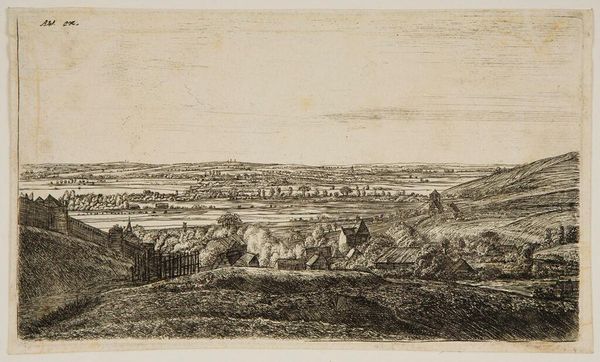
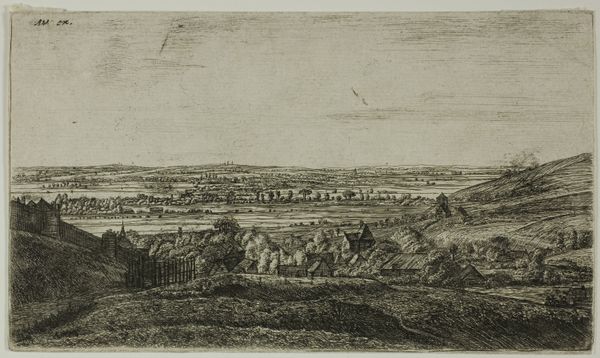
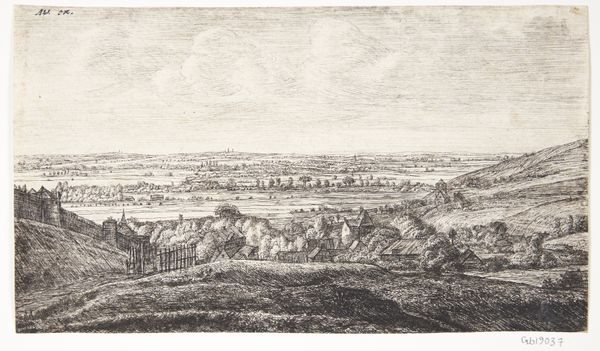
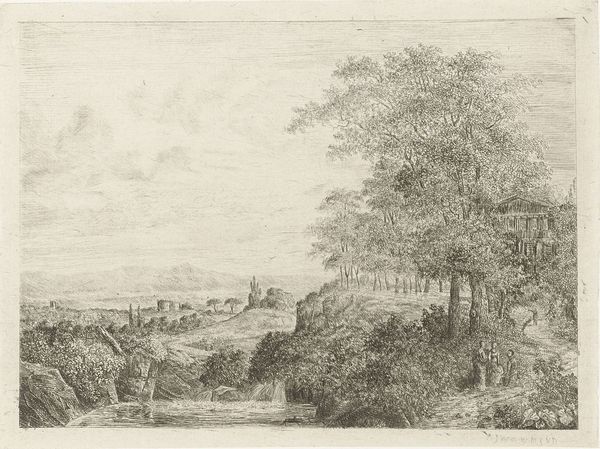
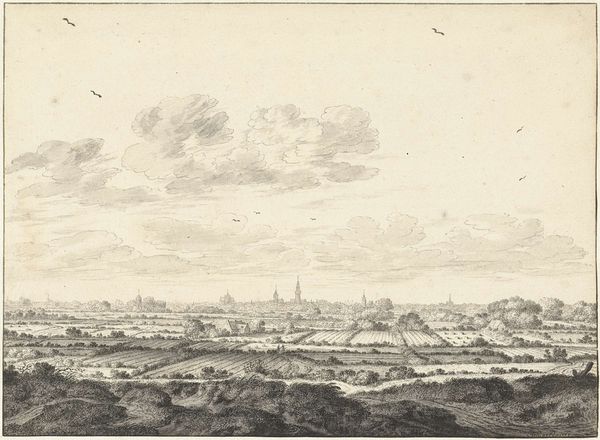
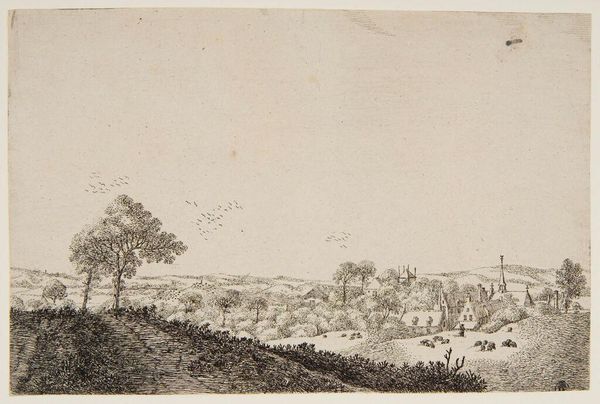
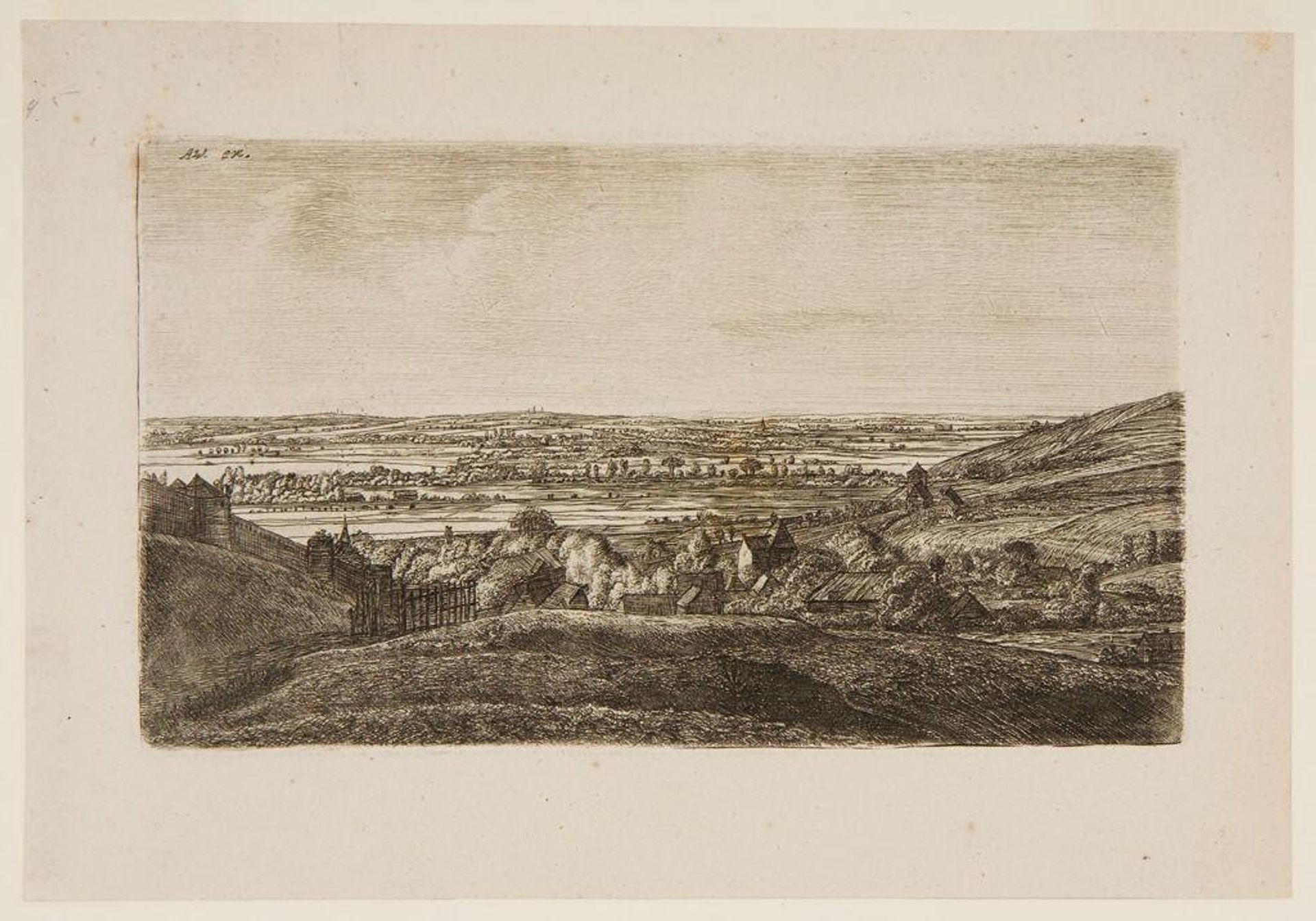
Village in a Valley, With Distant View Across the Lower Rhine

Listen to curator's interpretation
Curatorial notes
Editor: This is Johannes Ruischer's "Village in a Valley, With Distant View Across the Lower Rhine," a small etching. It feels so expansive, almost like a map. What do you make of the way he depicts this landscape? Curator: Landscape prints like this played a crucial role in shaping national identity. Consider how the Dutch Republic, newly independent, used images to promote a sense of place and belonging. Editor: So, it's not just a pretty picture, it's nation-building? Curator: Exactly! Notice how Ruischer meticulously details the everyday life – the village, the fields. These weren't just picturesque scenes; they were statements about the value and stability of Dutch society. Who controlled the narrative? Editor: I see! The elite, commissioning these prints to project an image of prosperity and order. Thanks, I never thought about landscape art this way. Curator: The image becomes a tool. Food for thought!