c. 1850
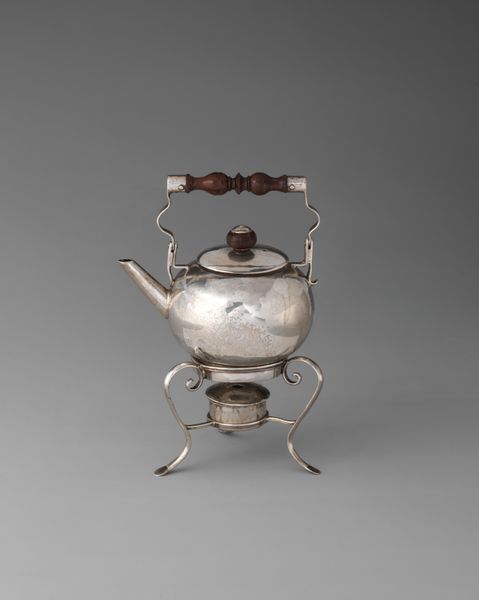
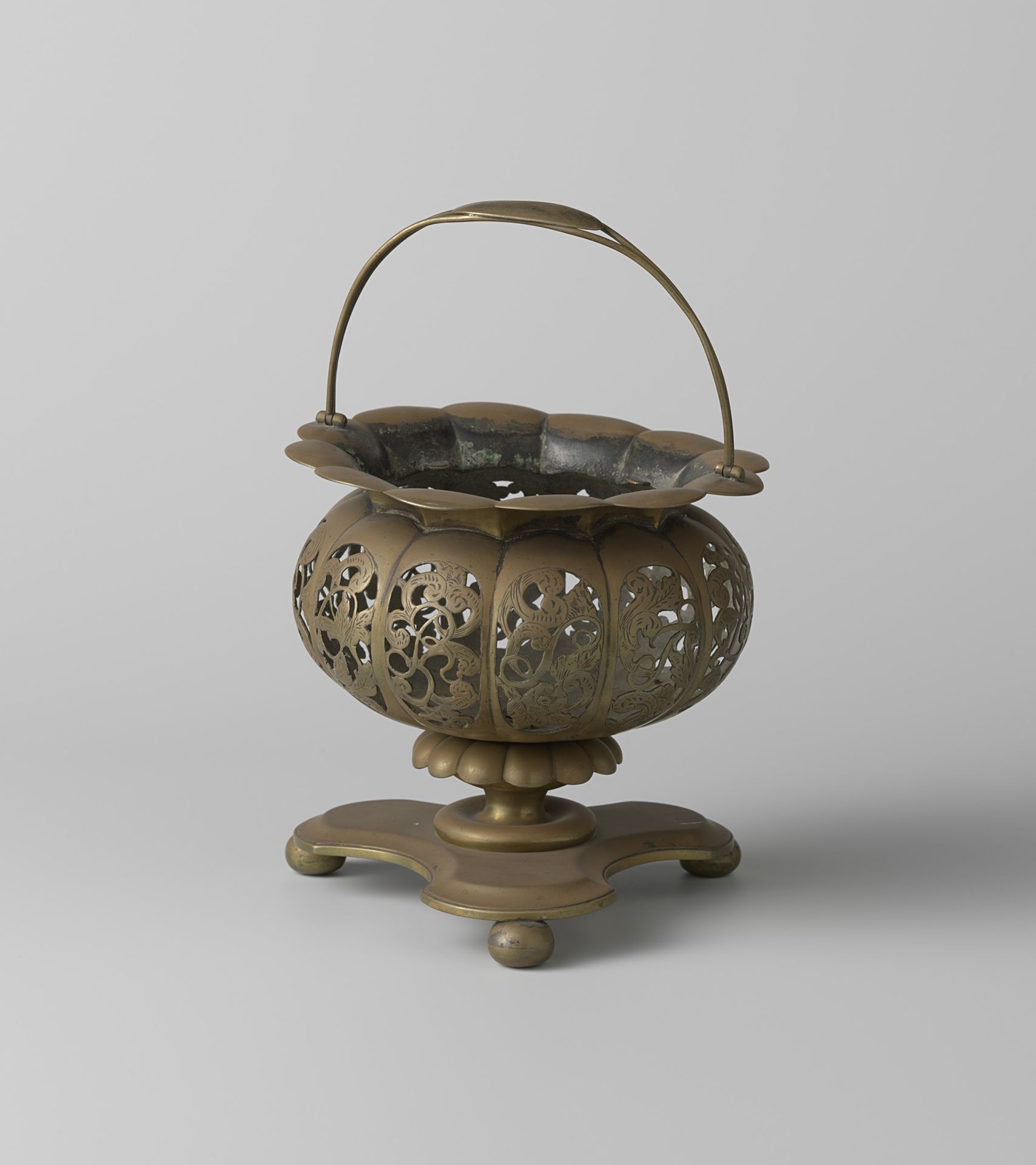
Komfoor met opengewerkte, bolronde bak in twaalf geledingen

Listen to curator's interpretation
Curatorial notes
This brazier, or "komfoor," was made by Louis Nicolas Seraphim van Voorst, likely in the Netherlands, out of brass. Brass, an alloy of copper and zinc, has a relatively low melting point, and is well suited to being cast into complex, decorative shapes. Here, the form of the brazier is bulbous, with twelve openwork panels displaying ornate floral motifs. Notice the handle attached at the top, and the scalloped rim, typical of the period. The construction of this object involves working the metal through a combination of casting, piercing, and chasing – the latter being the practice of meticulously hammering the surface to refine the details of the design. This suggests a workshop environment where specialized labor was divided between those skilled in casting and those adept at finer decorative work. Braziers like this one were used to hold hot coals, keeping tea or food warm. They were symbols of comfort and domesticity. Appreciating this object requires us to think not only about its appearance, but the labor, materials, and social context of its production.