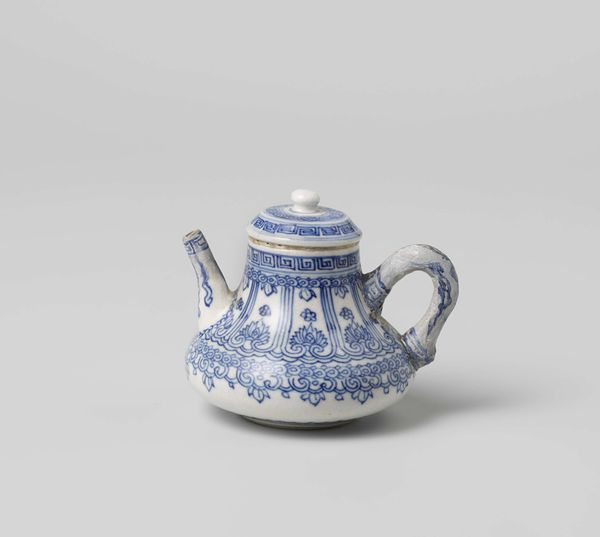
c. 1780
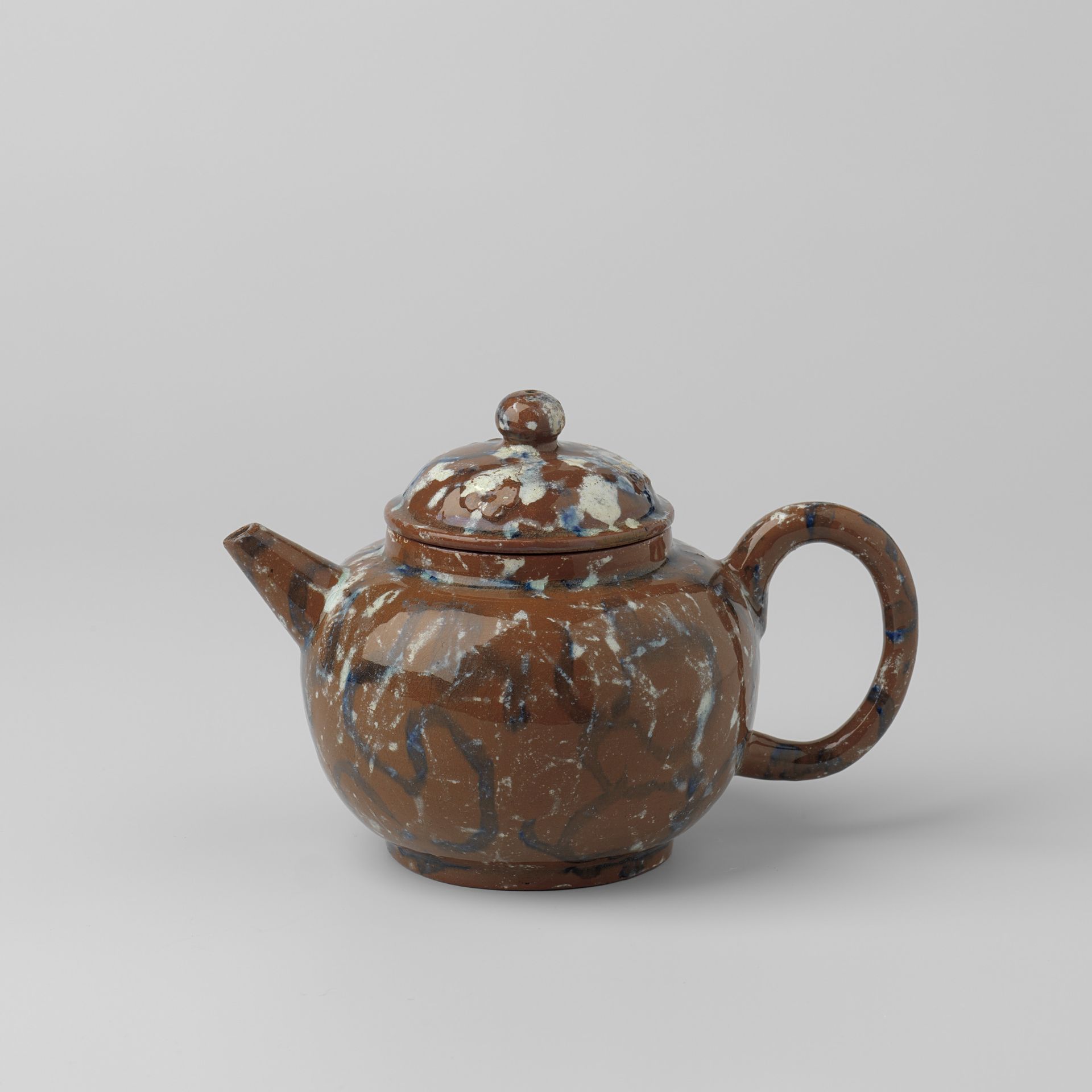
Deksel van theepot, blauw-wit gemarmerd

Listen to curator's interpretation
Curatorial notes
This is a blue-and-white marbled teapot lid, likely from the early 18th century, made by Jacobus de Caluwe. While small, this fragment speaks volumes about the global trade networks of the Dutch Golden Age. Tea was a luxury good, imported by the Dutch East India Company, transforming social rituals and material culture in the Netherlands. Delftware potteries like de Caluwe’s responded to this demand, imitating expensive Chinese porcelain for a burgeoning middle class. The marbled effect, though not directly replicating Chinese designs, reflects a broader European fascination with exotic and luxurious materials. Analyzing the lid’s form and decoration, alongside historical records of trade, probate inventories, and archaeological finds, we gain insights into the social meaning of tea consumption and the dynamics of artistic production in the Netherlands. Art history, then, becomes a window into the economic, social, and cultural transformations of the past.