About this artwork
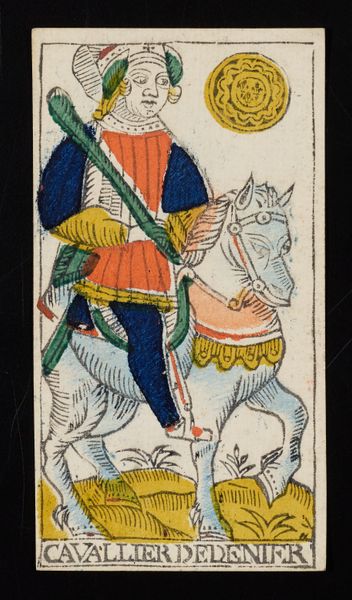
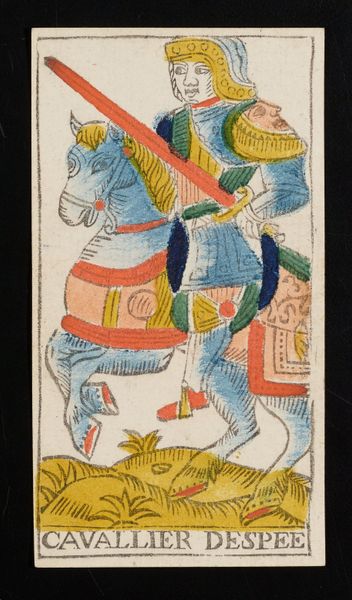
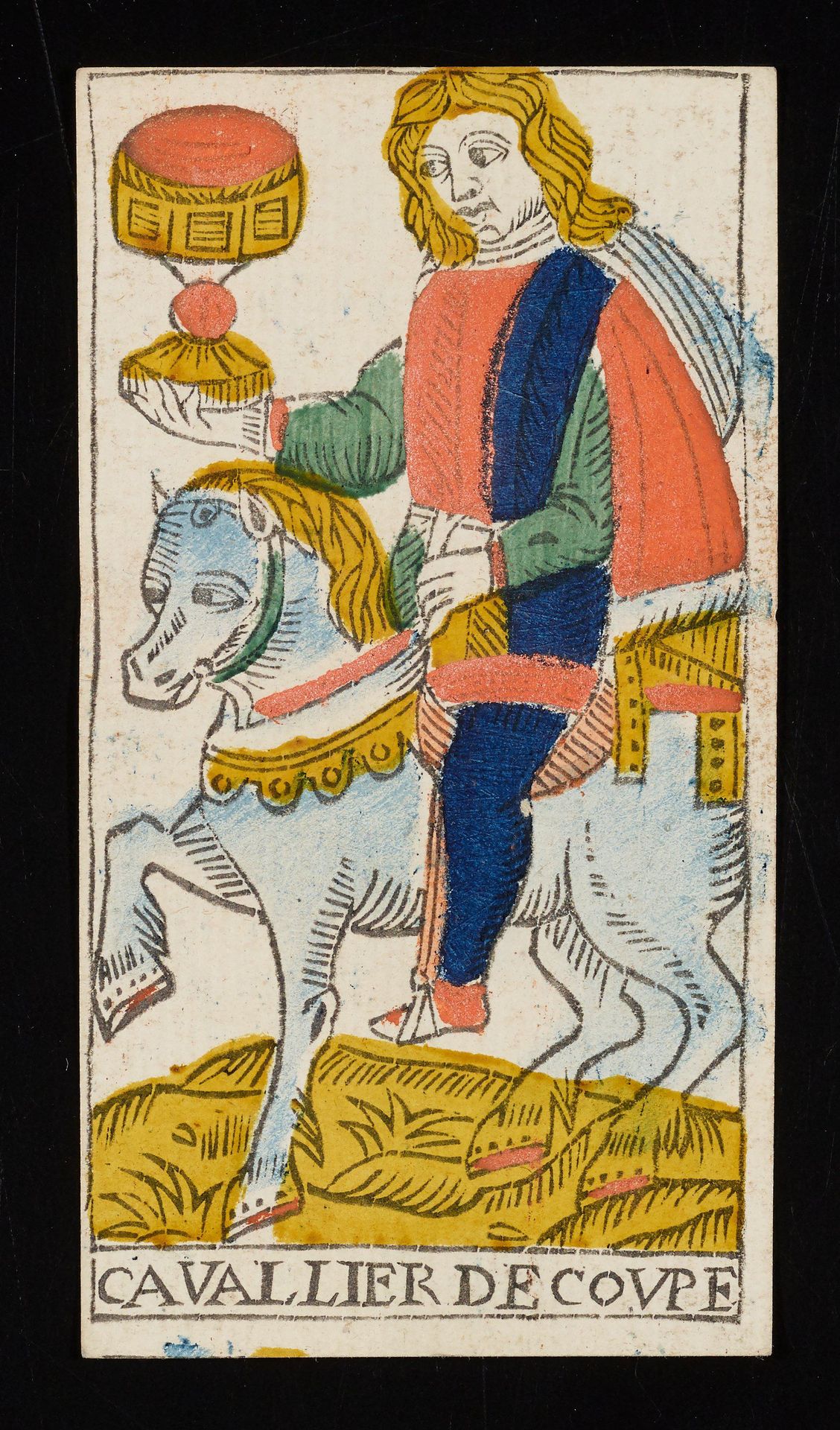
Claude Burdel created this "Knight of Cups" card using woodcut and stencil, sometime in the 18th century. The composition features a central figure on horseback, rendered with bold lines and flat areas of color that suggest an emotional tableau. Notice the limited palette—red, blue, green, yellow—each applied with a degree of imprecision that enlivens the surface. The use of colour isn't just decorative; it's structural. The blue mantle contrasted against the red tunic, creates a visual binary that invites us to decode the symbolic significance of each hue. The artist presents a world where signs and symbols intersect. The Knight, the cup, the horse—each element is a signifier, pointing towards layers of cultural meaning. Consider how Burdel uses simple shapes and forms to create an image that has endured for centuries, not just aesthetically, but as a tool through which we continue to negotiate ideas of love, emotion and the self.
Knight of Cups
1751


Artwork details
- Medium
- print, engraving
- Dimensions
- 4 7/16 x 2 7/16 in. (11.27 x 6.19 cm) (image, sheet)4 5/8 x 2 1/2 in. (11.75 x 6.35 cm) (sheet, each)
- Location
- Minneapolis Institute of Art
- Copyright
- Public Domain
Tags
Comments
Share your thoughts
About this artwork
Claude Burdel created this "Knight of Cups" card using woodcut and stencil, sometime in the 18th century. The composition features a central figure on horseback, rendered with bold lines and flat areas of color that suggest an emotional tableau. Notice the limited palette—red, blue, green, yellow—each applied with a degree of imprecision that enlivens the surface. The use of colour isn't just decorative; it's structural. The blue mantle contrasted against the red tunic, creates a visual binary that invites us to decode the symbolic significance of each hue. The artist presents a world where signs and symbols intersect. The Knight, the cup, the horse—each element is a signifier, pointing towards layers of cultural meaning. Consider how Burdel uses simple shapes and forms to create an image that has endured for centuries, not just aesthetically, but as a tool through which we continue to negotiate ideas of love, emotion and the self.
Comments
Share your thoughts