
Curatorial notes
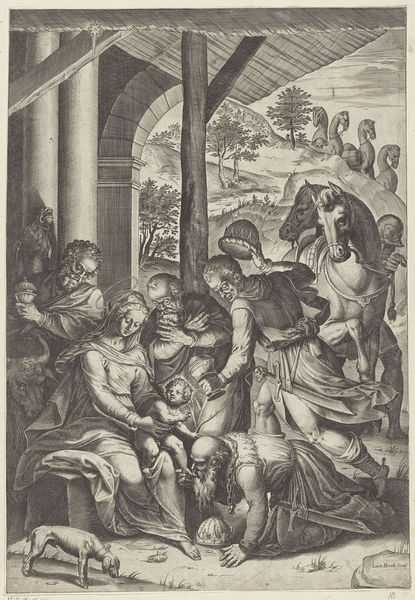
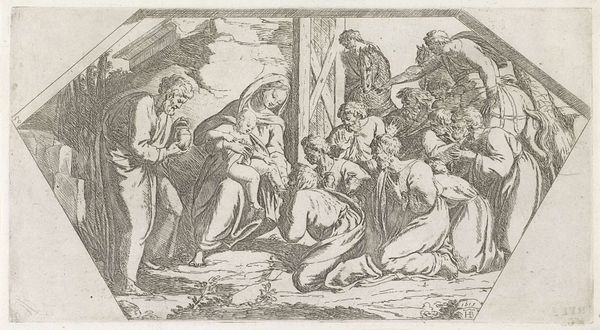
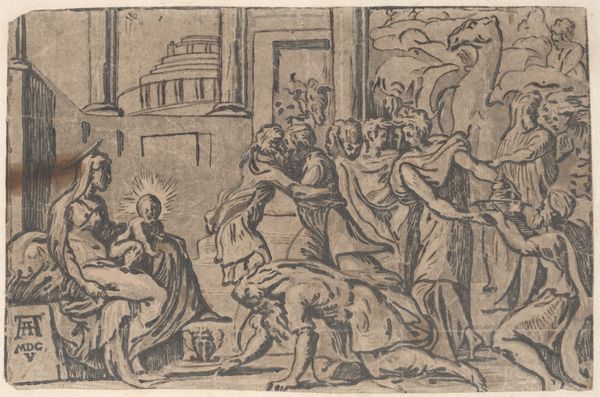
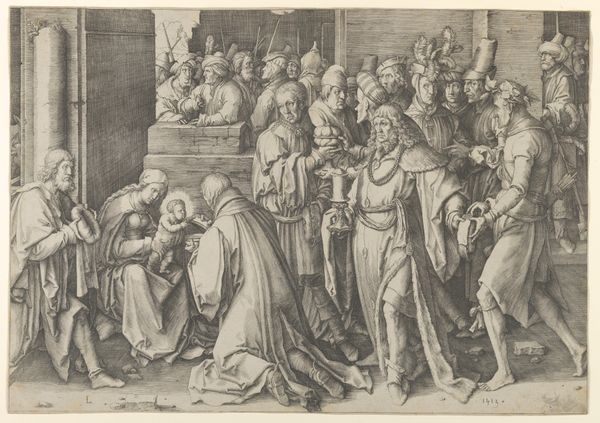
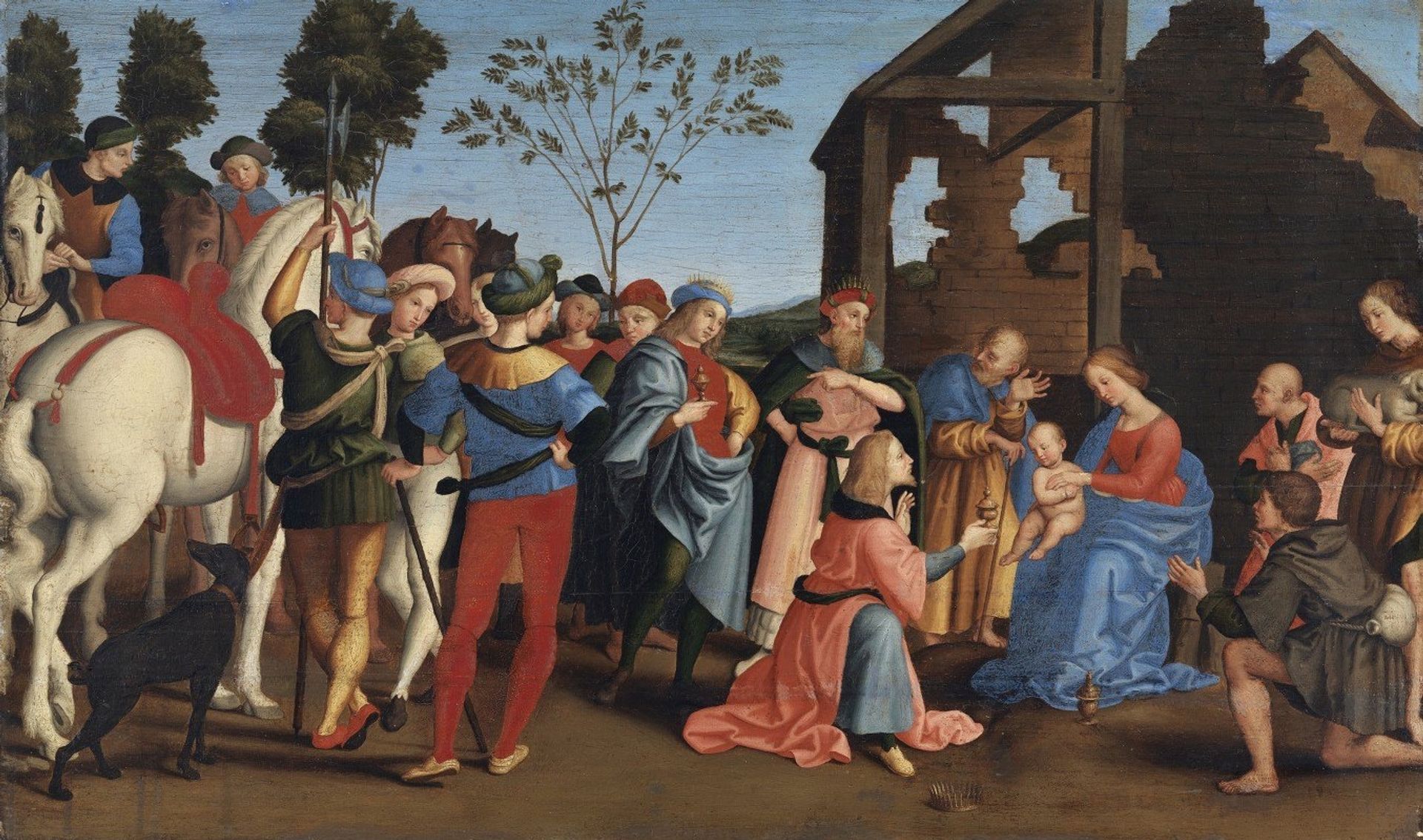
Raphael painted 'The Adoration of the Kings' in the early 16th century, likely using oil paints on a prepared wood panel or canvas. Think about the traditional art materials of the time: pigments painstakingly ground from minerals and plants, and the skilled labor required to prepare the painting surface and apply the paint in delicate layers. Raphael's technique imbues the scene with a sense of serenity and grace, a visual expression of the religious narrative. The creation of such a painting involved not only Raphael's artistic genius, but also the labor of his workshop assistants who would have prepared materials and executed parts of the composition. Consider the social context: Raphael's art was commissioned by wealthy patrons, reflecting the economic power structures of Renaissance society. The precious materials and time-consuming processes involved in creating paintings like this elevated them to objects of status and veneration. By recognizing the materiality and making of this painting, we gain a richer understanding of its cultural significance, acknowledging the value of both artistic skill and the labor that went into its creation.