1834 - 1911
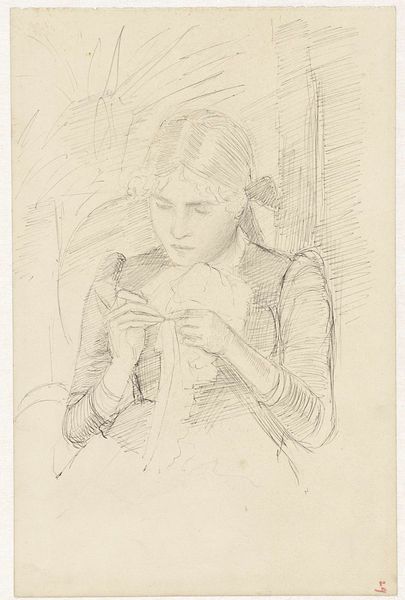
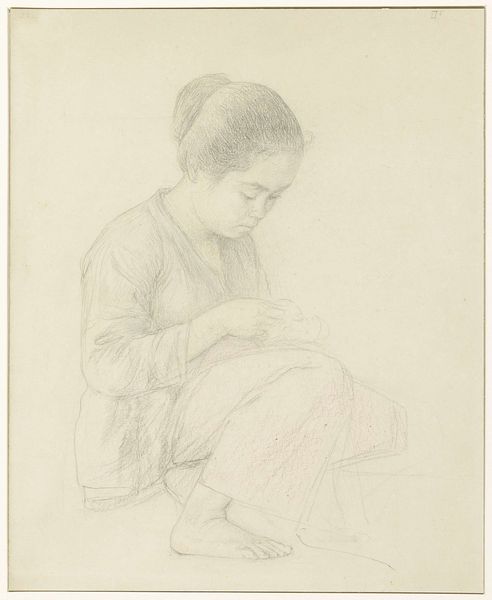
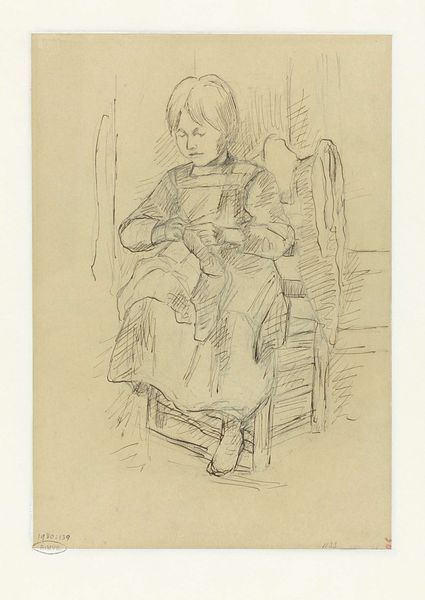
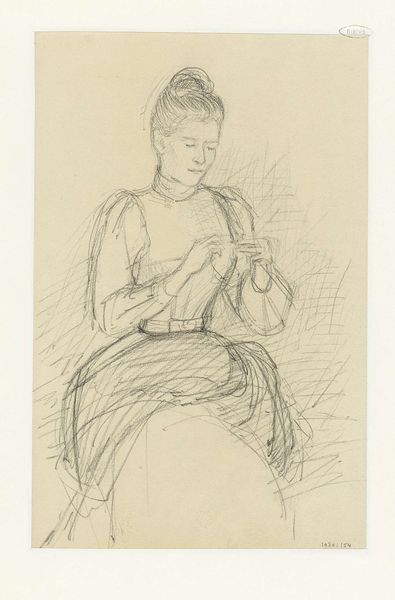
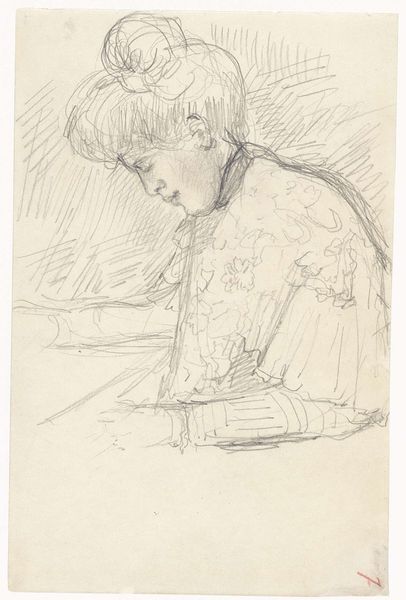
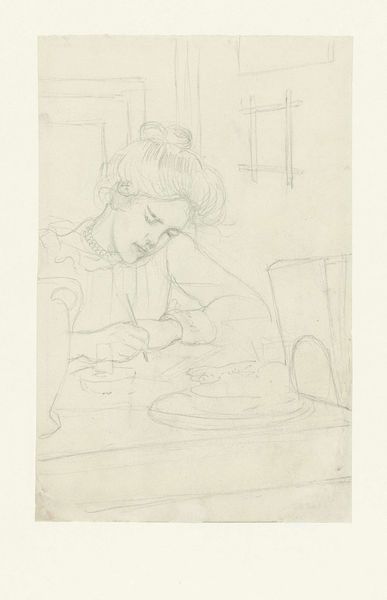
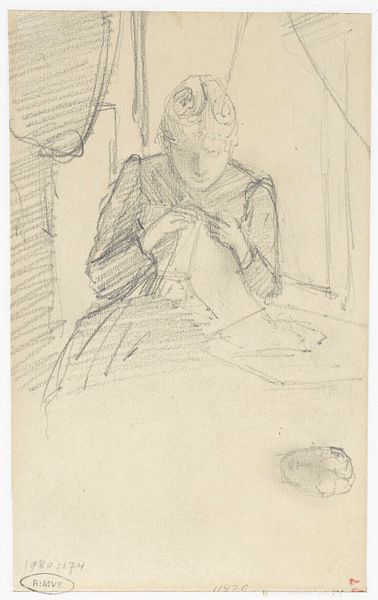
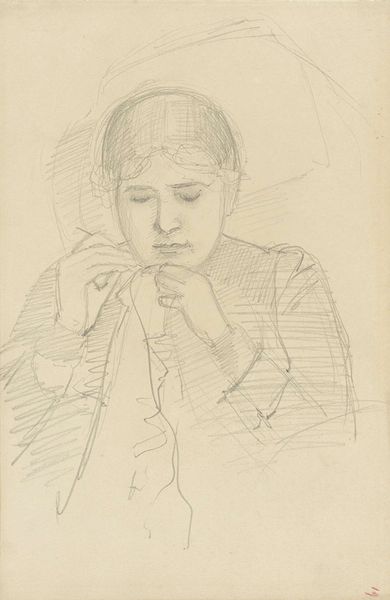
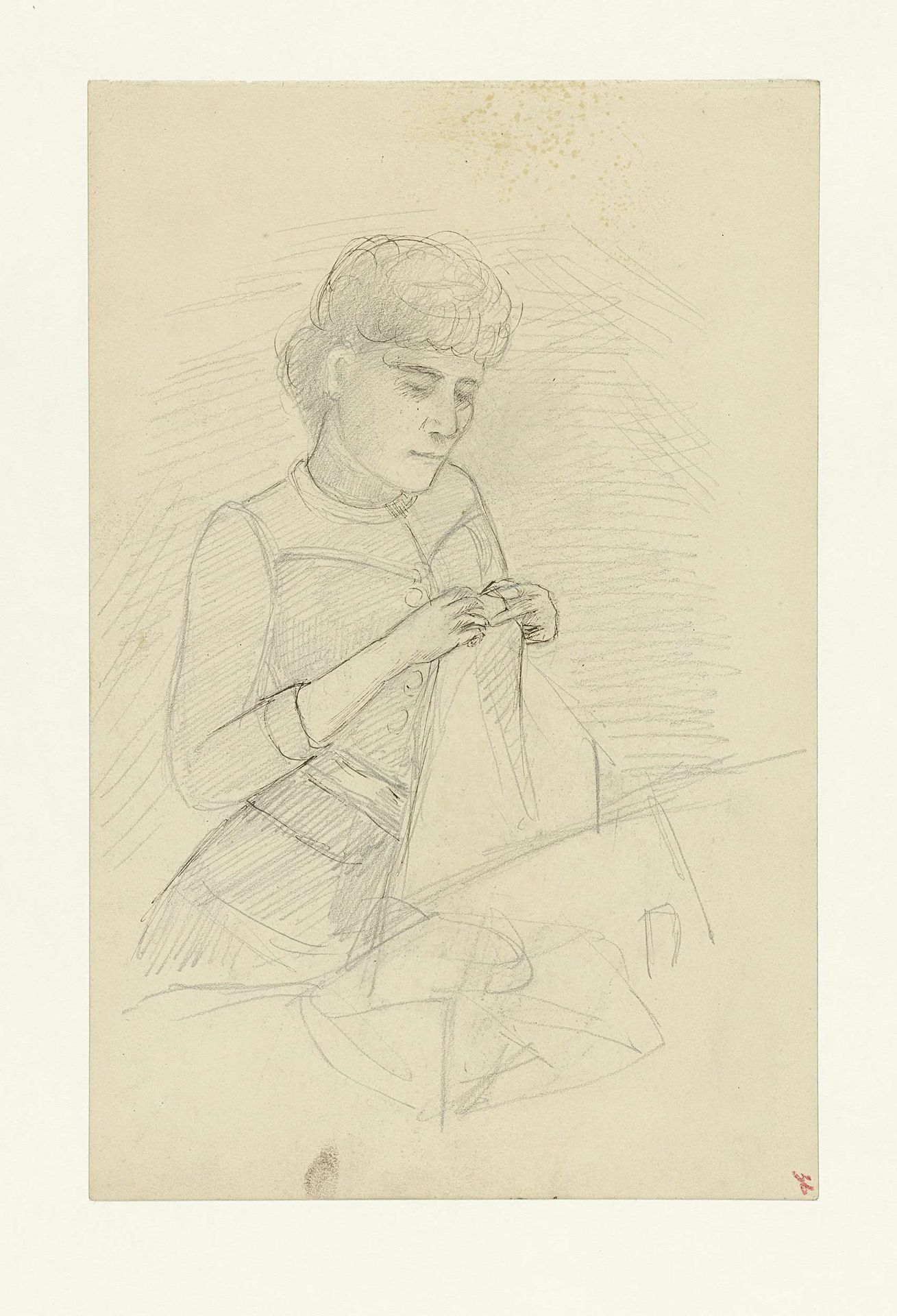
Handwerkende vrouw

Jozef Israëls
1824 - 1911Location
RijksmuseumListen to curator's interpretation
Curatorial notes
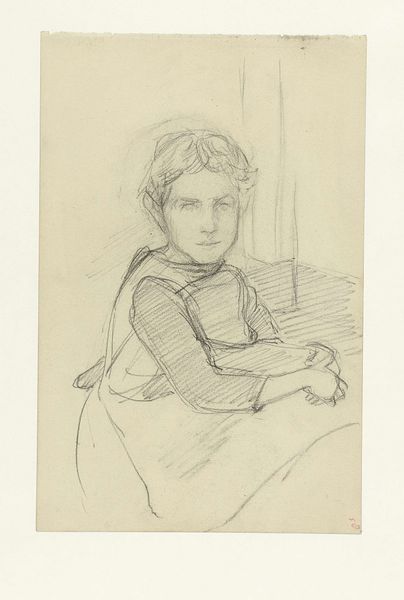
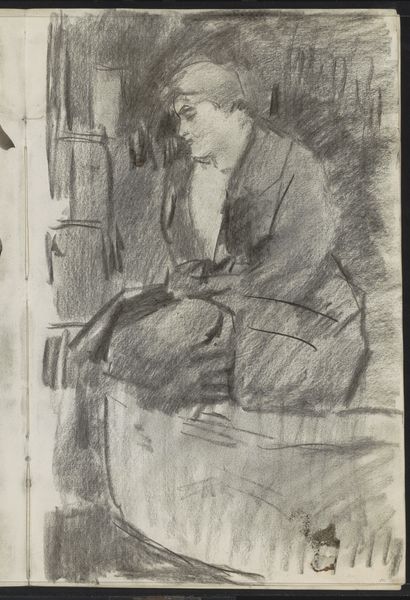
Jozef Israëls made this sketch of a working woman with pencil on paper sometime during his career. In the 19th century, art academies and institutions promoted genre scenes which perpetuated the role of women as domestic caretakers. However, Israëls’s sketch challenges this idealization of women by depicting them as active participants in the workforce. Through loose lines and delicate shading, the artist captures the woman's concentration as she sews, highlighting her labor and skill. This portrayal reflects the influence of the Hague School, a Dutch art movement that sought to depict everyday life with realism and empathy. Israëls and his contemporaries aimed to elevate the status of ordinary people, in contrast to the more academic and idealized styles of the time. Historians often consult census records, social surveys, and institutional archives to further understand the socio-economic conditions of the time. By doing so, we can appreciate how art contributes to broader discussions about labor, gender, and social justice.