About this artwork
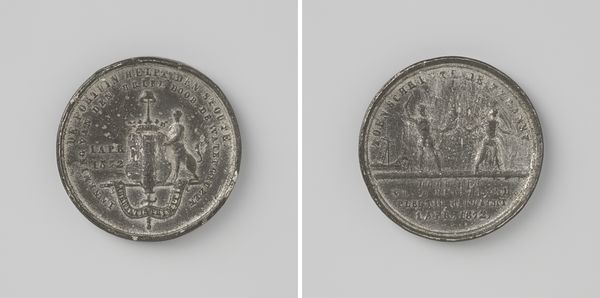
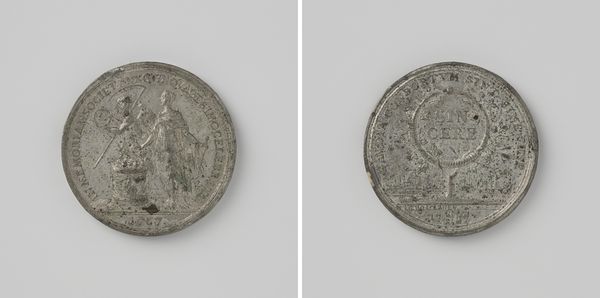
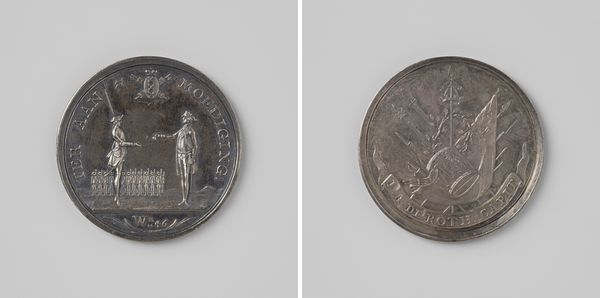
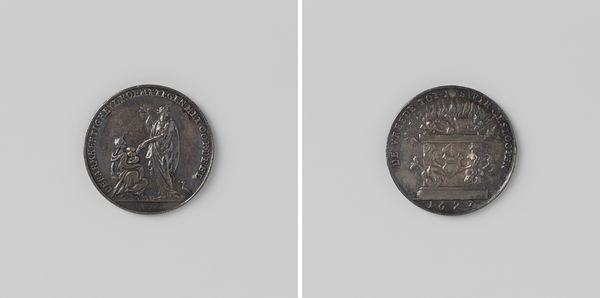
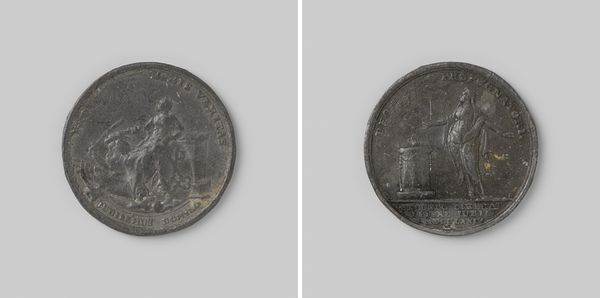
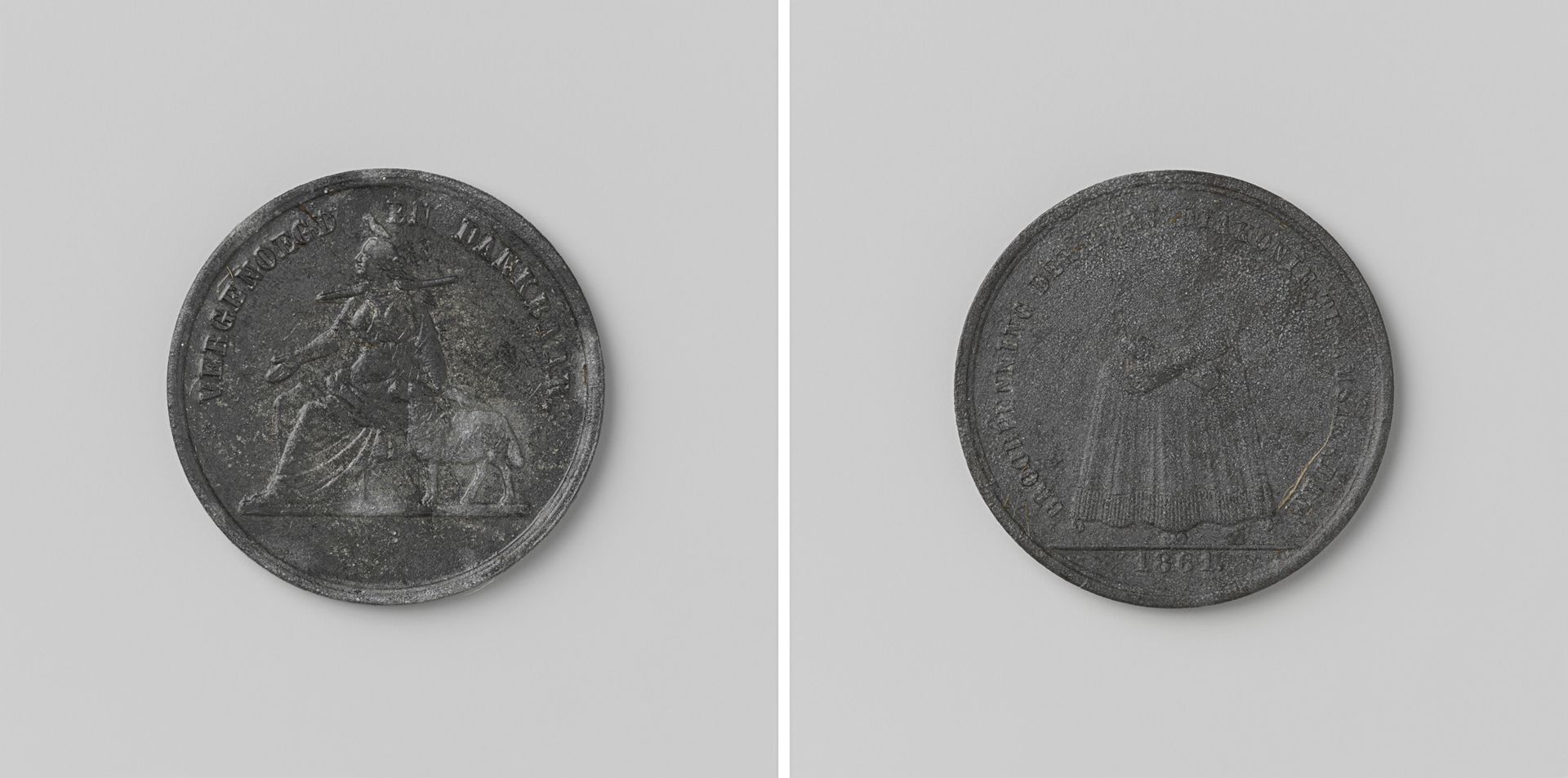
This lead token, now held at the Rijksmuseum, was made by David van der Kellen, sometime in the 19th century. These tokens were given to impoverished church members of the Dutch Reformed Church in Amsterdam, entitling them to bread handouts. These tokens embody the complex relationship between charity, class, and religious identity during a period of rapid social change. The Reformed Church, a dominant religious force in the Netherlands, played a crucial role in providing social assistance. But this assistance came with its own set of expectations and regulations, shaping the lives of the recipients. Consider the power dynamics inherent in this system, where access to basic necessities was mediated by religious affiliation and adherence to certain norms. What did it mean to be a 'deserving' member of the church, and how did this impact one's sense of self-worth and belonging? This token speaks to a time where faith and survival were deeply intertwined, highlighting the precarious existence of the poor.
Hervormde Diakonie te Amsterdam, loodje dat behoeftige kerklidmaten bij uitdeling recht gaf op brood
1861

David van der (1804-1879) Kellen
1804 - 1879Location
RijksmuseumArtwork details
- Medium
- metal, relief, sculpture
- Dimensions
- diameter 2.8 cm, weight 6.11 gr
- Location
- Rijksmuseum
- Copyright
- Rijks Museum: Open Domain
Tags
Comments
Share your thoughts
About this artwork
This lead token, now held at the Rijksmuseum, was made by David van der Kellen, sometime in the 19th century. These tokens were given to impoverished church members of the Dutch Reformed Church in Amsterdam, entitling them to bread handouts. These tokens embody the complex relationship between charity, class, and religious identity during a period of rapid social change. The Reformed Church, a dominant religious force in the Netherlands, played a crucial role in providing social assistance. But this assistance came with its own set of expectations and regulations, shaping the lives of the recipients. Consider the power dynamics inherent in this system, where access to basic necessities was mediated by religious affiliation and adherence to certain norms. What did it mean to be a 'deserving' member of the church, and how did this impact one's sense of self-worth and belonging? This token speaks to a time where faith and survival were deeply intertwined, highlighting the precarious existence of the poor.
Comments
Share your thoughts