mixed-media, watercolor
#
portrait
#
mixed-media
#
figuration
#
watercolor
#
mixed medium
#
mixed media
#
modernism
#
watercolor
Copyright: Public domain US
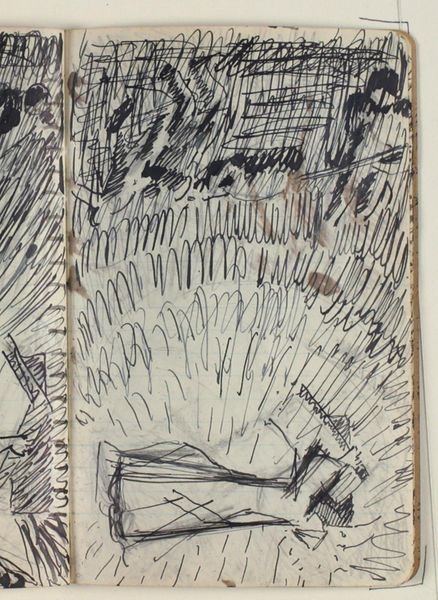
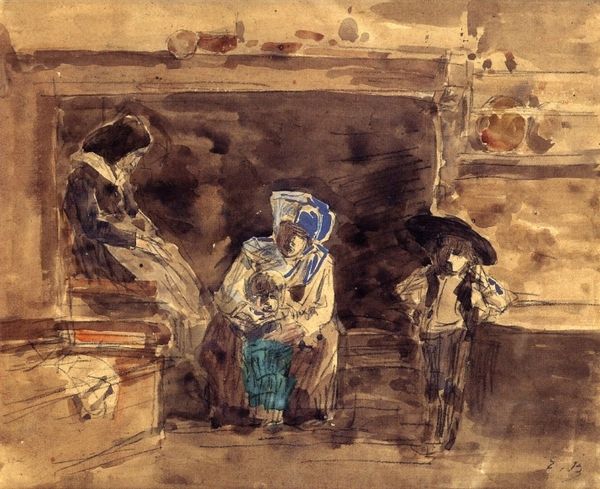
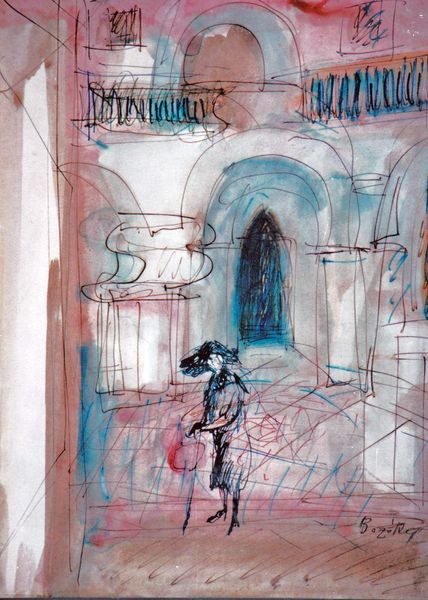
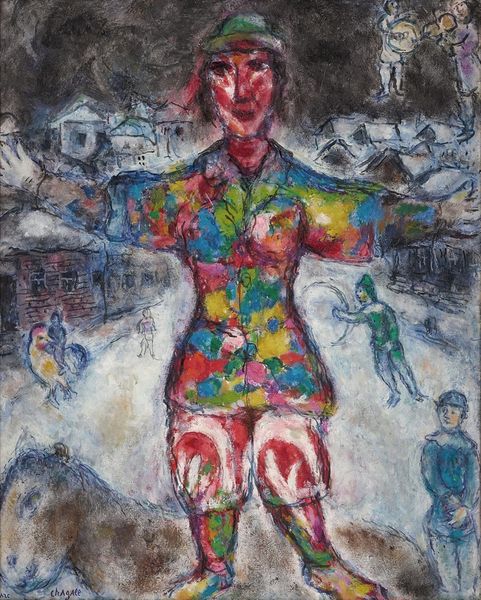
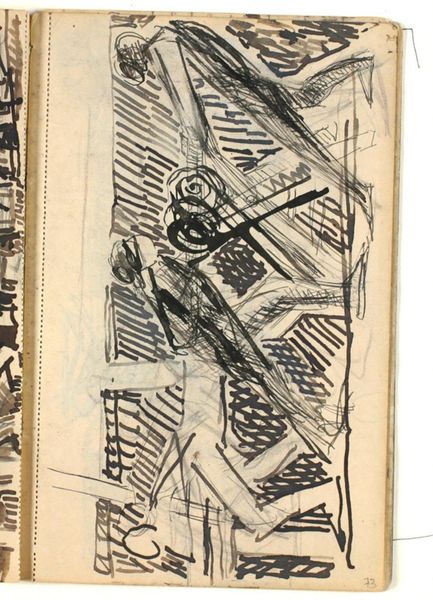
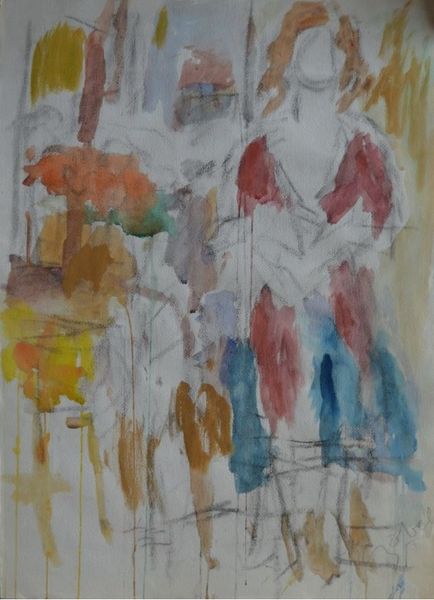
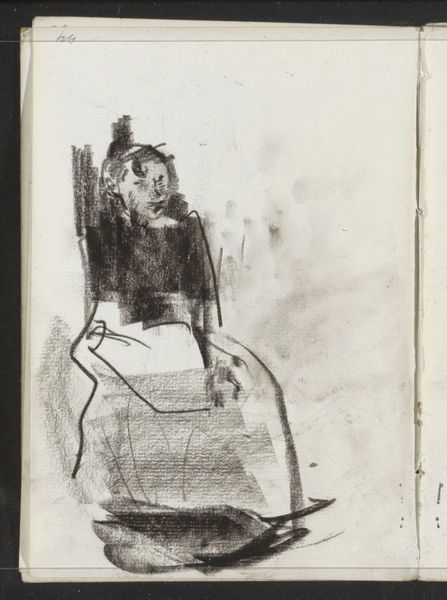
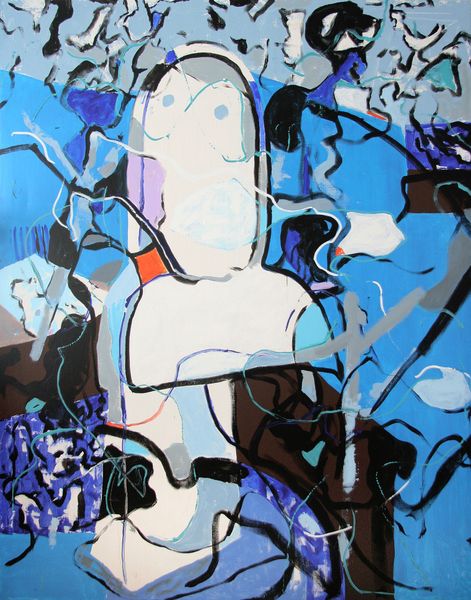
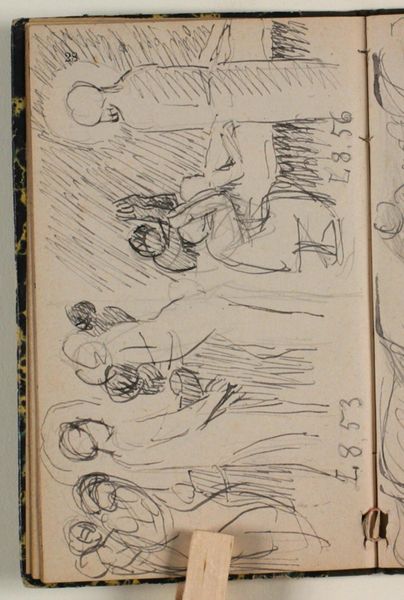
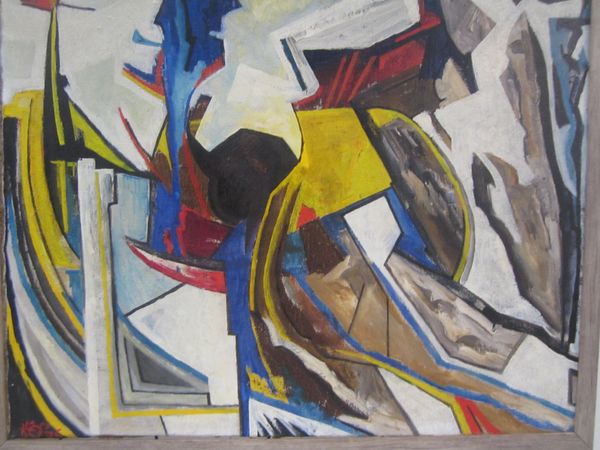
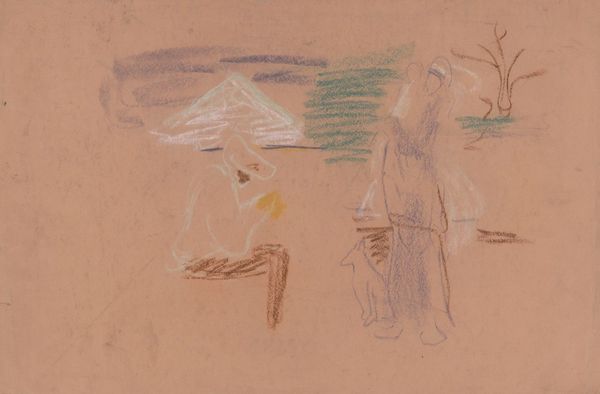
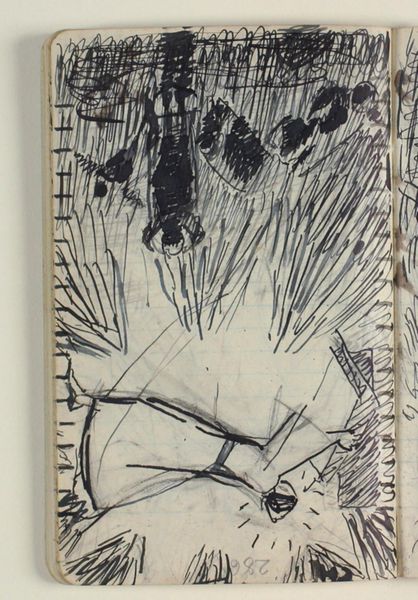
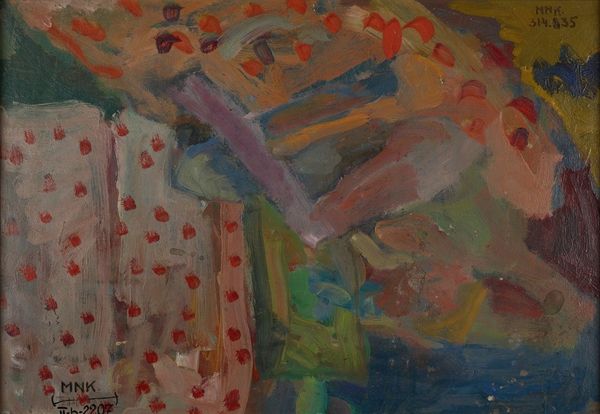
Curator: Welcome. Here we have Ossip Zadkine's "Untitled" mixed-media piece from 1917, a significant example of early Modernist figuration using watercolor. Editor: My first impression is melancholy. The color palette, primarily muted reds and yellows, creates a sense of quiet desperation, as if the figures are trapped within the confines of this patterned interior. Curator: Indeed. Notice how Zadkine uses broad washes of watercolor to define the space, layering color to build texture and depth. The linear structure overlaid, particularly in the rendition of the figures and the architectural forms, speaks to the fragmented realities so key in early 20th-century artistic movements. Editor: But who are these figures, and what's happening here? It strikes me as a critique of alienation in modern society. The diners are isolated from each other, consumed by their own thoughts, even in a public space. Is this perhaps a comment on the fracturing of community after the devastations of WWI? Curator: Perhaps. It also may be an attempt to dismantle traditional artistic forms. See how perspective is skewed and flattened, disrupting any sense of realistic space. The geometric simplifications bordering on abstraction point to Cubist influence, where representation yields to construction. Editor: But can’t that construction reflect real social fragmentation? The table is off-kilter, the lines feel restless. It mirrors the psychic unrest of a generation grappling with loss and social upheaval, where notions of community and shared identity had been so forcefully challenged. Curator: Your focus draws attention to the cultural climate after the First World War, whereas I am seeing Zadkine playing with pictorial devices here. By using simple forms to create volume, by reducing and then accentuating perspective to draw the viewer’s eye across the canvas...it creates its own self-referential logic. Editor: Fair enough. Both, perhaps, function simultaneously in this work—a deep interrogation of painting’s structure that opens into broader existential and social questions of identity during this period of radical historical transformation. Curator: A fitting observation on which to conclude. Thanks. Editor: My pleasure. Thank you.
Comments
No comments
Be the first to comment and join the conversation on the ultimate creative platform.
 Collect
 React
React Comment
More like this