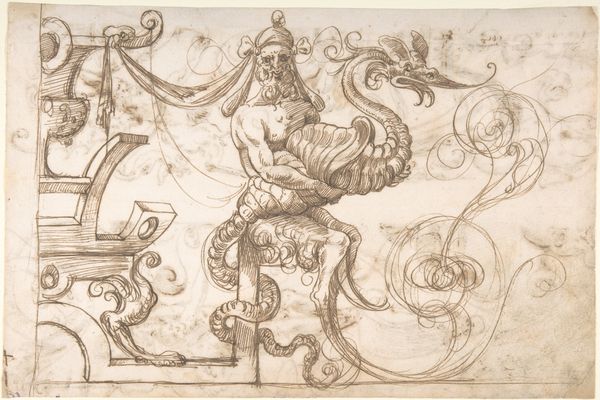
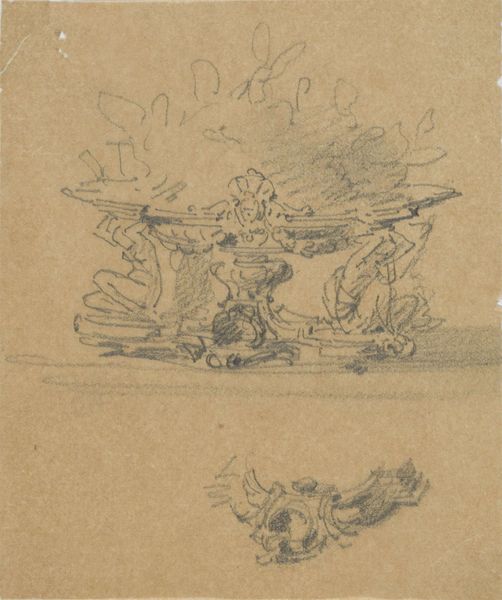
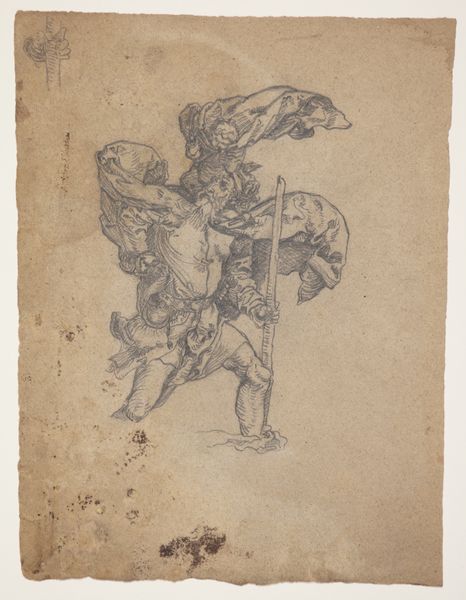
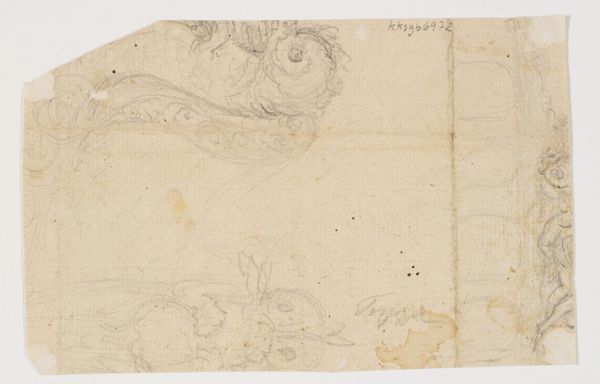
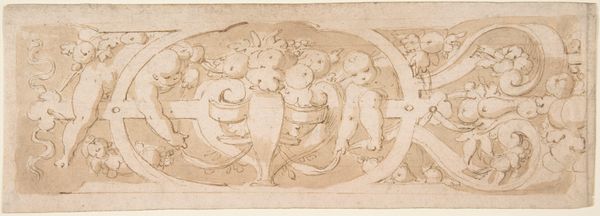
Design for a Salt Cellar or a Table Fountain 1570 - 1620


drawing, print, paper, ink, sculpture, chalk, pen
drawing
pencil sketch
paper
11_renaissance
ink
sculpture
chalk
water
pen
Dimensions: 136 × 180 mm (primary support); 163 × 220 mm (secondary support)
Copyright: Public Domain
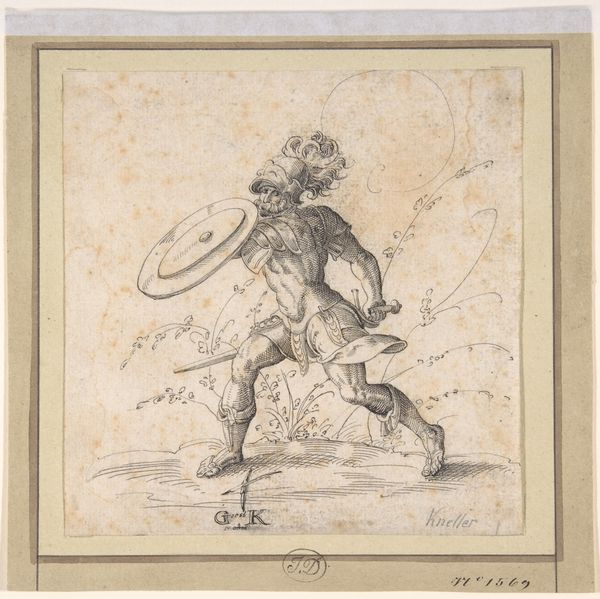
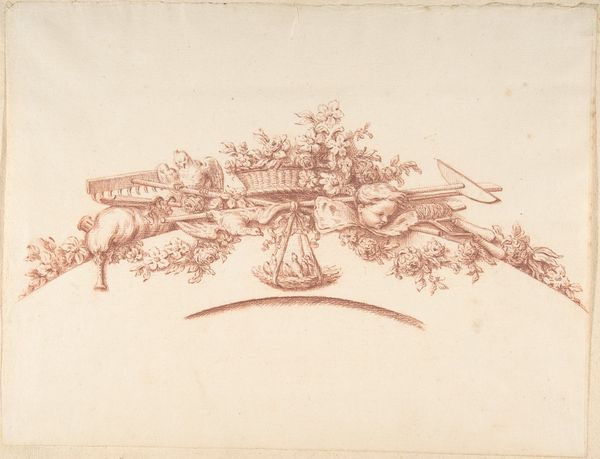
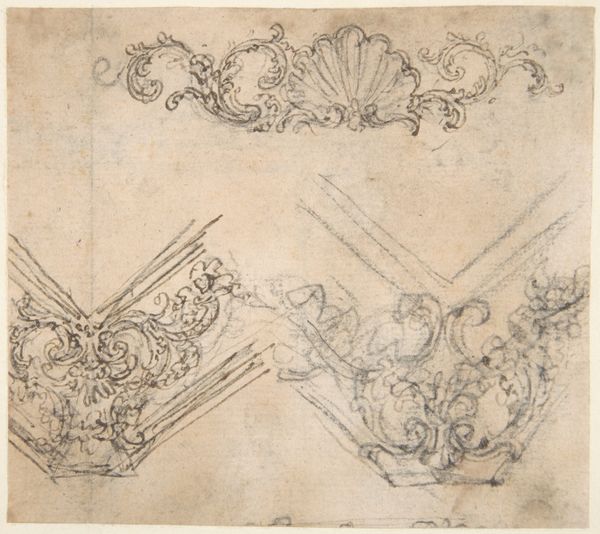
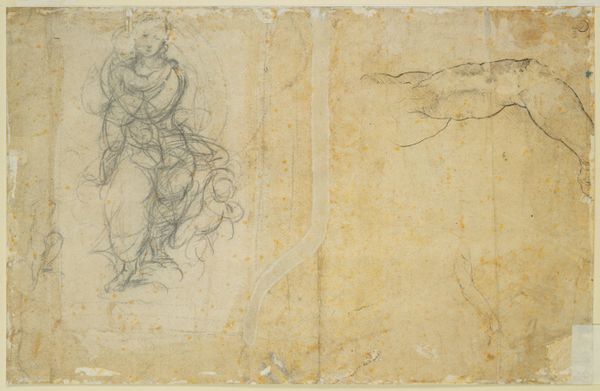
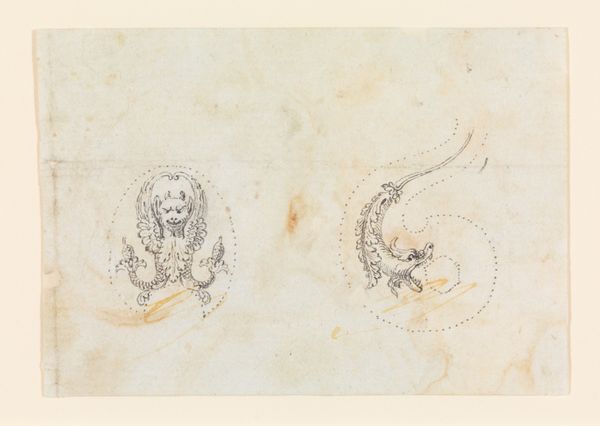
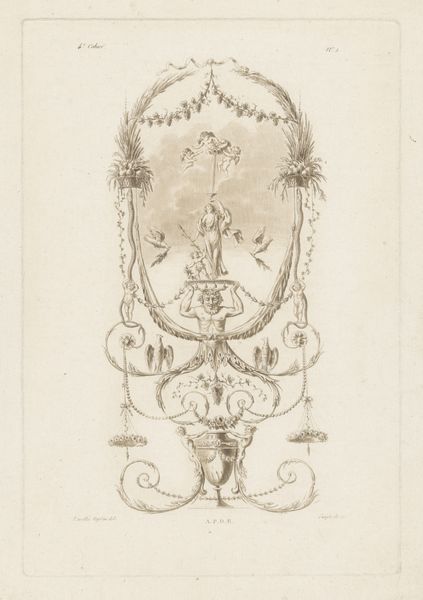
Editor: Here we have Livio Agresti’s “Design for a Salt Cellar or a Table Fountain," created sometime between 1570 and 1620. It’s a pen, ink, chalk, and pencil sketch on paper. The intricacy is stunning; the figures are both elegant and grotesque. I'm curious – how do you interpret this work within the artistic and cultural landscape of its time? Curator: Well, consider the rise of Mannerism. This drawing embodies that movement’s characteristics: elegance, distortion, and an emphasis on artifice. Think of it as a reaction against the High Renaissance. Editor: In what ways does it react against the High Renaissance? Curator: The Renaissance aimed for naturalism and harmony. Mannerism, however, prized sophisticated, even theatrical, compositions and complex allegories. The function is subverted by form, becoming less utilitarian and more symbolic. What societal forces do you think prompted this stylistic shift? Editor: Maybe it’s the Church’s influence pushing art to become more overtly symbolic rather than realistic? And with wealthy patrons demanding increasingly elaborate pieces... Curator: Precisely. And such designs showcased the patron's refinement, and their financial prowess to afford luxury items designed for pure aesthetic delight. Now, think about how the materials themselves, like the precious salt it would have held, contribute to that display of power and taste. Editor: So the art isn’t just the drawing itself but a reflection of status? I guess I’ve been looking too closely at the design and not enough at the role these objects played. Curator: Exactly! Understanding that dynamic gives this piece greater significance.
Comments
No comments
Be the first to comment and join the conversation on the ultimate creative platform.
 React
React Comment