About this artwork
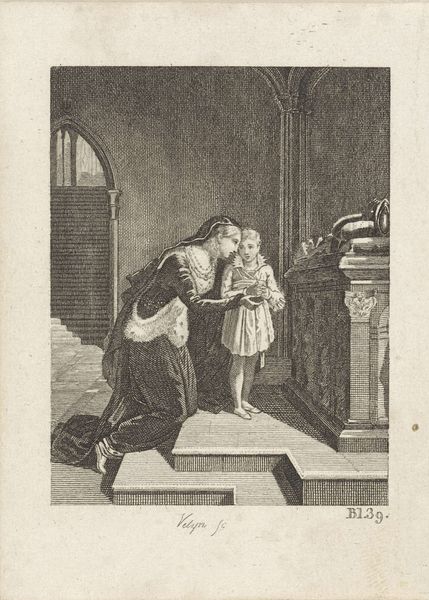
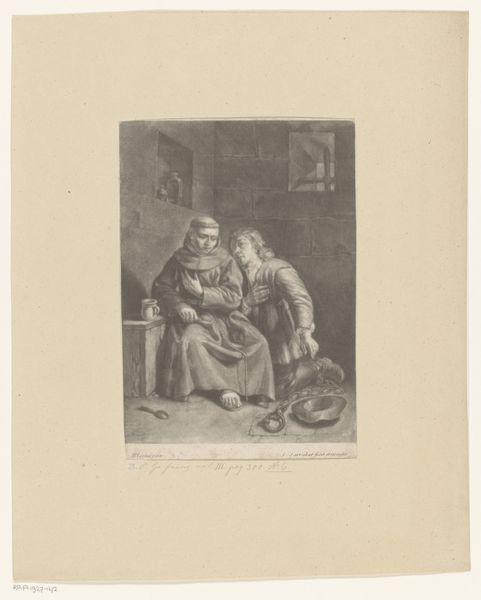
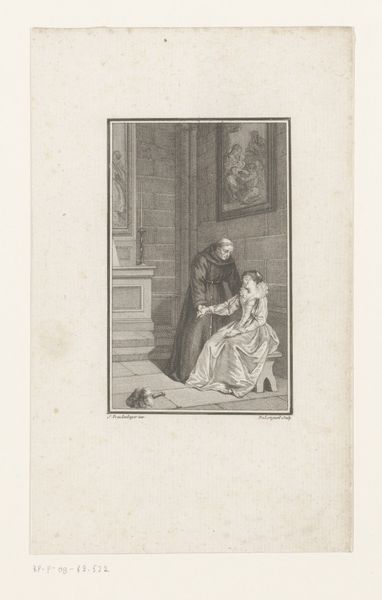
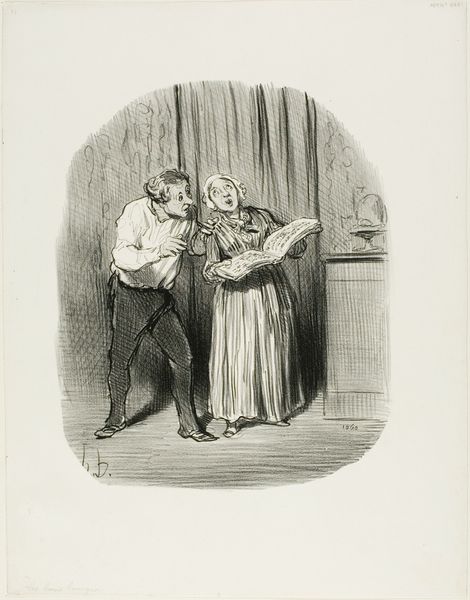
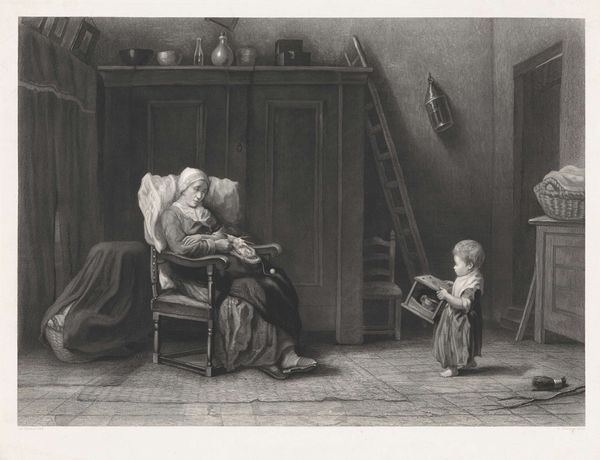
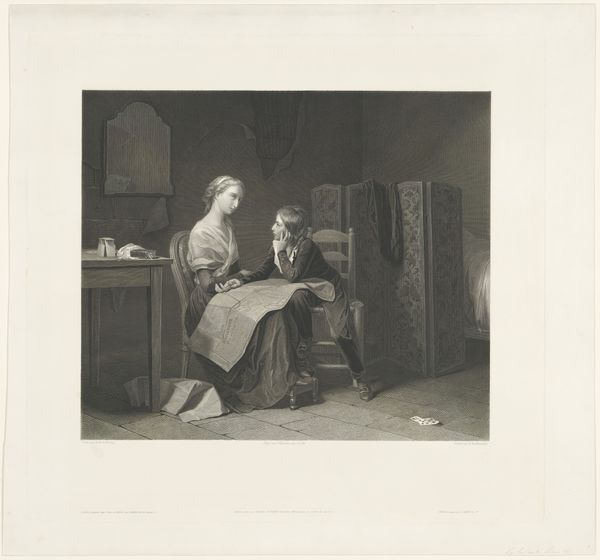
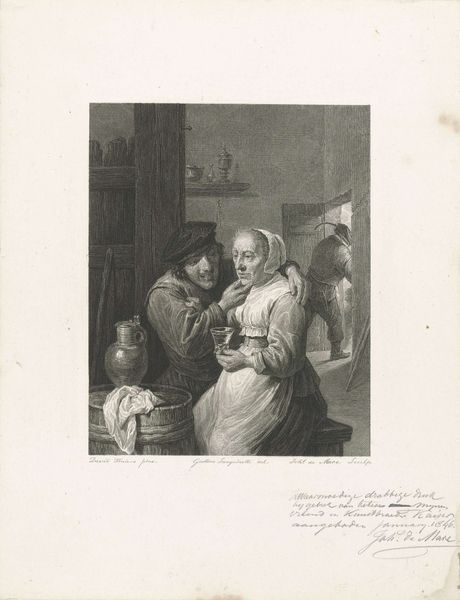
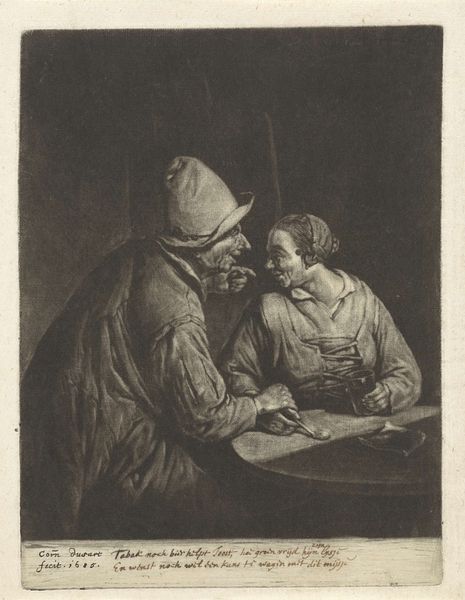
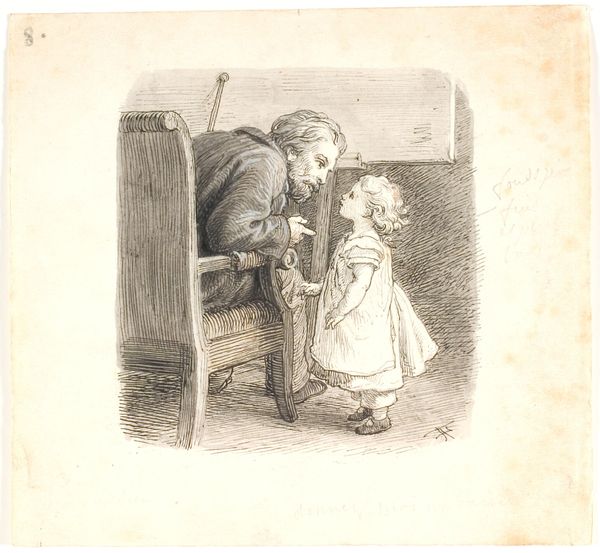
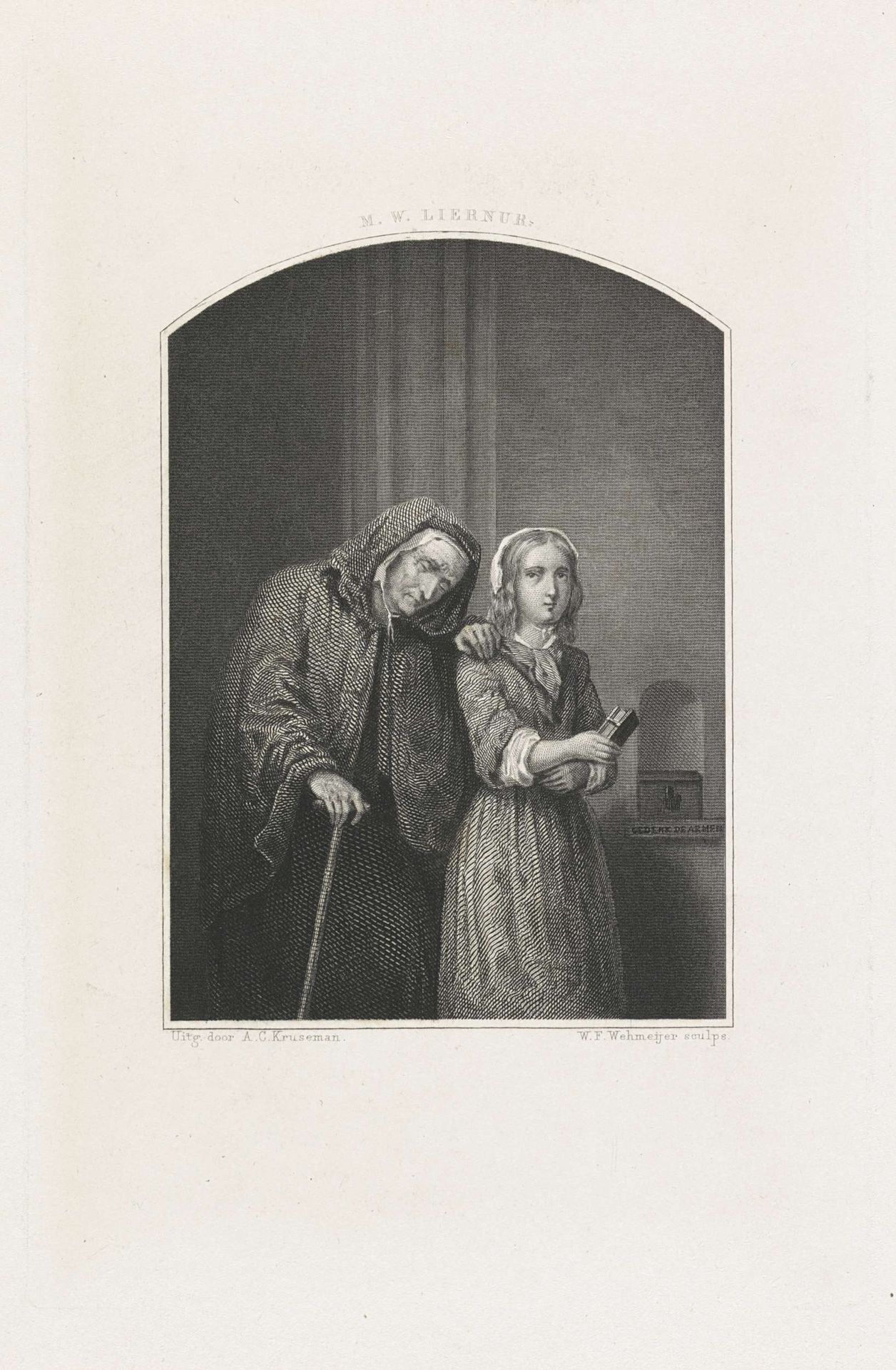
Curator: This image, "Oude vrouw leunend op een meisje," meaning "Old woman leaning on a girl," is an 1854 engraving by Willem Frederik Wehmeyer, realized in graphite. Editor: My first impression is one of weariness, yet there's a sweetness, too. The girl, seemingly so young, provides support. It's tender. Curator: It's striking how the genre scene touches upon societal norms. Wehmeyer made this print to be broadly circulated, suggesting it struck a chord culturally regarding how aging populations were viewed, their dependency. Editor: And look at the subtle symbolism! The old woman’s cane—a classical emblem of aging, reliance on support. It anchors the composition visually and suggests a lifetime of burdens now necessitating external aid. Curator: Precisely! We can read this in a context where orphanages and workhouses dominated care for the elderly. Individual responsibility towards aging relatives was being subtly promoted in this socio-political landscape. Editor: Note also the box on the wall. Is that a contribution box for charity? The artist subtly places the figures adjacent to it, nudging at public morality, the individual roles people were meant to fill in society. The iconology here is incredibly nuanced. Curator: Indeed. These images contributed to debates, reinforcing narratives while often silencing the realities of poverty, health, and opportunity within disadvantaged groups. The medium itself, inexpensive prints, democratized access but didn’t necessarily democratize the message. Editor: Thinking about visual continuity, it connects deeply to artistic renderings across centuries, exploring allegorical images of age and innocence. The pair represents broader themes, endurance through adversity and empathy through generations, which still hold power today. Curator: Ultimately, Wehmeyer’s print serves as a powerful artifact from 1854. It's about more than two figures. Editor: Agreed. The work reveals societal complexities about age and morality, reminding us that how images shaped those concepts deserves careful attention.

Artwork details
- Medium
- drawing, print, graphite, engraving
- Dimensions
- height 175 mm, width 116 mm
- Copyright
- Rijks Museum: Open Domain
Tags
Comments
Share your thoughts
About this artwork
Curator: This image, "Oude vrouw leunend op een meisje," meaning "Old woman leaning on a girl," is an 1854 engraving by Willem Frederik Wehmeyer, realized in graphite. Editor: My first impression is one of weariness, yet there's a sweetness, too. The girl, seemingly so young, provides support. It's tender. Curator: It's striking how the genre scene touches upon societal norms. Wehmeyer made this print to be broadly circulated, suggesting it struck a chord culturally regarding how aging populations were viewed, their dependency. Editor: And look at the subtle symbolism! The old woman’s cane—a classical emblem of aging, reliance on support. It anchors the composition visually and suggests a lifetime of burdens now necessitating external aid. Curator: Precisely! We can read this in a context where orphanages and workhouses dominated care for the elderly. Individual responsibility towards aging relatives was being subtly promoted in this socio-political landscape. Editor: Note also the box on the wall. Is that a contribution box for charity? The artist subtly places the figures adjacent to it, nudging at public morality, the individual roles people were meant to fill in society. The iconology here is incredibly nuanced. Curator: Indeed. These images contributed to debates, reinforcing narratives while often silencing the realities of poverty, health, and opportunity within disadvantaged groups. The medium itself, inexpensive prints, democratized access but didn’t necessarily democratize the message. Editor: Thinking about visual continuity, it connects deeply to artistic renderings across centuries, exploring allegorical images of age and innocence. The pair represents broader themes, endurance through adversity and empathy through generations, which still hold power today. Curator: Ultimately, Wehmeyer’s print serves as a powerful artifact from 1854. It's about more than two figures. Editor: Agreed. The work reveals societal complexities about age and morality, reminding us that how images shaped those concepts deserves careful attention.
Comments
Share your thoughts