engraving
#
baroque
#
old engraving style
#
genre-painting
#
engraving
#
erotic-art
Dimensions: height 195 mm, width 156 mm
Copyright: Rijks Museum: Open Domain
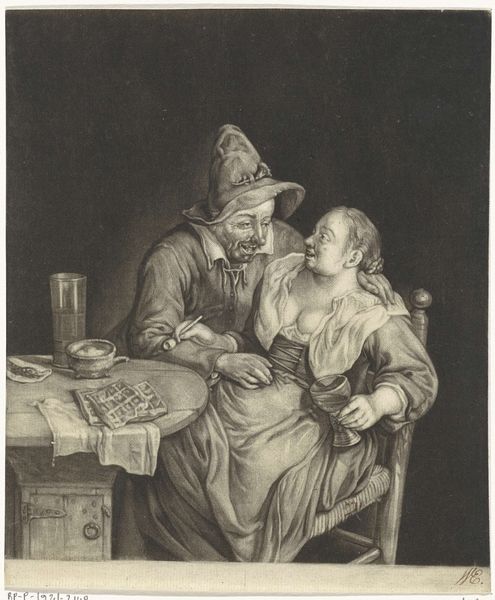
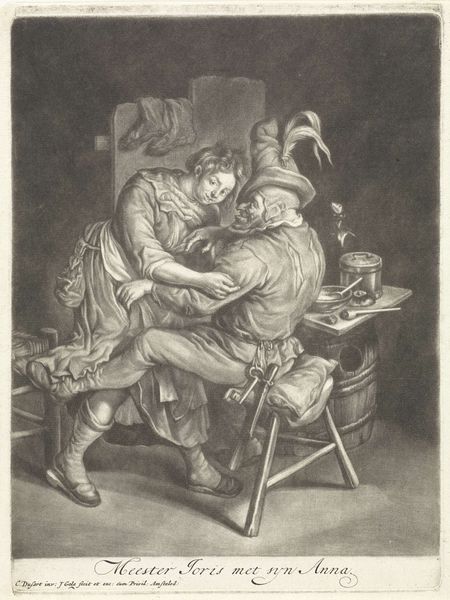
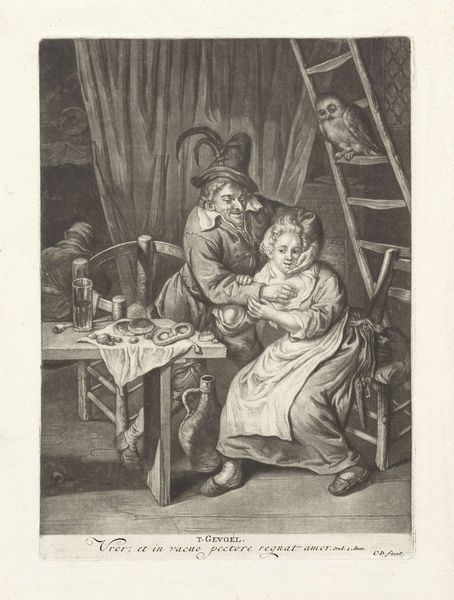
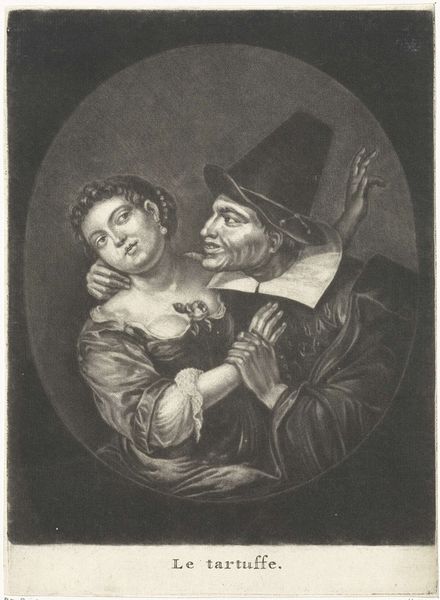
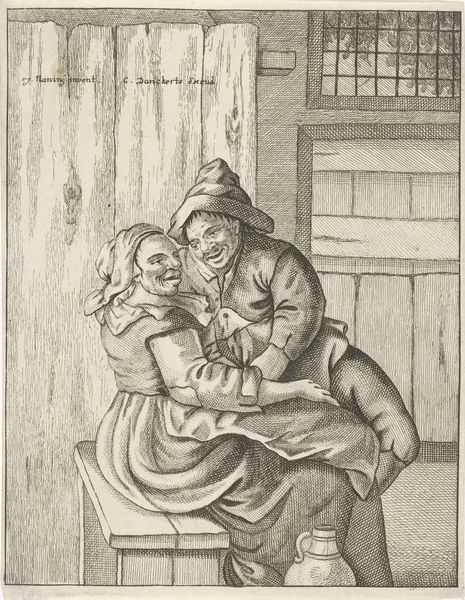
Cornelis Dusart etched this piece called "Monnik betast een vrouw" which shows a monk groping a woman, both laughing, in a circular frame. The rosary hanging from the monk's waist is a striking symbol, meant for prayer and devotion, now perverted into a tool of mockery. This inversion, a sacred object used in profane jest, echoes through time. Think of the medieval Feast of Fools, where church rituals were parodied, or the Renaissance Carnival, where social hierarchies were temporarily upended. Here, the laughter itself becomes a conduit, a primal release of societal tensions. Notice how the image plays on the subconscious, using humor to confront deep-seated anxieties about power, morality, and human desire. The act of laughter serves as both a release and a form of social commentary, a recurring motif in the theater of human life. The symbol, much like human nature, is in constant flux, forever caught in the cyclical dance of transgression and renewal.
Comments
No comments
Be the first to comment and join the conversation on the ultimate creative platform.
 Collect
 React
React Comment
More like this