About this artwork
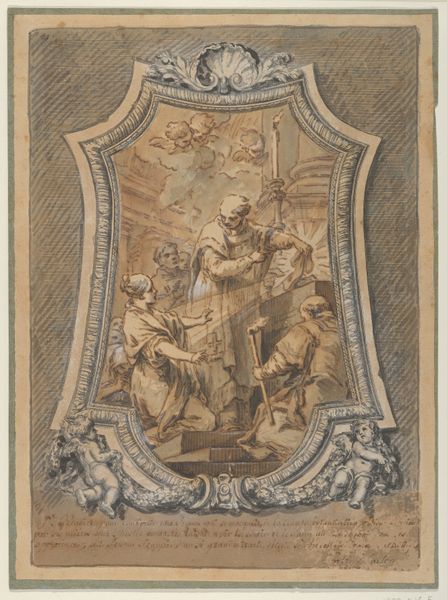
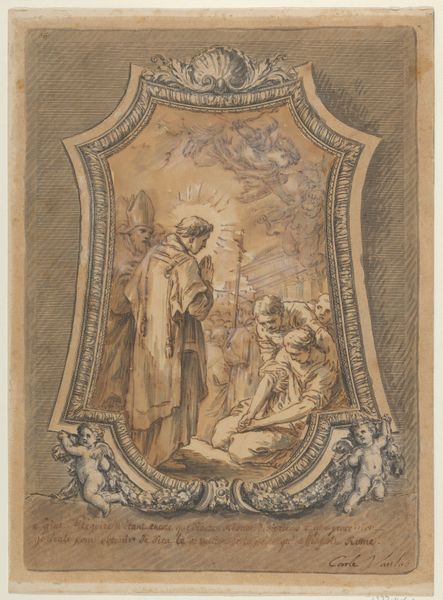
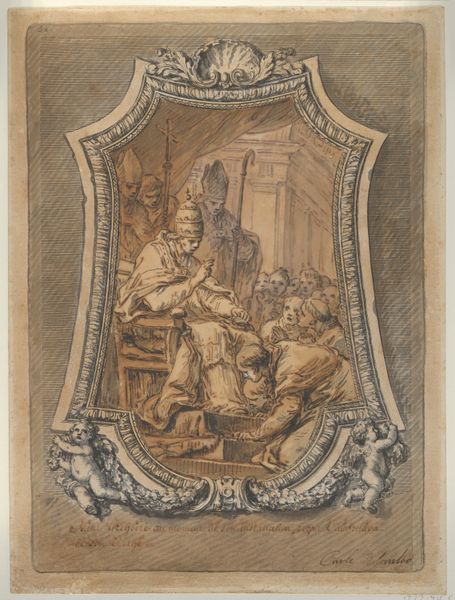
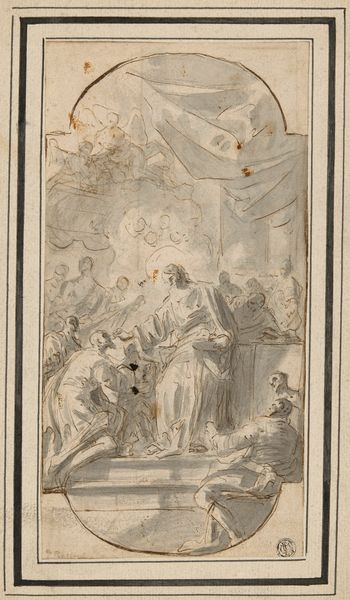
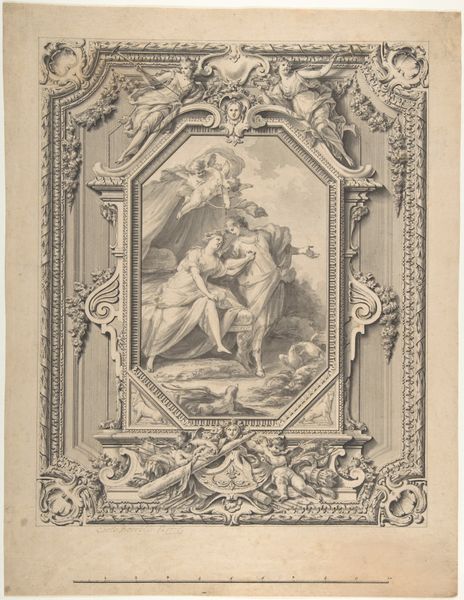
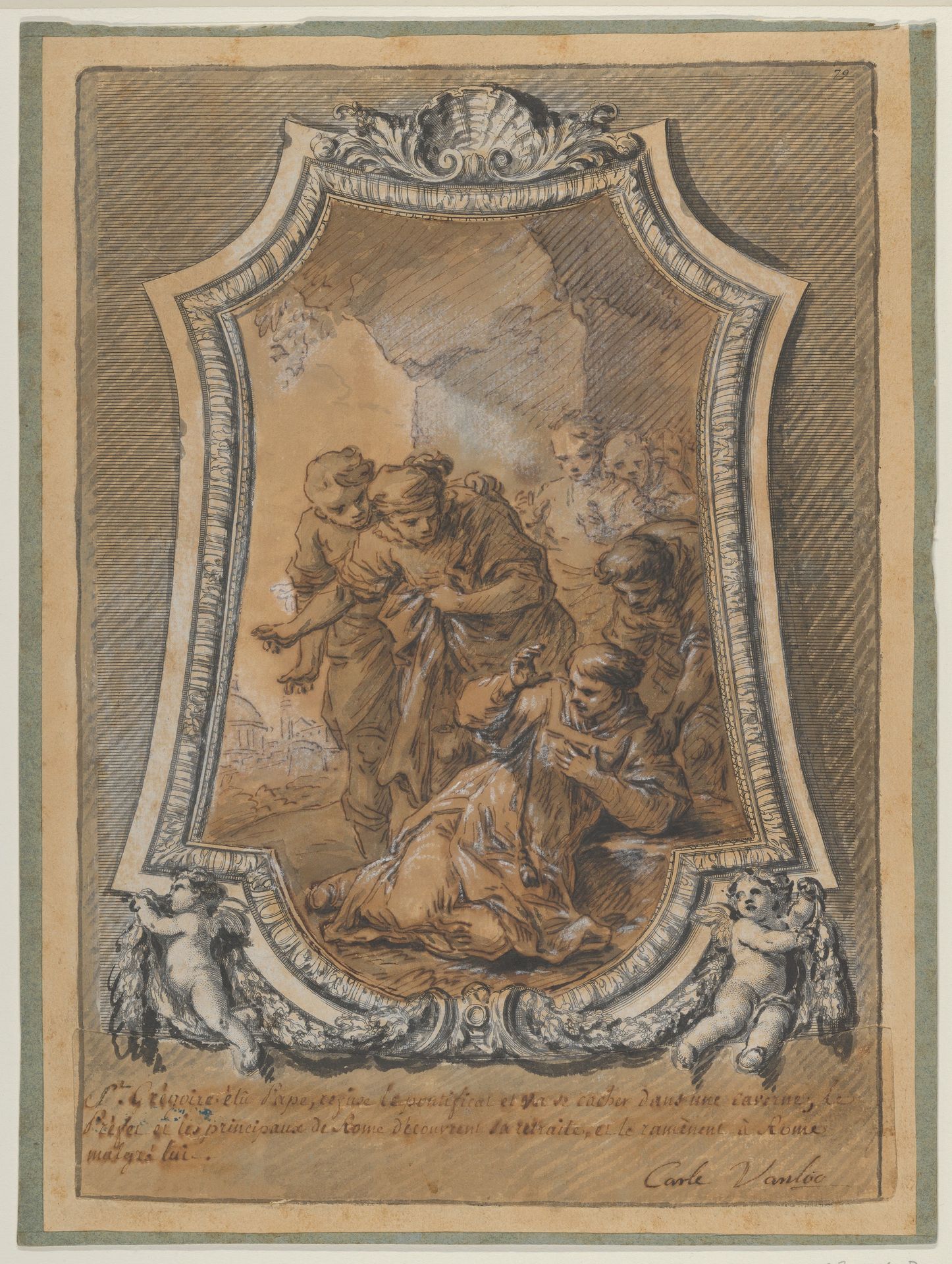
Carle Vanloo created "St. Gregory Reluctant to Accept His Election as Bishop of Rome" using pen and brown ink with gray wash, heightened with white gouache. Notice how the composition is built around a central, shield-like frame that encloses the narrative. The limited color palette creates a tonal unity, drawing our eye to the interplay of light and shadow that models the figures. This creates depth, emphasizing the drama of the moment as St. Gregory resists his elevation. Vanloo uses the visual structure of the drawing to explore power and reluctance. The architectural frame, adorned with cherubs, gives way to a scene of human emotion. Gregory’s resistance isn’t just a personal act, but a challenge to the very structure of authority. The scene creates a semiotic system where gestures and expressions convey complex meanings about duty, humility, and power, challenging fixed interpretations of religious authority. The drawing’s formal qualities—the contrast of light and shadow, the dynamic composition—function as part of a larger cultural and philosophical discourse, showing how art can question established values.
St. Gregory Reluctant to Accept His Election as Bishop of Rome
1715 - 1765

Carle (Charles André) Vanloo
1705 - 1765
The Metropolitan Museum of Art
Metropolitan Museum of Art, New York, NYArtwork details
- Medium
- drawing, tempera, painting, print, watercolor
- Dimensions
- 7 5/8 x 5 1/2 in. (19.4 x 13.9 cm)
- Location
- Metropolitan Museum of Art, New York, NY
- Copyright
- Public Domain
Tags
Comments
Share your thoughts
About this artwork
Carle Vanloo created "St. Gregory Reluctant to Accept His Election as Bishop of Rome" using pen and brown ink with gray wash, heightened with white gouache. Notice how the composition is built around a central, shield-like frame that encloses the narrative. The limited color palette creates a tonal unity, drawing our eye to the interplay of light and shadow that models the figures. This creates depth, emphasizing the drama of the moment as St. Gregory resists his elevation. Vanloo uses the visual structure of the drawing to explore power and reluctance. The architectural frame, adorned with cherubs, gives way to a scene of human emotion. Gregory’s resistance isn’t just a personal act, but a challenge to the very structure of authority. The scene creates a semiotic system where gestures and expressions convey complex meanings about duty, humility, and power, challenging fixed interpretations of religious authority. The drawing’s formal qualities—the contrast of light and shadow, the dynamic composition—function as part of a larger cultural and philosophical discourse, showing how art can question established values.
Comments
Share your thoughts