About this artwork
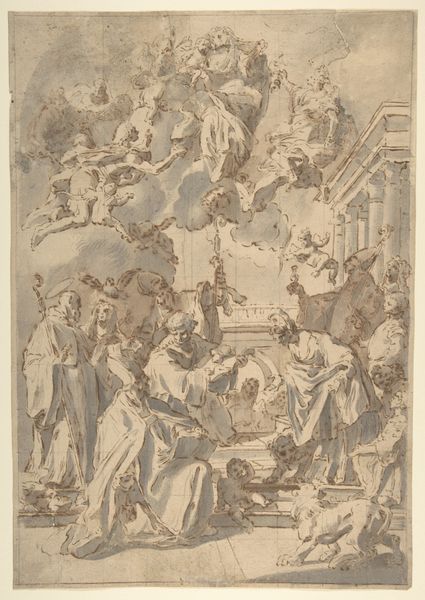
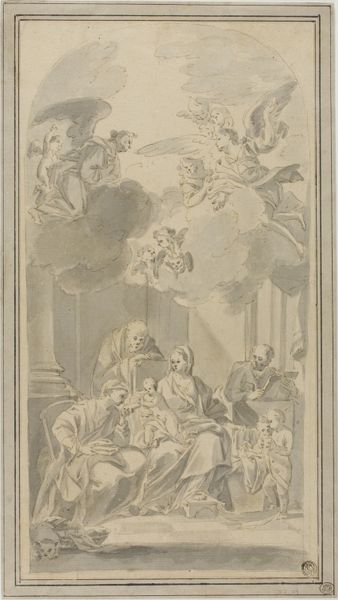
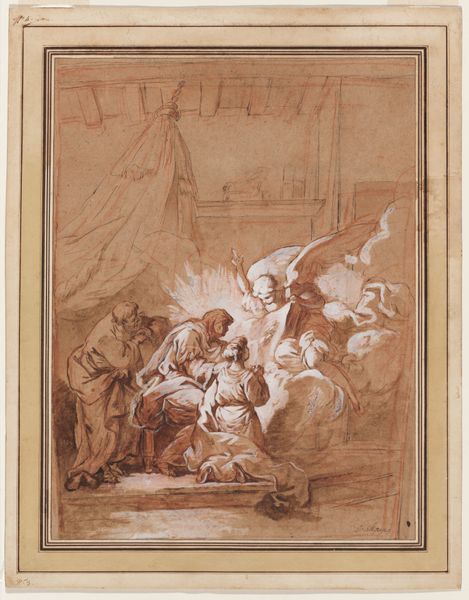
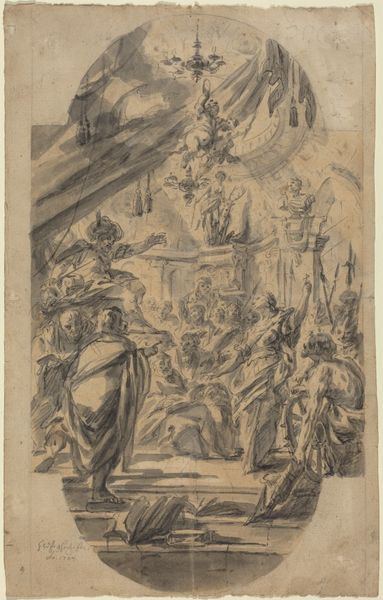
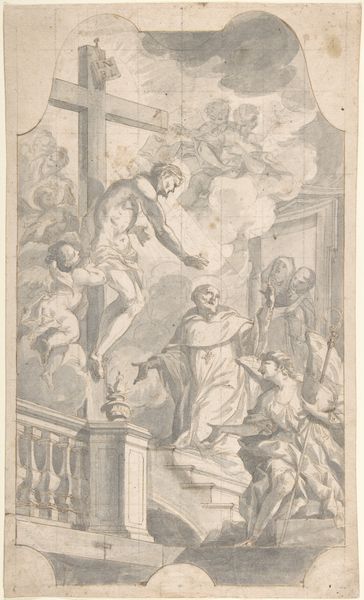
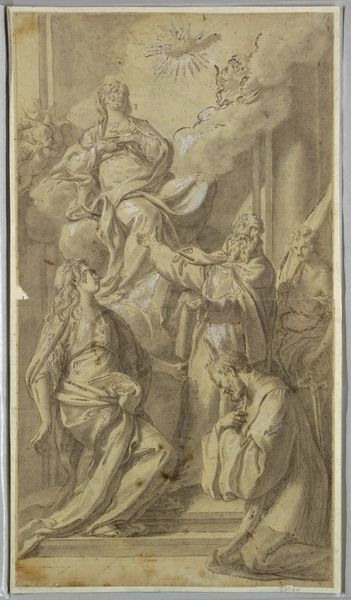
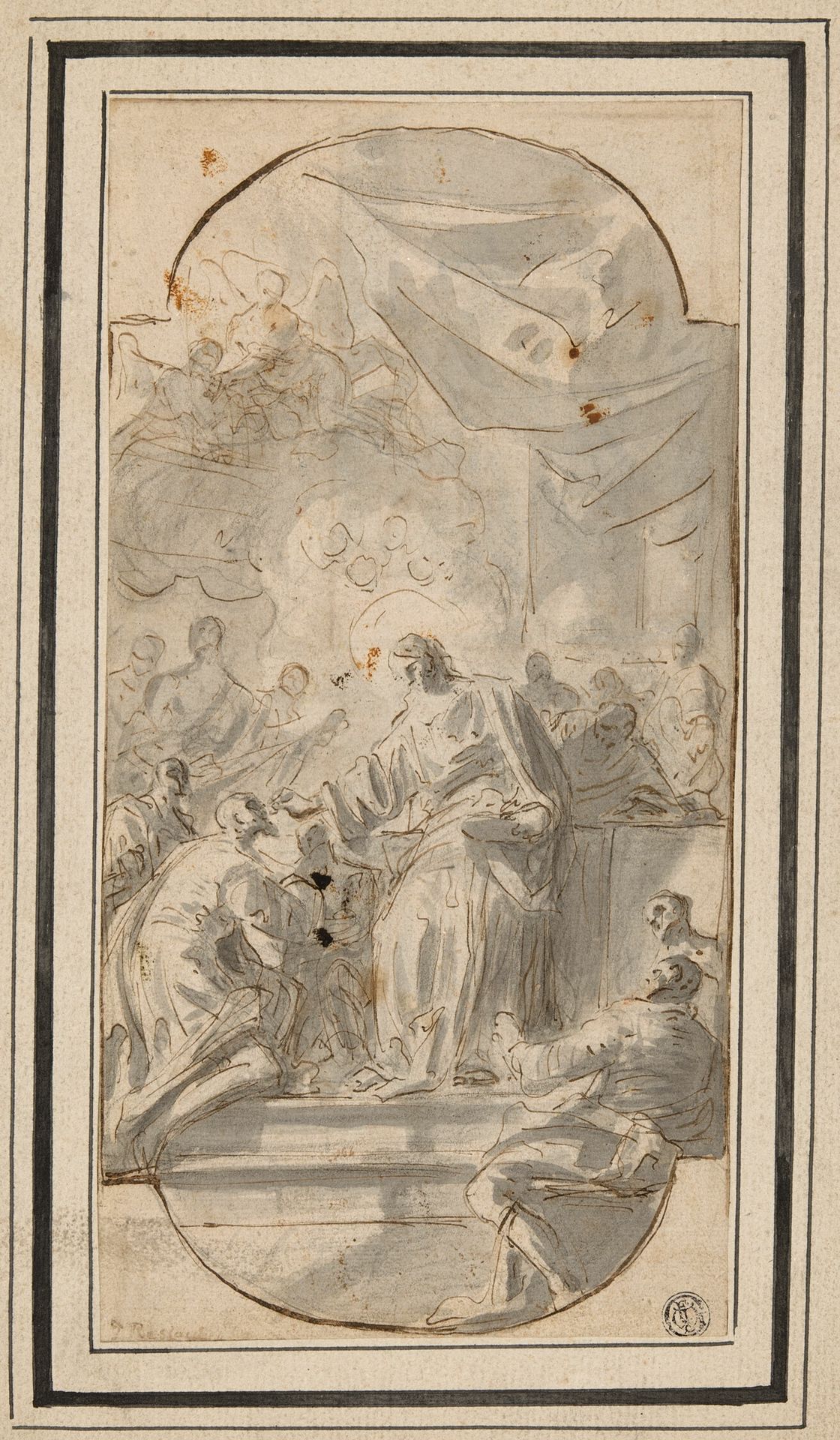
This drawing, Christ Giving Communion, was made by Domenico Mondo sometime in the 18th century using pen and brown ink with gray wash over graphite. Mondo was working during a period in which the Catholic Church wielded enormous power, both spiritually and politically, throughout Italy. In this sketch, Mondo depicts a scene of holy communion. Christ stands at the center, administering the Eucharist, an important rite symbolizing spiritual nourishment and unity with God. Notice the expressions of reverence and devotion of the surrounding figures. The act of communion has historically been a complex site of inclusion and exclusion, reflecting societal hierarchies and power dynamics. Mondo’s depiction reinforces the spiritual authority of the church, yet it also evokes the personal and intimate experience of faith. This work invites us to reflect on how religious rituals shape both individual identity, and collective belonging.
Christ Giving Communion (The Institution of the Eucharist)
n.d.


Artwork details
- Medium
- drawing, print, paper, ink, chalk
- Dimensions
- 265 × 134 mm
- Location
- The Art Institute of Chicago
- Copyright
- Public Domain
Tags
Comments
Share your thoughts
About this artwork
This drawing, Christ Giving Communion, was made by Domenico Mondo sometime in the 18th century using pen and brown ink with gray wash over graphite. Mondo was working during a period in which the Catholic Church wielded enormous power, both spiritually and politically, throughout Italy. In this sketch, Mondo depicts a scene of holy communion. Christ stands at the center, administering the Eucharist, an important rite symbolizing spiritual nourishment and unity with God. Notice the expressions of reverence and devotion of the surrounding figures. The act of communion has historically been a complex site of inclusion and exclusion, reflecting societal hierarchies and power dynamics. Mondo’s depiction reinforces the spiritual authority of the church, yet it also evokes the personal and intimate experience of faith. This work invites us to reflect on how religious rituals shape both individual identity, and collective belonging.
Comments
Share your thoughts