painting
#
fantasy art
#
painting
#
fantasy illustration
#
landscape
#
fantasy-art
#
figuration
#
expressionist
Copyright: Jahar Dasgupta,Fair Use
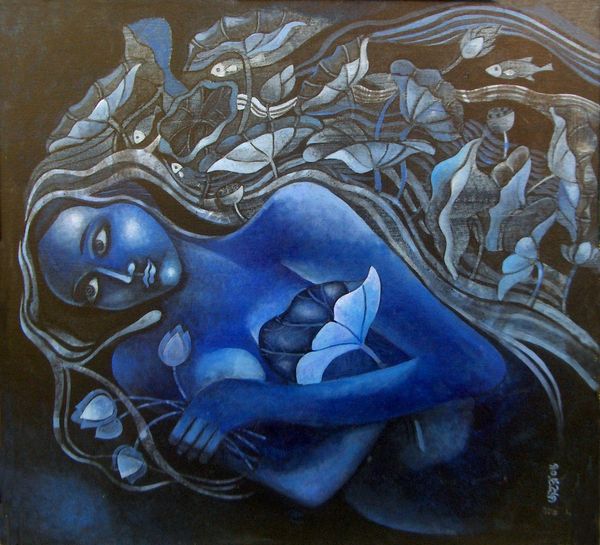
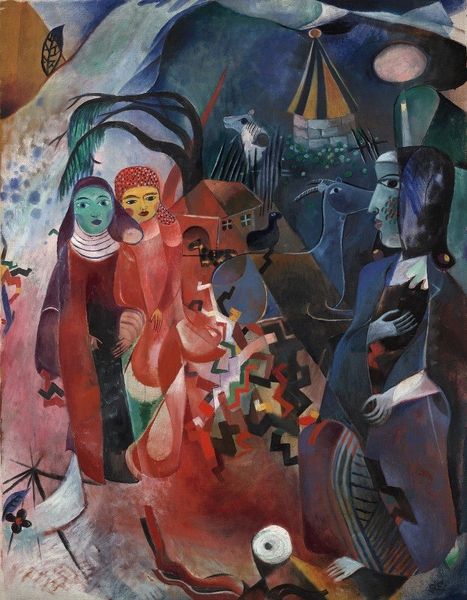
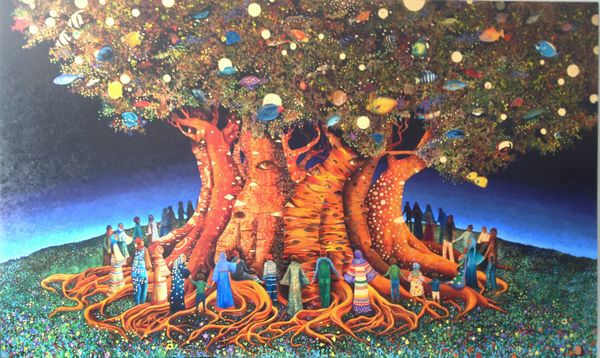
Editor: We’re looking at “Krishnalila I,” a painting by Jahar Dasgupta. While the date is not available, the style is suggestive of fantasy art executed using what seems to be traditional painting techniques. The blue figures set against that darker ground feel otherworldly. How should we approach interpreting this? Curator: Focusing on the material aspects is crucial. The artist's choice to represent figures using a non-naturalistic pigment demands scrutiny. It begs the question, what cultural resources were available that allow him to choose blue pigment, and does that cultural context then lend meaning to the figures being portrayed as blue? Consider the commercial accessibility and use of ultramarine, lapis lazuli or even synthetic pigments in India, and how that impacts our interpretation. Editor: So the availability of blue pigment informs our understanding? It shifts the focus from pure artistic expression to the material conditions enabling that expression. Curator: Precisely. And the very act of painting. This wasn’t, I’m guessing, digital painting. Look at the labor invested – the time to apply layers, blend colors, build up the composition. Think of this against a backdrop of post-colonial Indian art; are they adopting western oil painting or re-interpreting materials found more locally? Is it craft, fine art, or a deliberate hybridity? Editor: I see. So, understanding the historical and geographical context, especially concerning the availability and trade of materials, gives us deeper insights into its meaning. Curator: It decenters the “genius” artist and re-centers the network of material production and distribution that the artist engaged in. It changes how we understand artistic creativity, no? Editor: Absolutely. Considering art this way creates more questions, and reveals a deeper richness through material, making and labor. Curator: Indeed.
Comments
No comments
Be the first to comment and join the conversation on the ultimate creative platform.
 Collect
 React
React Comment
More like this