1859 - 1861
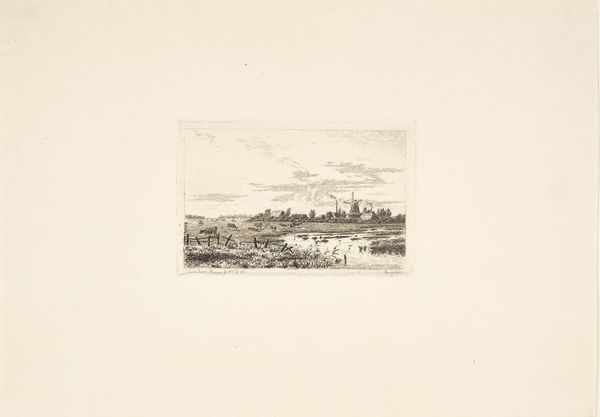
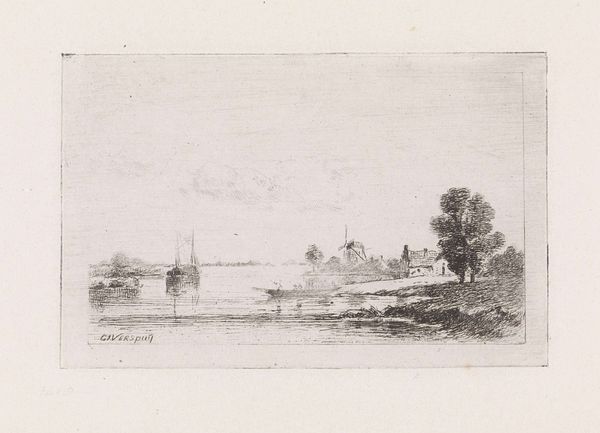
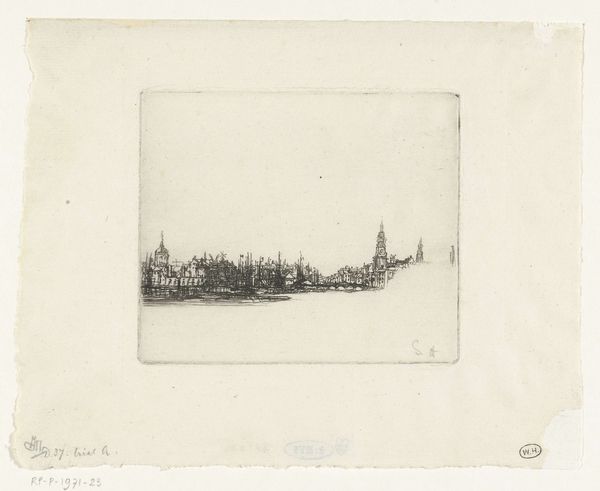
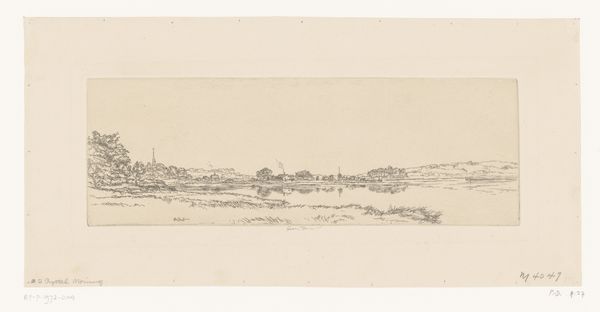
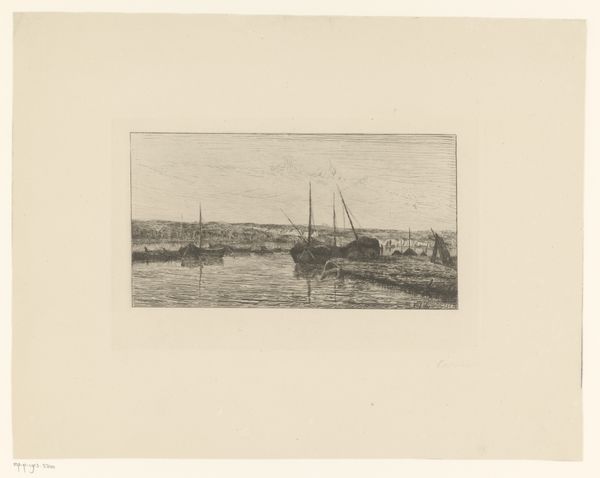
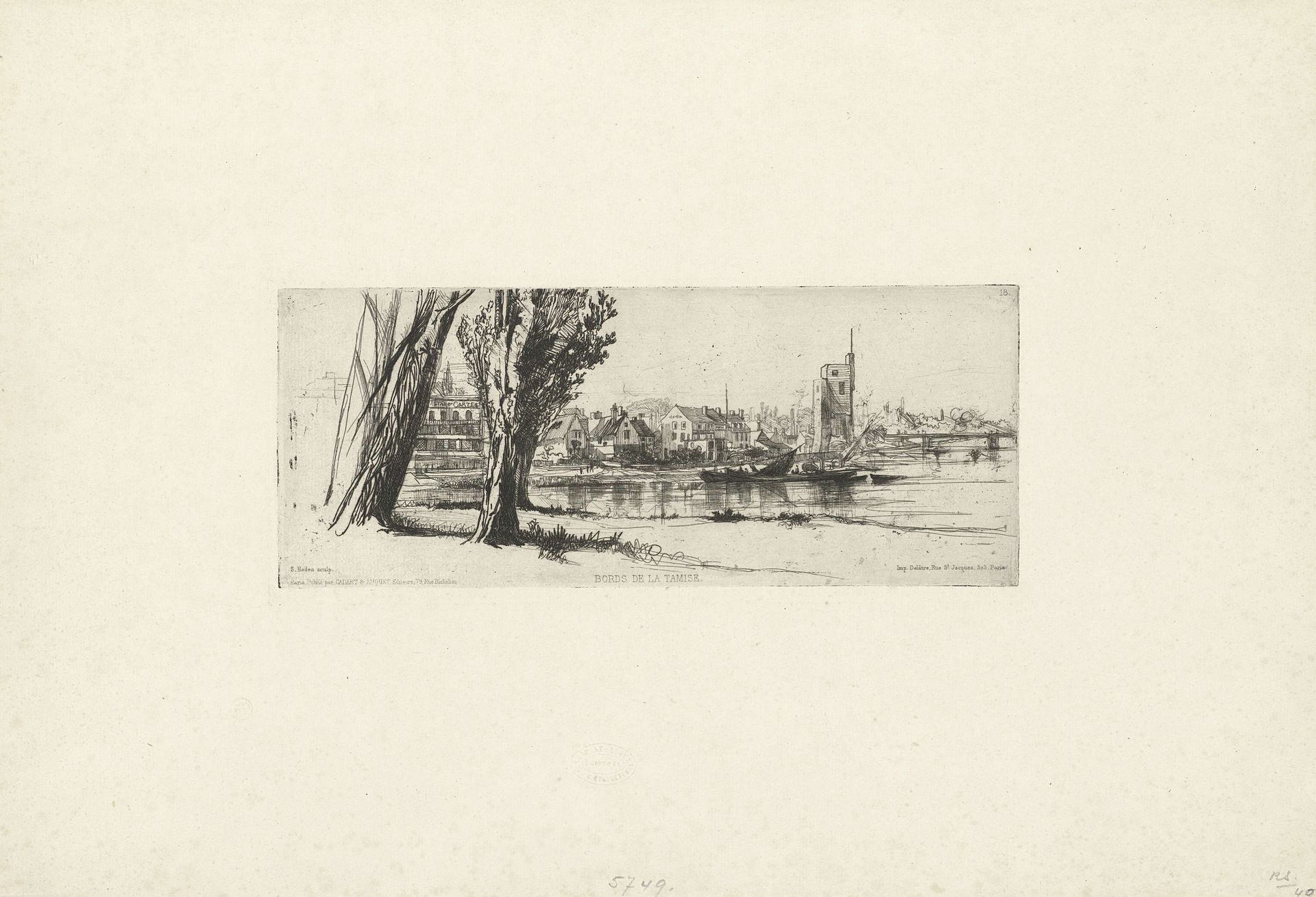
Oever van de Theems bij Fulham

Sir Francis Seymour Haden
1818 - 1910Location
RijksmuseumListen to curator's interpretation
Curatorial notes
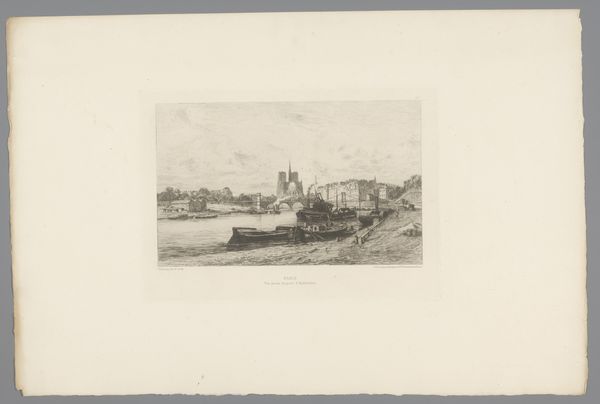
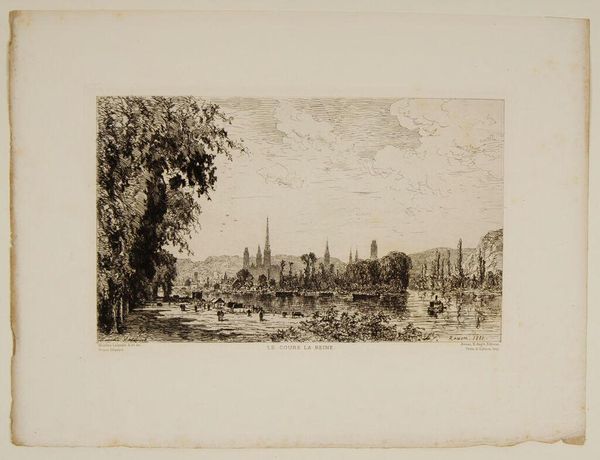
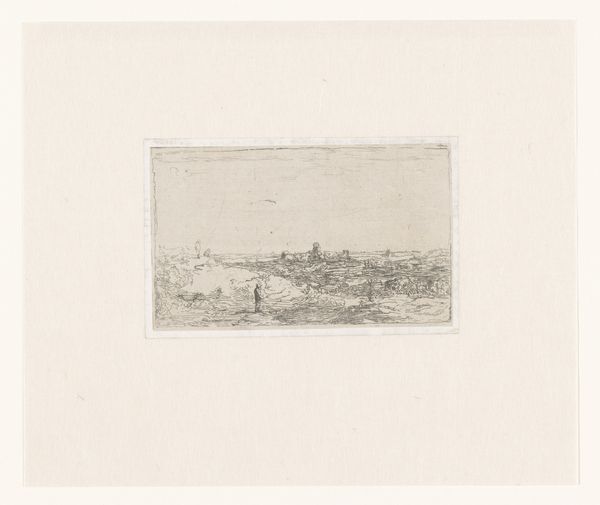
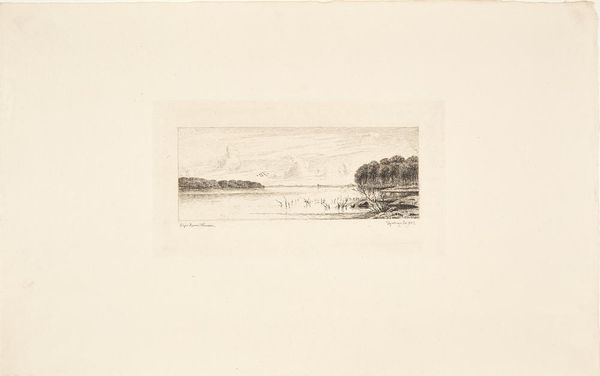
Sir Francis Seymour Haden created this etching of the bank of the Thames near Fulham, likely during the late 19th century. It's a scene of everyday life, but also reveals a subtle critique of industrialization. Haden, a surgeon by profession, was deeply involved in the etching revival movement in Britain, advocating for etching as an original art form rather than just a reproductive medium. Notice how the scene captures the quiet industry along the river, with boats and buildings coexisting with nature. The church tower in the background stands as a landmark, but the factories signal the changing face of England. Haden’s choice to depict this scene invites us to reflect on the impact of industrial progress on the landscape and the quality of life. Was he celebrating this change, or mourning a lost pastoral ideal? To understand Haden's view, we might turn to period writings on urban development and environmental concerns. What was the public role of art in a time of social change?