About this artwork
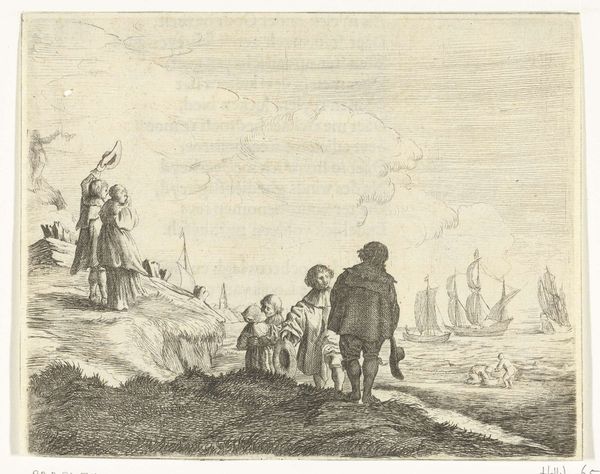
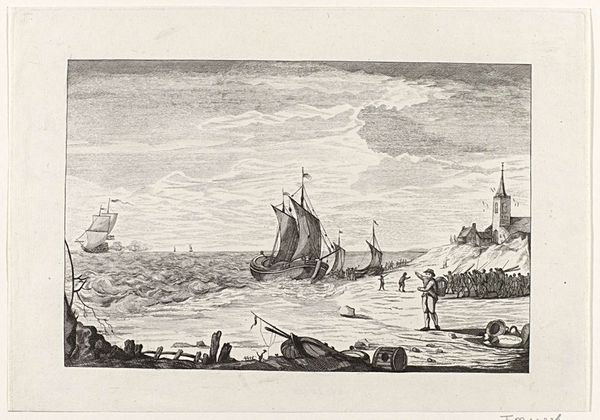
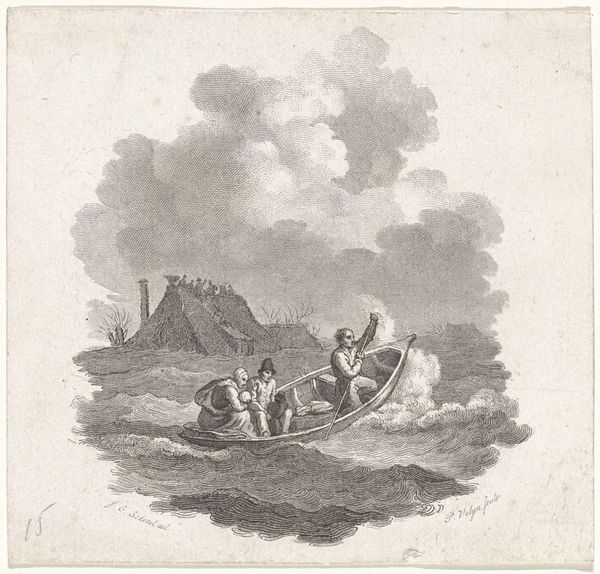
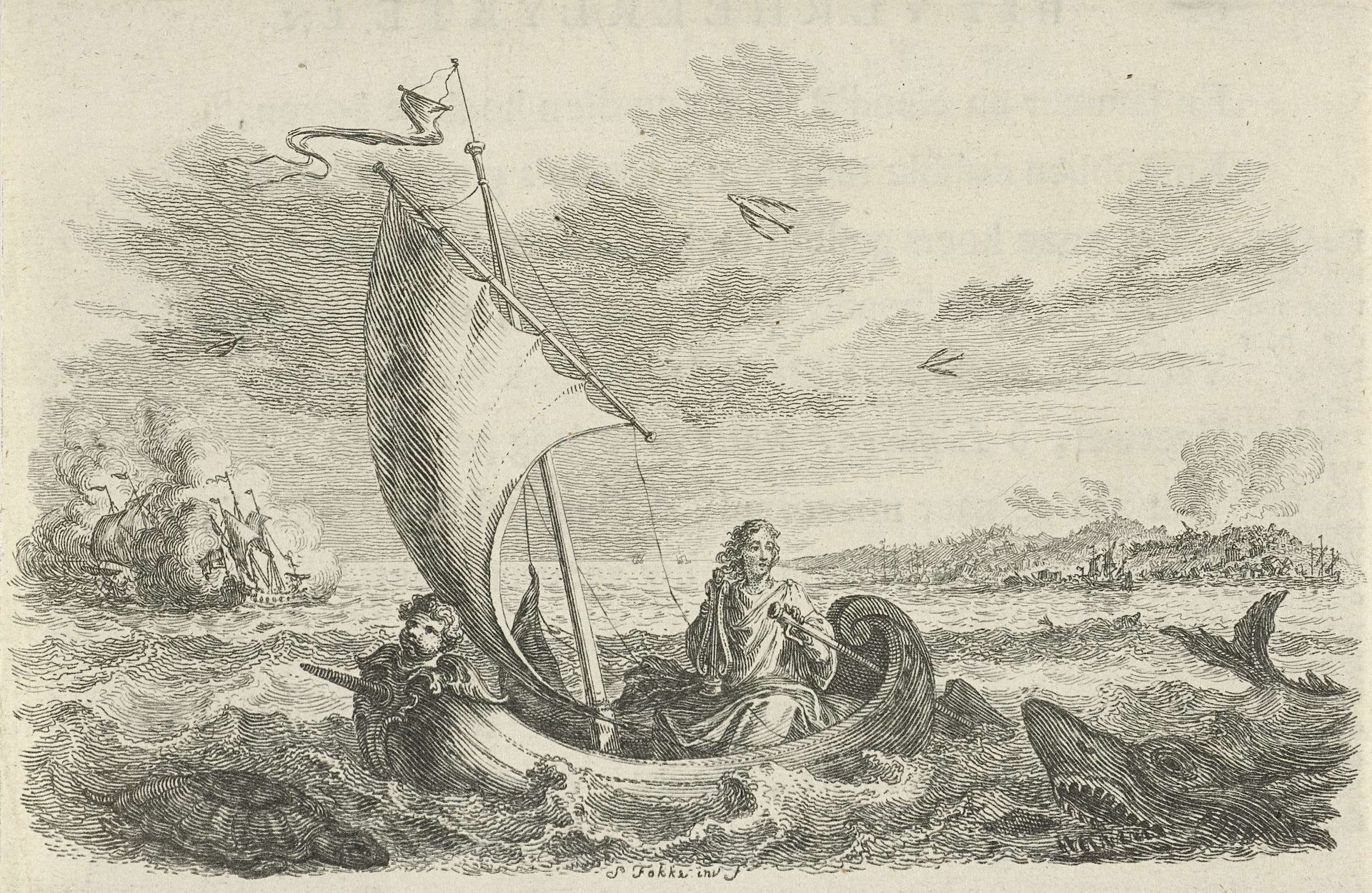
Curator: This engraving, attributed to Simon Fokke and dating somewhere between 1722 and 1782, is called "Jongeman in een zeilboot," or "Young Man in a Sailboat." It resides here at the Rijksmuseum. Editor: It’s immediately striking; chaotic yet strangely calm at the same time. Look at that finely wrought texture! The waves especially feel so raw and real, achieved purely through line work. Curator: Indeed. This image likely served as an illustration within a larger publication. Fokke was quite active in Amsterdam's print culture. Considering that prints facilitated the dissemination of information and ideas to a broad audience, we should consider how this imagery, particularly during the Enlightenment, contributed to shaping public opinion and societal norms. Editor: The engraving process itself tells a story of meticulous labor. You see the distinct marks and controlled cuts made with the engraver's tool—evidence of the printmaker's hand, crucial to its replication and accessibility. It would be interesting to compare the types of papers used for printing it, and where the papers themselves were manufactured. Curator: The details do prompt many avenues for interpretation. A closer look reveals not just the young man but other figures and vessels amidst naval warfare. Perhaps this is a genre painting, intended as entertainment but also reflecting the prevalent maritime power of the Dutch Republic? It would also be important to place this image alongside similar prints from that period. Editor: Absolutely. It’s hard to ignore how material considerations intertwine with social narrative. The relatively affordable cost of prints at this scale democratized access to art. How often did such prints then end up circulating around studios? What other practical purposes did it serve beyond pure aesthetics? Curator: A productive reflection that shifts the discourse toward its agency within eighteenth-century culture! By exploring its accessibility and usage, we unveil some hidden aspects of the artistic creation. Editor: Exactly. Hopefully, we can uncover what other latent qualities await discovery when viewed through the lens of its very fabrication.

Artwork details
- Medium
- drawing, print, engraving
- Dimensions
- height 92 mm, width 140 mm
- Location
- Rijksmuseum
- Copyright
- Rijks Museum: Open Domain
Tags
Comments
Share your thoughts
About this artwork
Curator: This engraving, attributed to Simon Fokke and dating somewhere between 1722 and 1782, is called "Jongeman in een zeilboot," or "Young Man in a Sailboat." It resides here at the Rijksmuseum. Editor: It’s immediately striking; chaotic yet strangely calm at the same time. Look at that finely wrought texture! The waves especially feel so raw and real, achieved purely through line work. Curator: Indeed. This image likely served as an illustration within a larger publication. Fokke was quite active in Amsterdam's print culture. Considering that prints facilitated the dissemination of information and ideas to a broad audience, we should consider how this imagery, particularly during the Enlightenment, contributed to shaping public opinion and societal norms. Editor: The engraving process itself tells a story of meticulous labor. You see the distinct marks and controlled cuts made with the engraver's tool—evidence of the printmaker's hand, crucial to its replication and accessibility. It would be interesting to compare the types of papers used for printing it, and where the papers themselves were manufactured. Curator: The details do prompt many avenues for interpretation. A closer look reveals not just the young man but other figures and vessels amidst naval warfare. Perhaps this is a genre painting, intended as entertainment but also reflecting the prevalent maritime power of the Dutch Republic? It would also be important to place this image alongside similar prints from that period. Editor: Absolutely. It’s hard to ignore how material considerations intertwine with social narrative. The relatively affordable cost of prints at this scale democratized access to art. How often did such prints then end up circulating around studios? What other practical purposes did it serve beyond pure aesthetics? Curator: A productive reflection that shifts the discourse toward its agency within eighteenth-century culture! By exploring its accessibility and usage, we unveil some hidden aspects of the artistic creation. Editor: Exactly. Hopefully, we can uncover what other latent qualities await discovery when viewed through the lens of its very fabrication.
Comments
Share your thoughts