1897
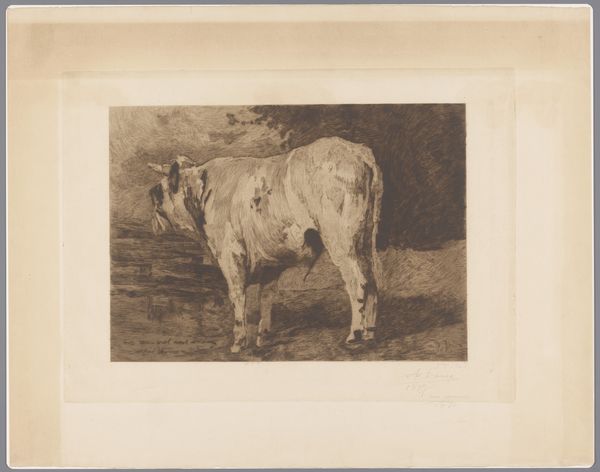
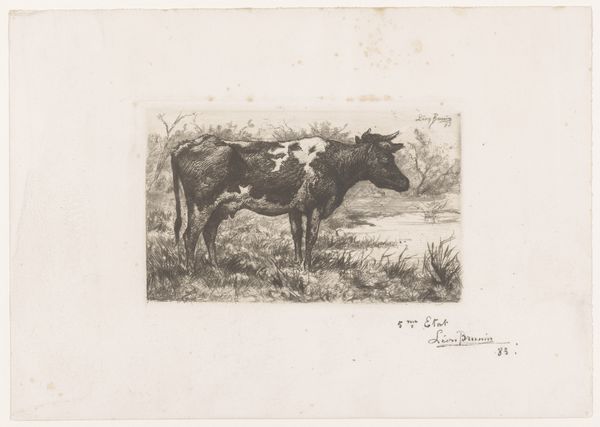
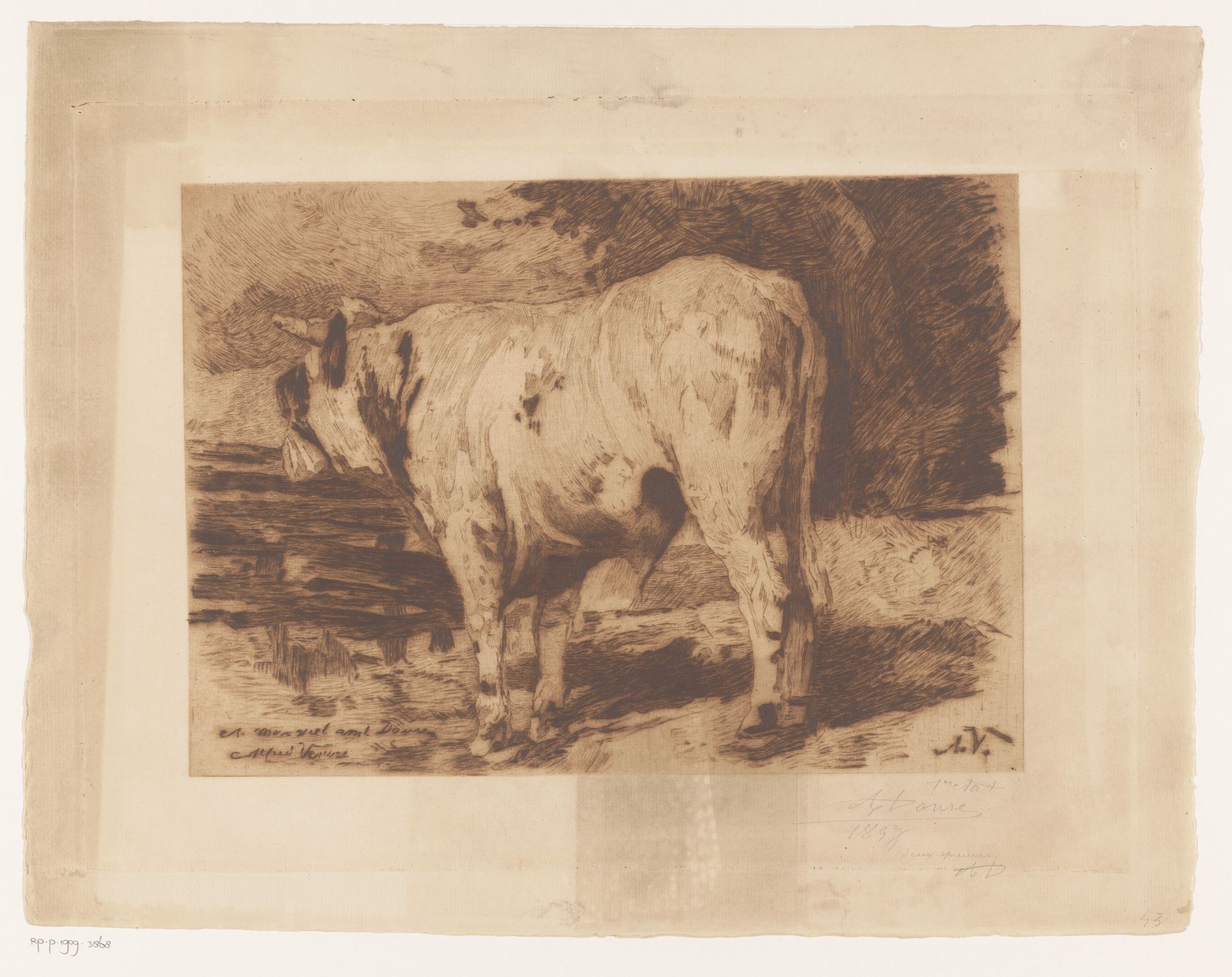
Stier in de wei

Auguste Danse
1829 - 1929Location
RijksmuseumListen to curator's interpretation
Curatorial notes
Auguste Danse's 'Stier in de wei' captures the essence of bovine strength and serenity through the fine lines of etching. The bull, a symbol deeply rooted in human history, represents fertility, power, and primal energy. Consider the ancient Minoan bull-leaping rituals or the Egyptian Apis bull, a deity embodying virility and kingship. Even in modern finance, the bull signifies a rising market. However, here, the bull stands placidly, its bell silent, a stark contrast to the frenzied energy often associated with this symbol. This tranquility is perhaps a reflection of a collective yearning for pastoral simplicity, a respite from the burgeoning industrial age. The bull, throughout time, has been reimagined—a testament to its enduring resonance in our cultural subconscious. The image speaks to the cyclical nature of symbols, how they resurface, evolve, and take on new meanings, perpetually engaging us on a primal level.