About this artwork
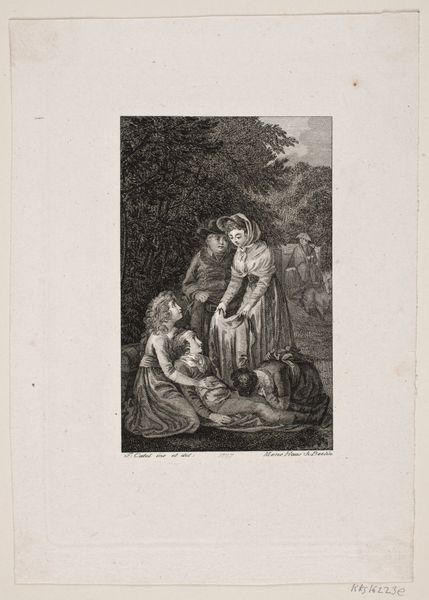
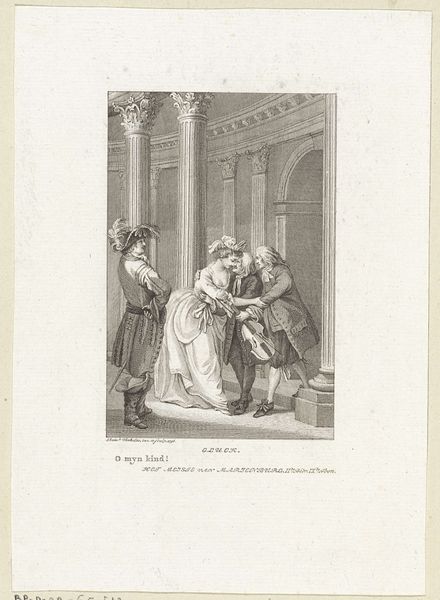
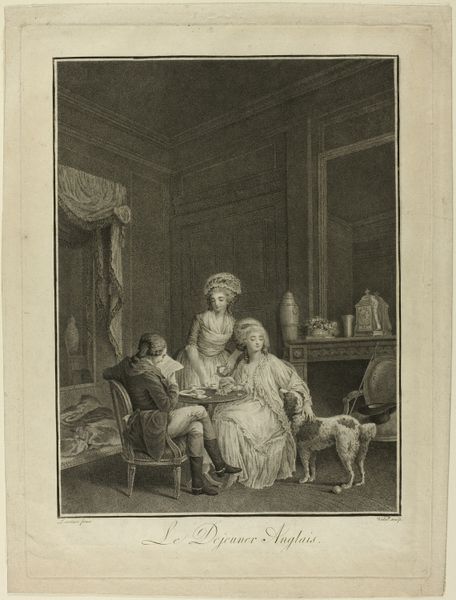
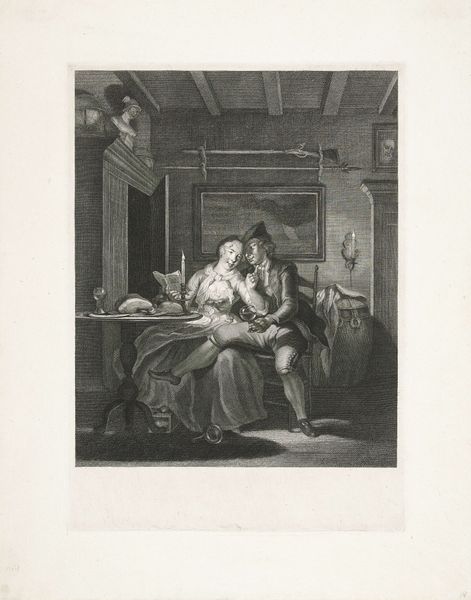
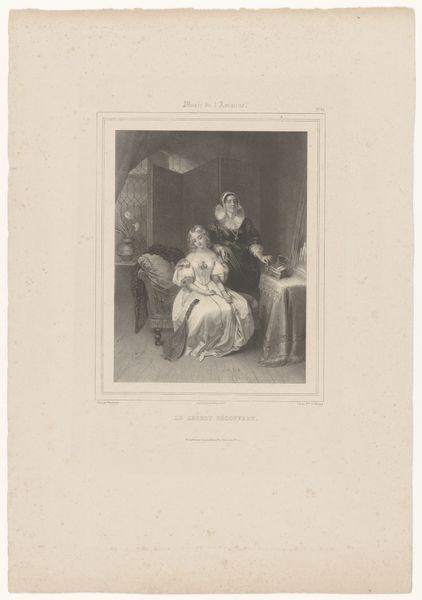
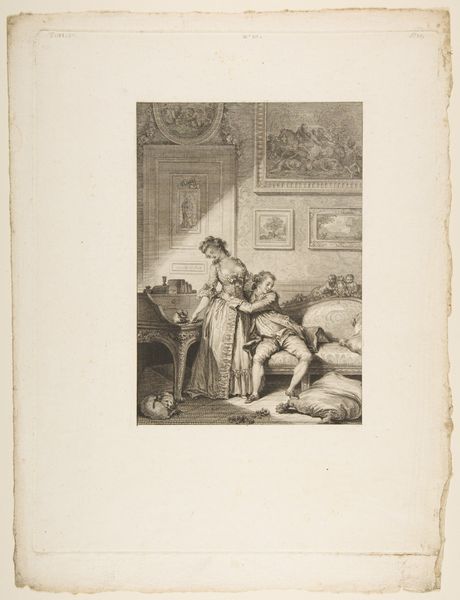
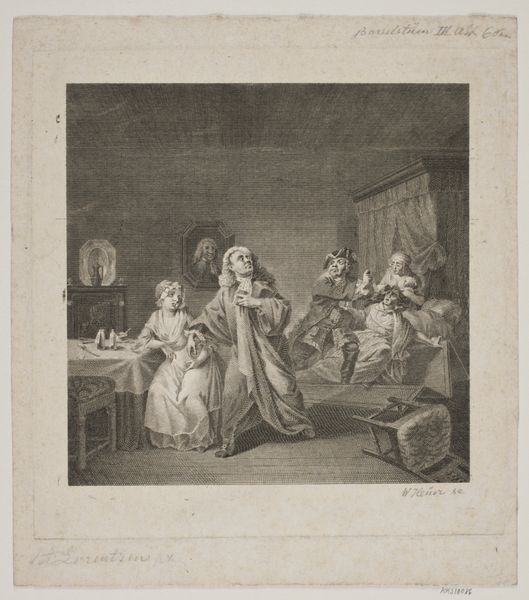
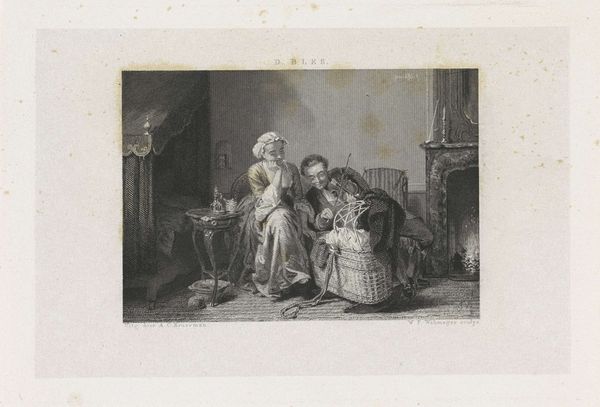
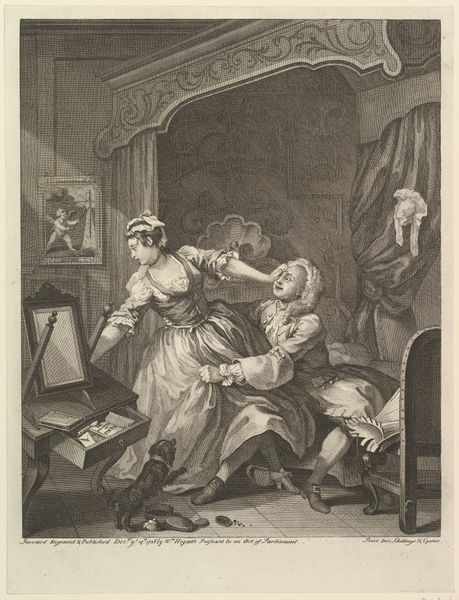
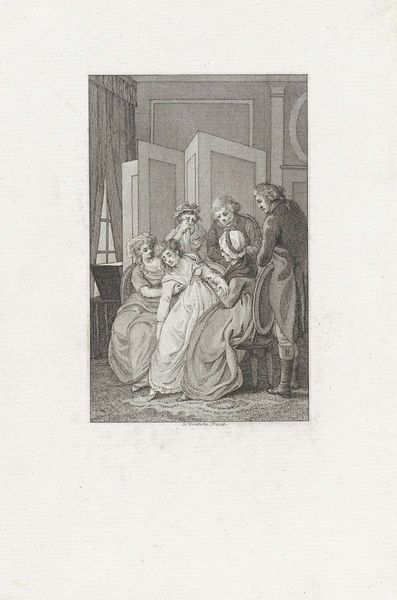
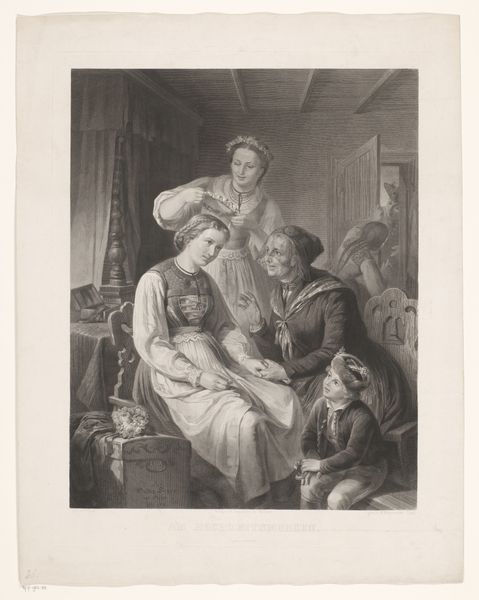
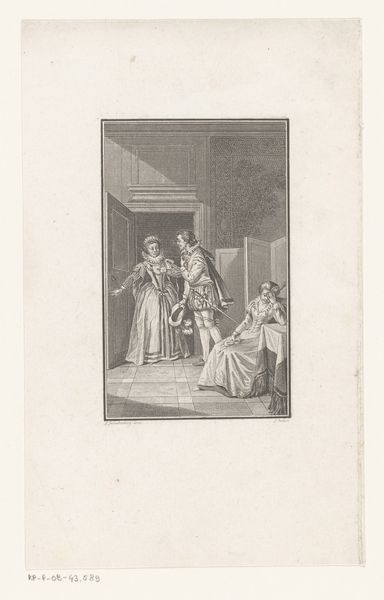
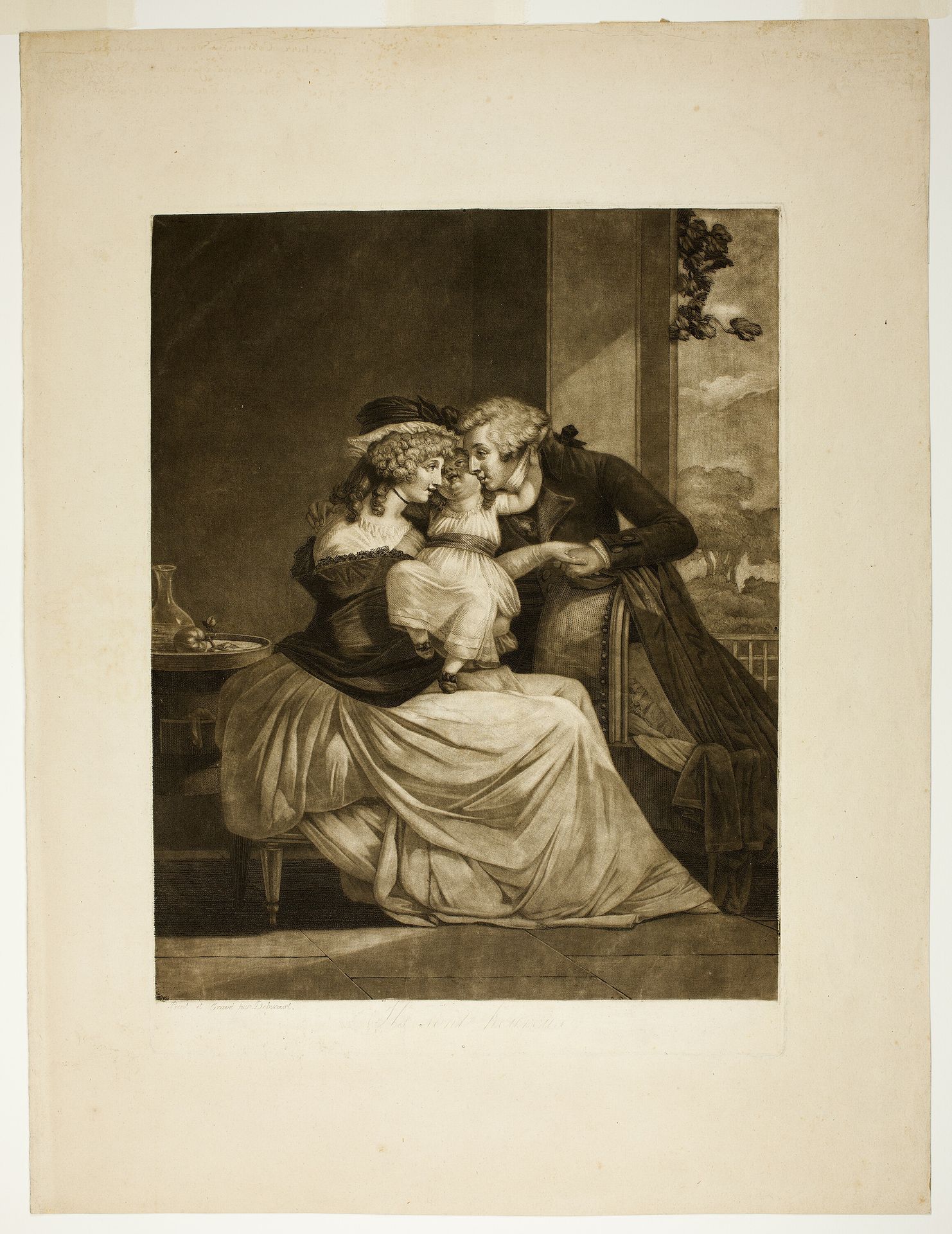
This print, "They Are Happy," was created by Louis Philibert Debucourt using a technique called aquatint. This process allowed for the creation of subtle tonal gradations, lending a soft, almost painterly quality to the image. Aquatint involves etching a metal plate, creating a textured surface that holds ink. The varying depths of the etched areas result in different densities of ink, capturing the nuances of light and shadow. Look closely, and you'll notice how Debucourt skillfully uses this to depict the family's tender moment. Prints like these were luxury goods, requiring specialized skills and equipment. Their circulation reflects the growth of a consumer culture, where images of domesticity and affluence held a strong appeal. The pursuit of happiness, as depicted here, was becoming intertwined with material comfort. By appreciating the labor-intensive process of its making, we can delve deeper into the artwork's cultural significance, and meanings of family life in the 18th century.
They Are Happy
n.d.


Artwork details
- Medium
- drawing, print, paper, engraving
- Dimensions
- 405 × 302 mm (plate); 569 × 434 mm (sheet)
- Location
- The Art Institute of Chicago
- Copyright
- Public Domain
Tags
Comments
Share your thoughts
About this artwork
This print, "They Are Happy," was created by Louis Philibert Debucourt using a technique called aquatint. This process allowed for the creation of subtle tonal gradations, lending a soft, almost painterly quality to the image. Aquatint involves etching a metal plate, creating a textured surface that holds ink. The varying depths of the etched areas result in different densities of ink, capturing the nuances of light and shadow. Look closely, and you'll notice how Debucourt skillfully uses this to depict the family's tender moment. Prints like these were luxury goods, requiring specialized skills and equipment. Their circulation reflects the growth of a consumer culture, where images of domesticity and affluence held a strong appeal. The pursuit of happiness, as depicted here, was becoming intertwined with material comfort. By appreciating the labor-intensive process of its making, we can delve deeper into the artwork's cultural significance, and meanings of family life in the 18th century.
Comments
Share your thoughts