1655
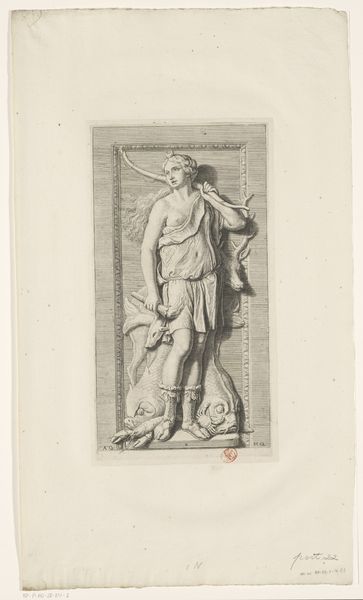
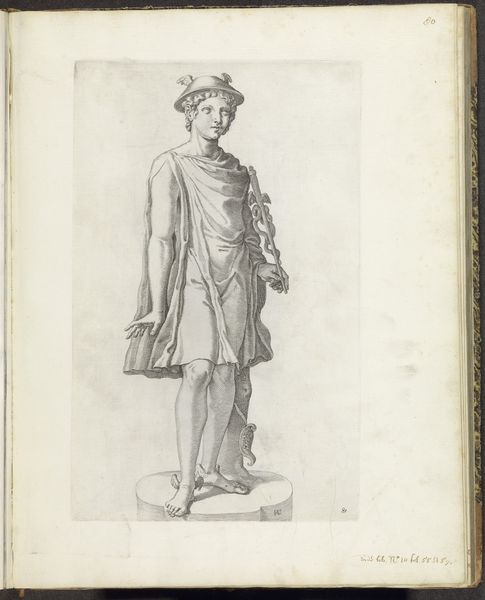
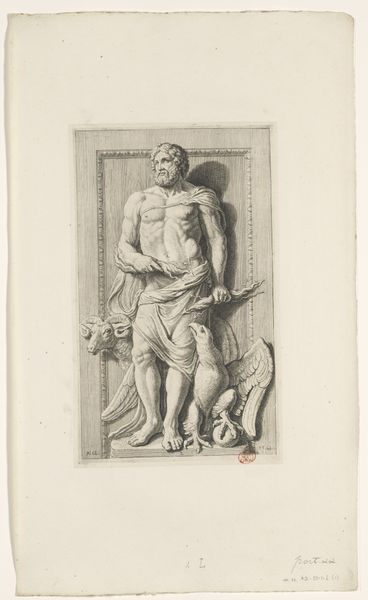
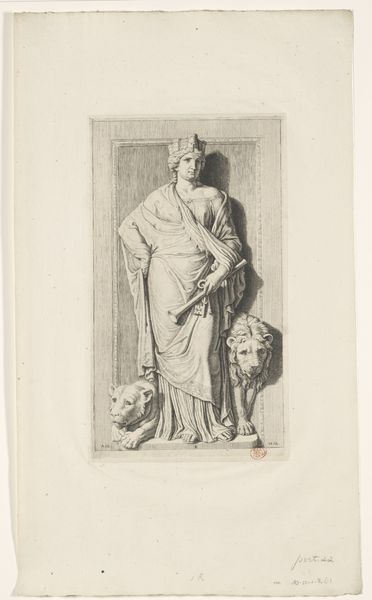
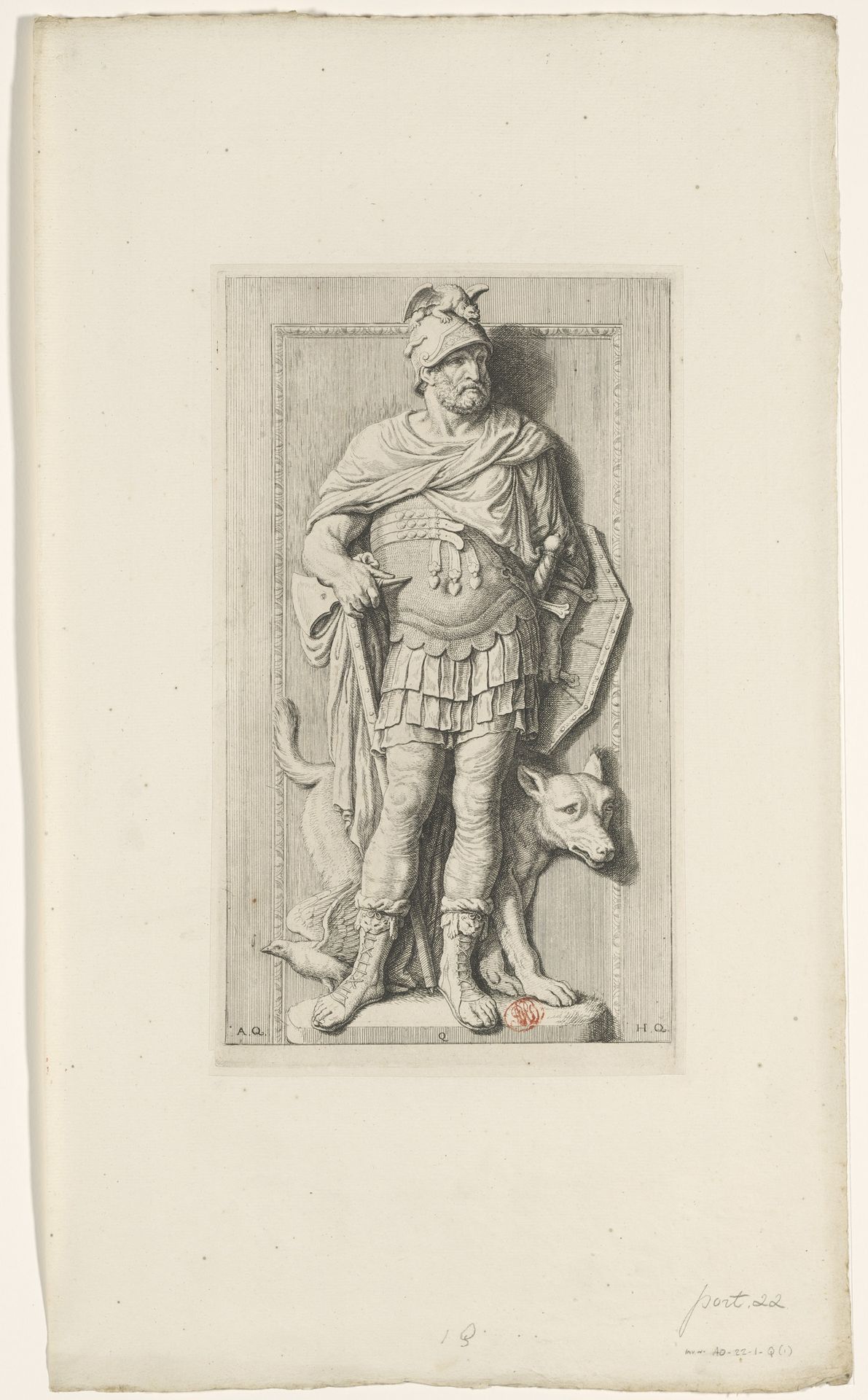
Beeld van Mars in de westelijke galerij van het Stadhuis op de Dam

Hubert Quellinus
1619 - 1687Location
RijksmuseumListen to curator's interpretation
Curatorial notes
Editor: This is "Beeld van Mars in de westelijke galerij van het Stadhuis op de Dam," an engraving by Hubert Quellinus from 1655, currently held in the Rijksmuseum. It has such a formal, stoic feel to it. How do you interpret this work, considering its original context? Curator: The image presents us with more than just a portrait of Mars. It invites a dialogue on power, civic identity, and the visual language of the Dutch Golden Age. This piece was originally part of a larger decorative program within Amsterdam's city hall, meant to project an image of strength and prosperity. But consider: who is this Mars really representing? And what political narratives is it subtly reinforcing? Editor: It’s interesting that you point out the implied political narratives. How does understanding that influence how we see the artwork today? Curator: We need to dissect the iconographic choices Quellinus made. Mars, typically a symbol of aggressive war, is presented here in a somewhat restrained manner. He’s armed, yes, but the overall composition speaks to controlled power, the kind of power necessary for maintaining a thriving republic. Look closely. Is it possible to draw comparisons to other sculptures that may carry religious meaning or project power? Editor: Now that I consider it more, it almost seems that Quellinus is alluding to civic duty instead of military might. Curator: Exactly. And that shift – from martial aggression to civic responsibility – speaks volumes about the values the Dutch Republic was trying to project, both to its citizens and to the world. Recognizing these embedded messages enables a more critical reading, one that goes beyond simply appreciating the artistry of the engraving. Editor: That’s a fascinating point; thanks for enriching how I interpret this work! Curator: My pleasure; thinking critically about the symbols helps us unlock how the work reflects the values and ideals of its time.