About this artwork
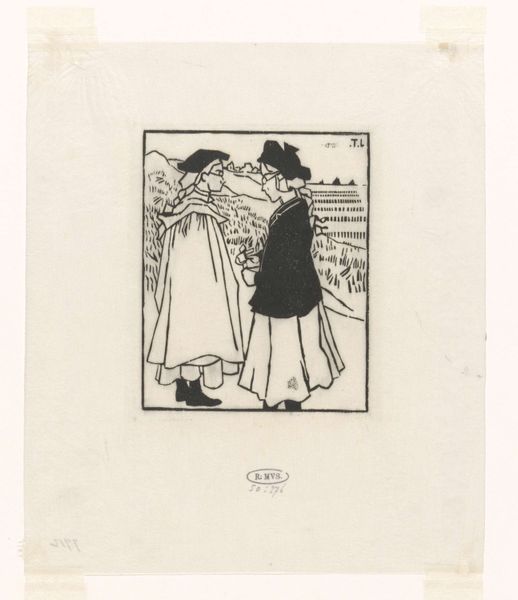
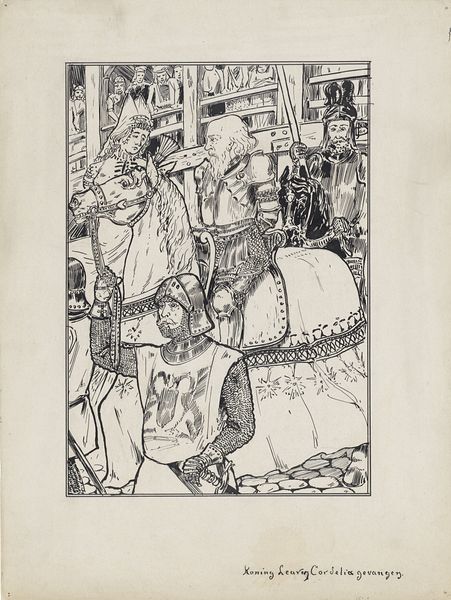
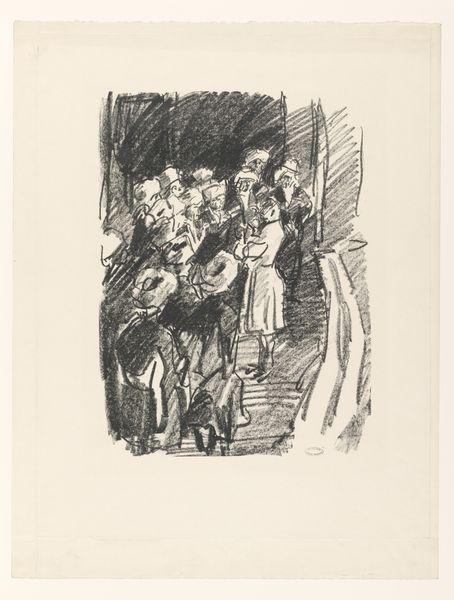
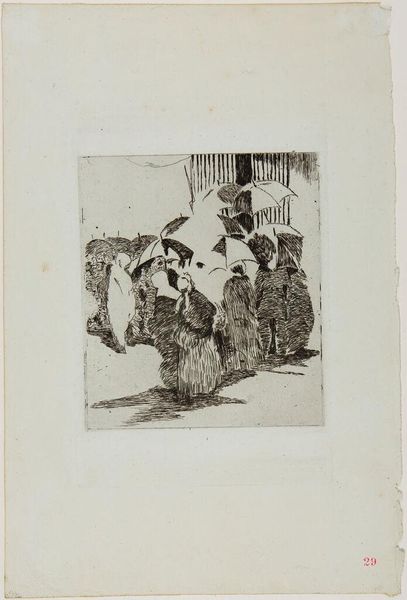
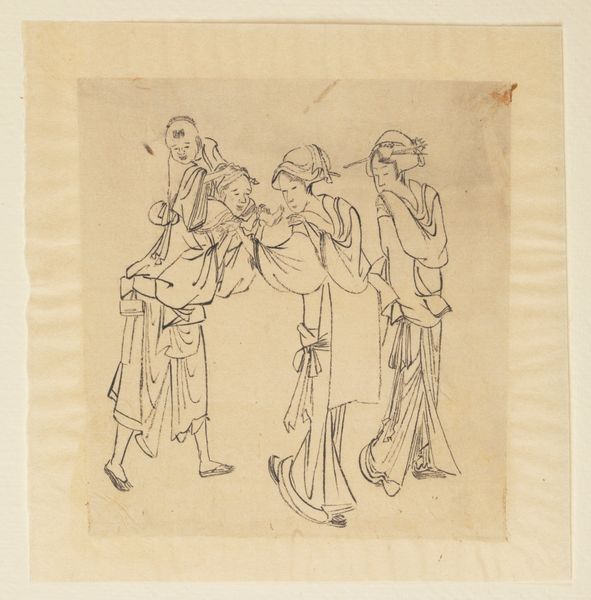
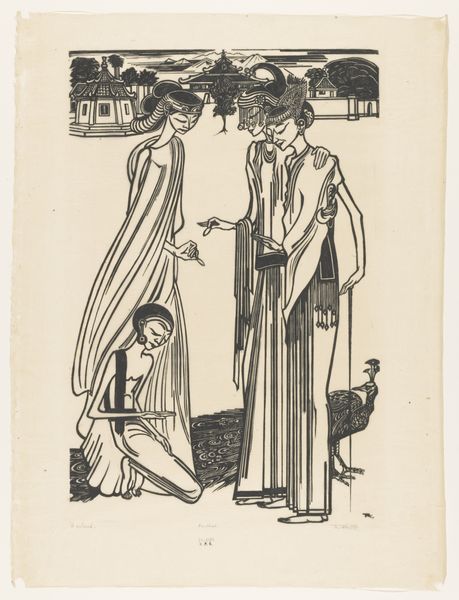
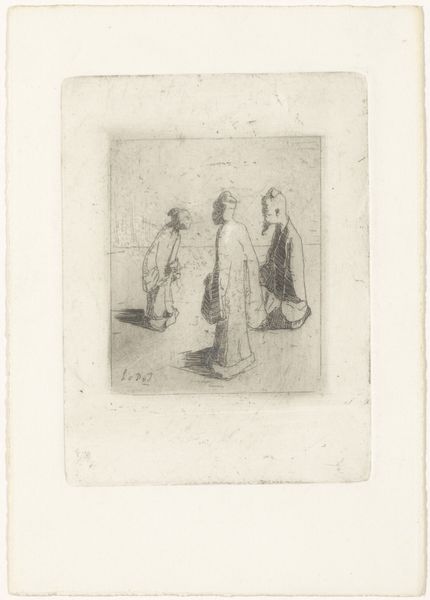
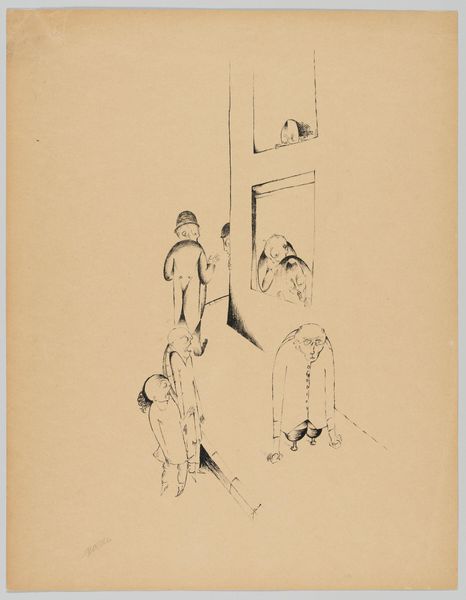
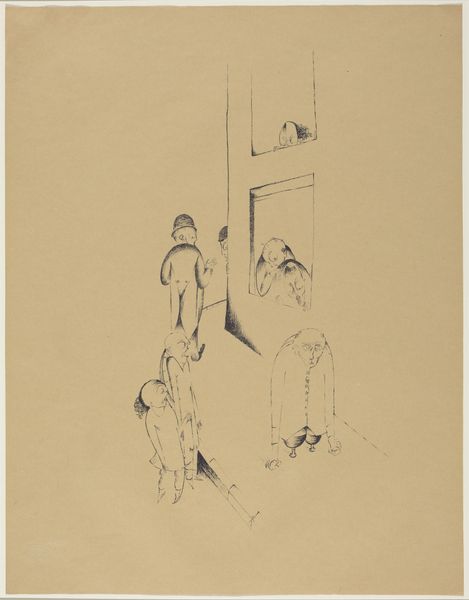
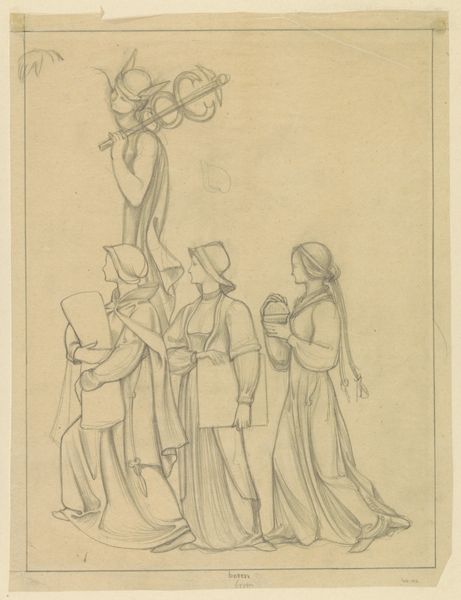
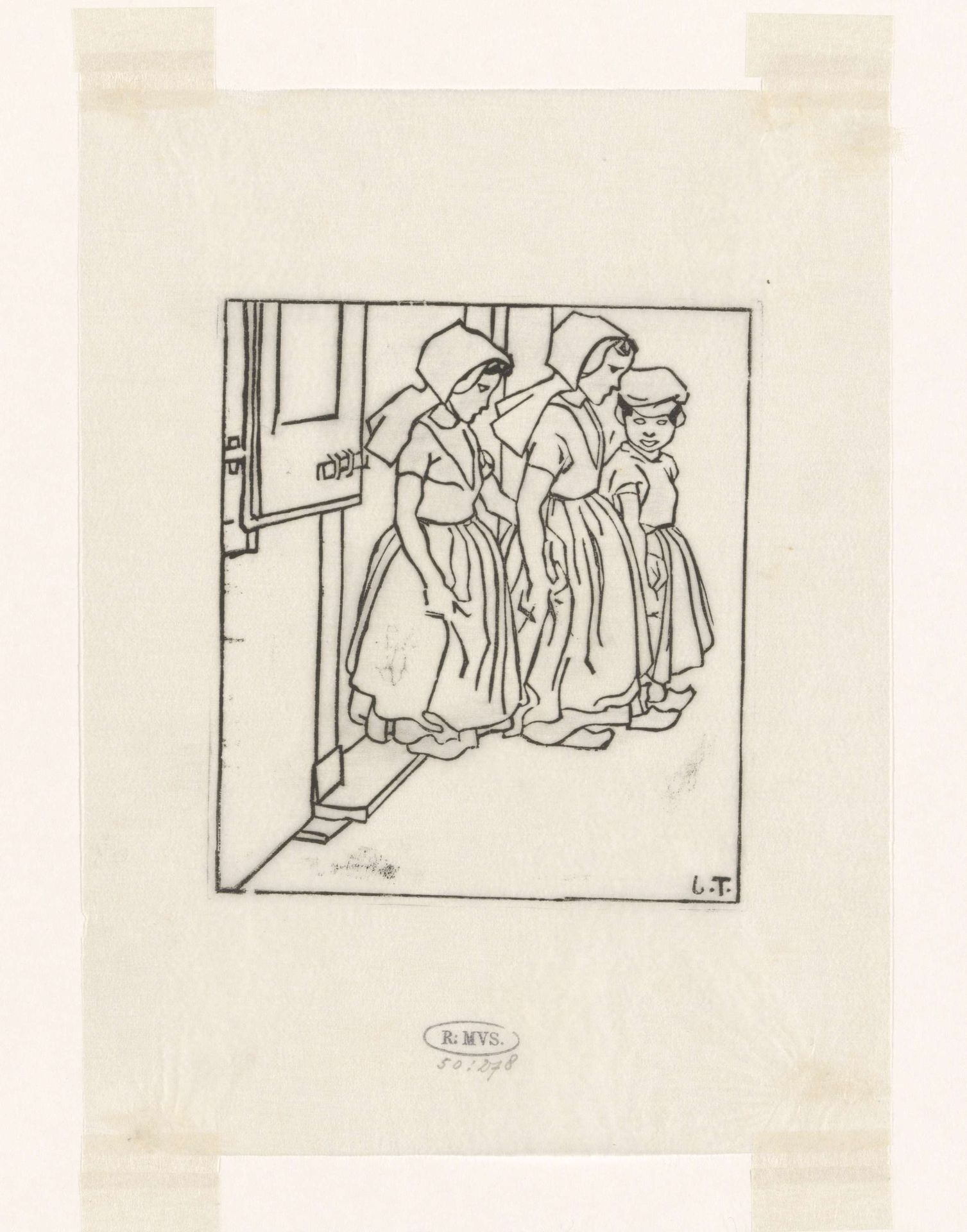
Jan Toorop made this drawing, “Three Zeeland Children,” with pen and ink. He wasn’t afraid to leave the evidence of his hand right there on the page. You can see it in the way he allows the lines to vary in thickness. Look at the way he defines the folds of the girls' dresses with a series of simple, parallel strokes. There’s something almost architectural about the way he builds up the forms, like he’s creating a blueprint. It reminds me a little of Käthe Kollwitz, in the way she used line to convey both form and emotion. Yet, there’s also something uniquely of its time, recalling the linear style of Art Nouveau. This piece captures a moment, but it also hints at the bigger picture—an ongoing dialogue between artists across time and space. It's a reminder that art isn’t just about answers, it’s about asking questions and embracing the beautiful mess of interpretation.

Artwork details
- Medium
- drawing, paper, ink
- Dimensions
- height 200 mm, width 152 mm
- Location
- Rijksmuseum
- Copyright
- Rijks Museum: Open Domain
Tags
portrait
drawing
art-nouveau
dutch-golden-age
pen sketch
paper
ink
symbolism
genre-painting
Comments
Be the first to share your thoughts about this work.
About this artwork
Jan Toorop made this drawing, “Three Zeeland Children,” with pen and ink. He wasn’t afraid to leave the evidence of his hand right there on the page. You can see it in the way he allows the lines to vary in thickness. Look at the way he defines the folds of the girls' dresses with a series of simple, parallel strokes. There’s something almost architectural about the way he builds up the forms, like he’s creating a blueprint. It reminds me a little of Käthe Kollwitz, in the way she used line to convey both form and emotion. Yet, there’s also something uniquely of its time, recalling the linear style of Art Nouveau. This piece captures a moment, but it also hints at the bigger picture—an ongoing dialogue between artists across time and space. It's a reminder that art isn’t just about answers, it’s about asking questions and embracing the beautiful mess of interpretation.
Comments
Be the first to share your thoughts about this work.