About this artwork
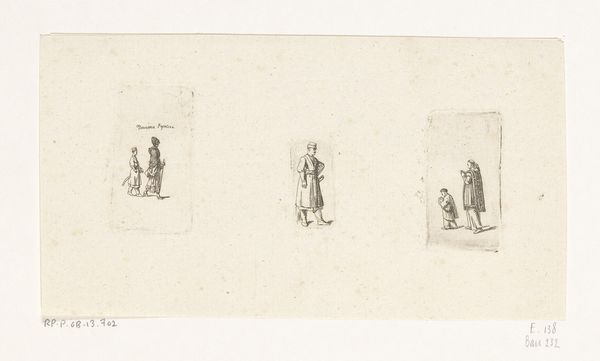
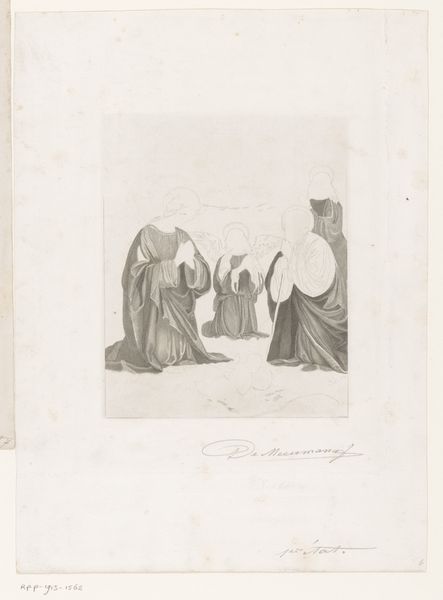
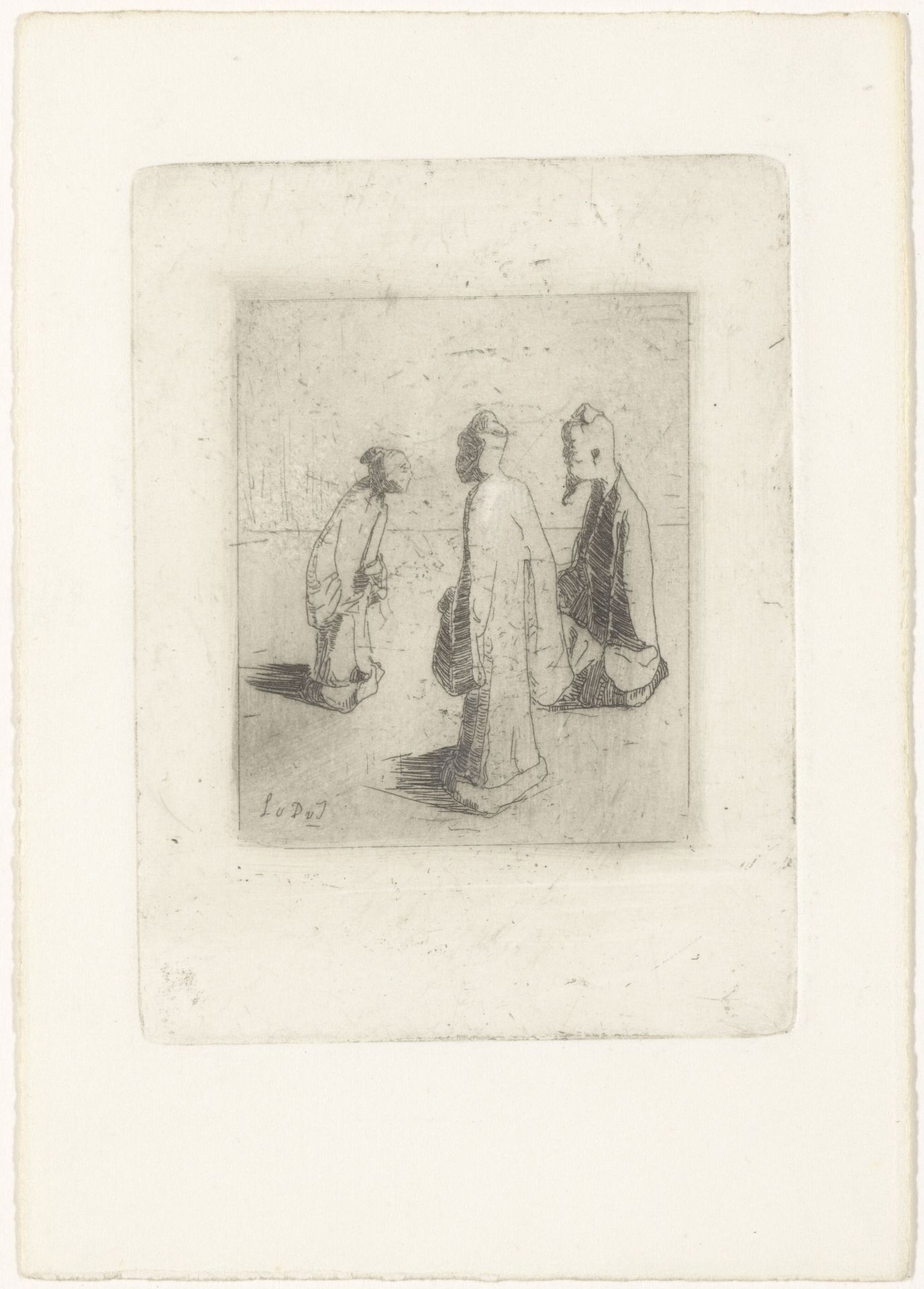
Lucie van Dam van Isselt made this etching, "Three Asian Images of Human Figures," probably in the early 20th century. You can see how the marks build up to create forms, a kind of visual puzzle emerging from the most simple of means. It reminds me of how we build up an image in our mind, detail by detail, until something like understanding emerges. Look at the texture in the piece. The figures are rendered in thin lines, giving them an airy, almost ghost-like quality. See the figure on the left, how the lines create a sense of bowing or deference. It’s the economy of the line that makes this image so beautiful, the way van Dam van Isselt coaxes so much expression out of so little. Her work shares a sensibility with that of James McNeill Whistler, who also worked with etching, using a similarly light touch to capture a mood. Both artists understand art as a process of suggestion, inviting the viewer to complete the image in their own mind. Neither of them offers fixed meanings, they offer a conversation.
Drie Aziatische beelden van menselijke figuren
1881 - 1949

Lucie van Dam van Isselt
1871 - 1949Location
RijksmuseumArtwork details
- Medium
- print, etching, sculpture
- Dimensions
- height 120 mm, width 90 mm
- Location
- Rijksmuseum
- Copyright
- Rijks Museum: Open Domain
Tags
Comments
Share your thoughts
About this artwork
Lucie van Dam van Isselt made this etching, "Three Asian Images of Human Figures," probably in the early 20th century. You can see how the marks build up to create forms, a kind of visual puzzle emerging from the most simple of means. It reminds me of how we build up an image in our mind, detail by detail, until something like understanding emerges. Look at the texture in the piece. The figures are rendered in thin lines, giving them an airy, almost ghost-like quality. See the figure on the left, how the lines create a sense of bowing or deference. It’s the economy of the line that makes this image so beautiful, the way van Dam van Isselt coaxes so much expression out of so little. Her work shares a sensibility with that of James McNeill Whistler, who also worked with etching, using a similarly light touch to capture a mood. Both artists understand art as a process of suggestion, inviting the viewer to complete the image in their own mind. Neither of them offers fixed meanings, they offer a conversation.
Comments
Share your thoughts