About this artwork
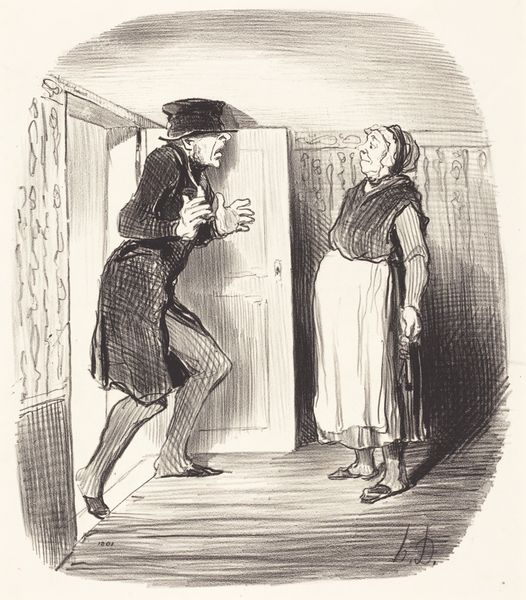
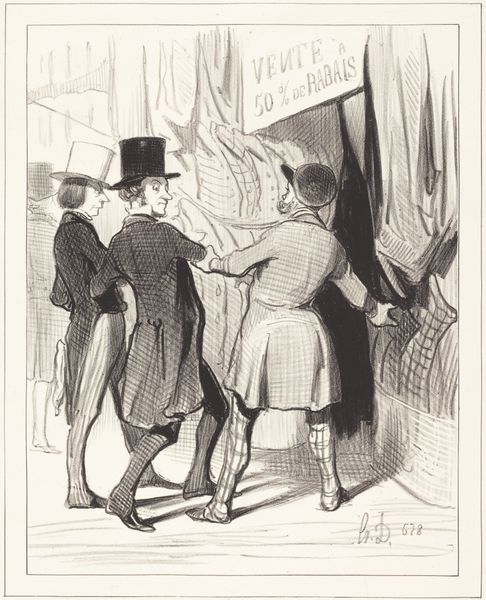
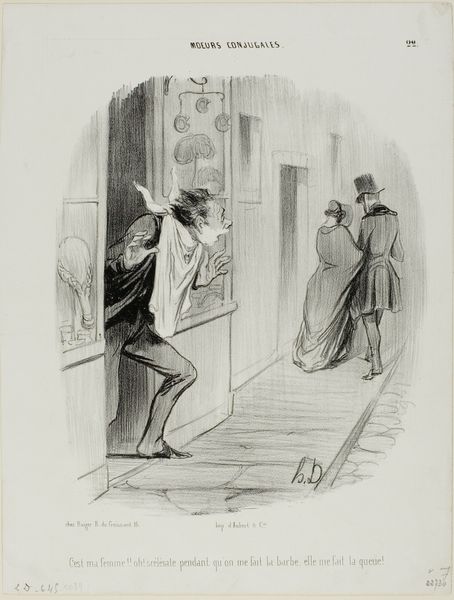
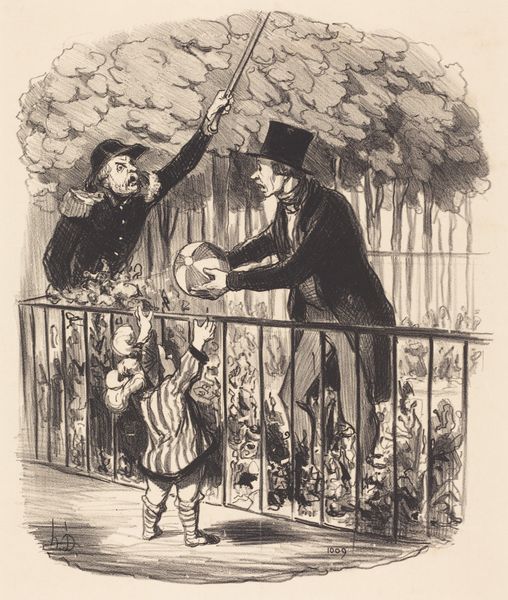
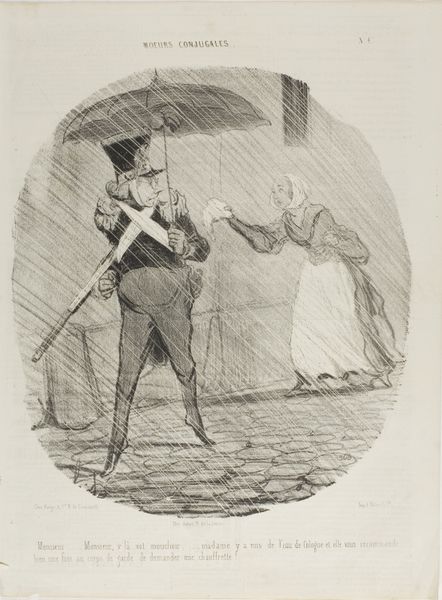
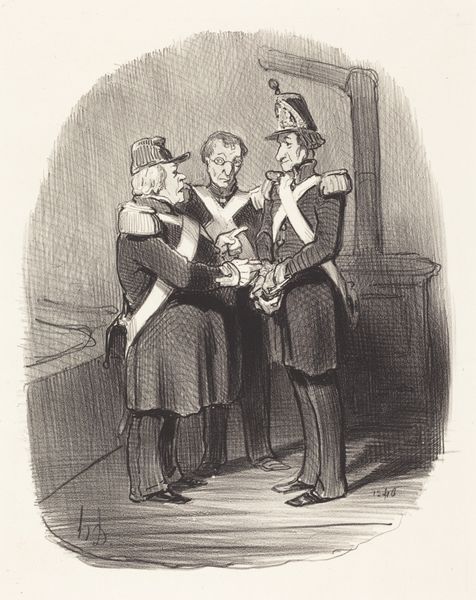
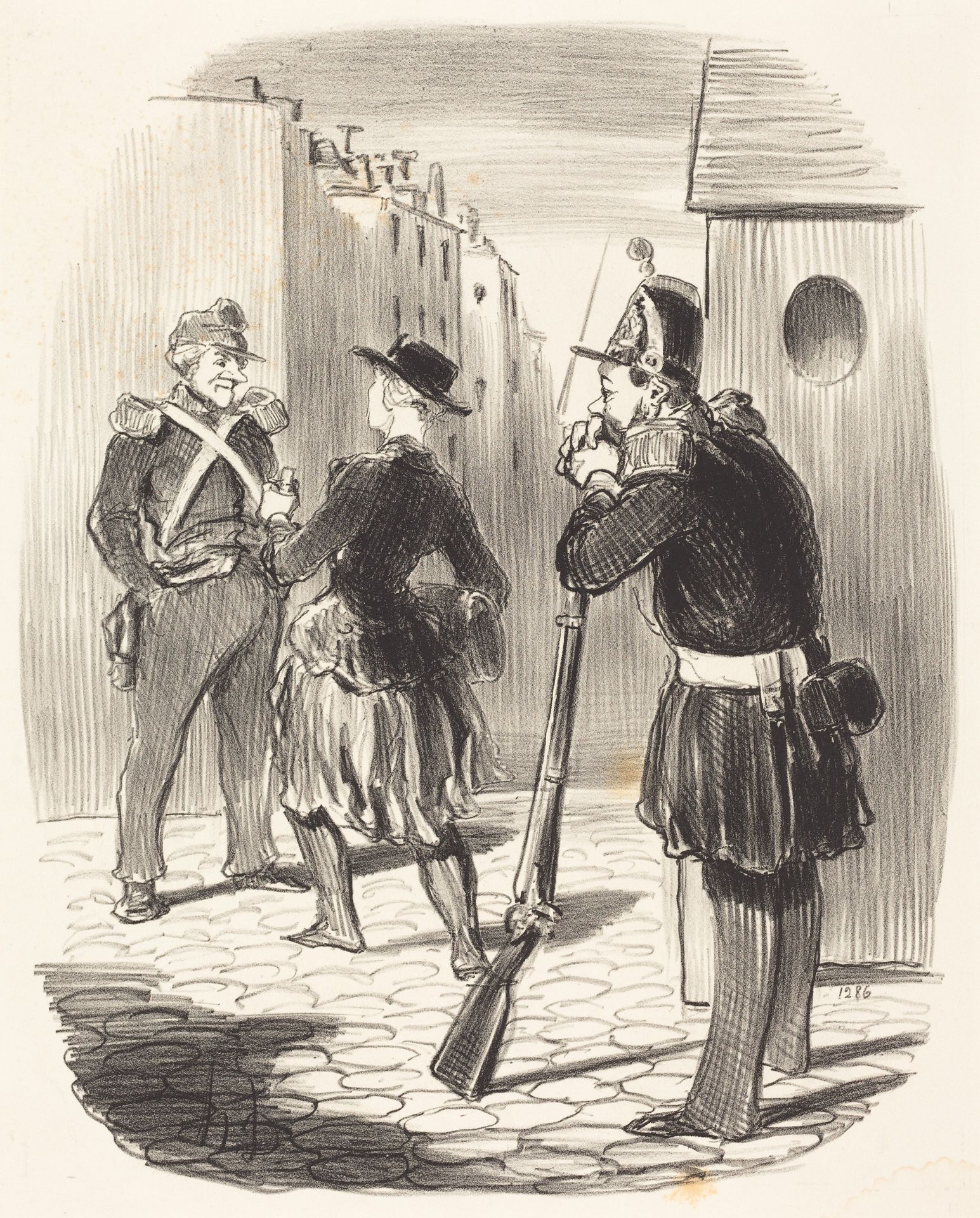
Honoré Daumier’s lithograph presents us with a snapshot of Parisian life, capturing the complexities of gender and class during a period of social upheaval in France. Daumier made lithographs for the popular press, and they often critiqued the bourgeoisie. Here, we see two soldiers, one preoccupied with a woman in a stylish bonnet. Meanwhile, a second soldier stands guard, his posture suggesting boredom or perhaps moral disapproval. The satirical title, roughly translated to ‘that damned Pigochard…,’ hints at the artist's critical view of the moral laxity among those in power. This image speaks to the shifting roles and expectations of women in 19th-century Paris, as well as the omnipresence of the military in everyday life. Daumier seems to ask: What are the guards protecting? And from whom? Is it the social order being protected or the class system itself? Daumier’s commentary invites us to consider the subtle power dynamics at play, reflecting on the intersection of desire, duty, and social critique.


Artwork details
- Medium
- drawing, lithograph, print, pen
- Copyright
- National Gallery of Art: CC0 1.0
Tags
Comments
Share your thoughts
About this artwork
Honoré Daumier’s lithograph presents us with a snapshot of Parisian life, capturing the complexities of gender and class during a period of social upheaval in France. Daumier made lithographs for the popular press, and they often critiqued the bourgeoisie. Here, we see two soldiers, one preoccupied with a woman in a stylish bonnet. Meanwhile, a second soldier stands guard, his posture suggesting boredom or perhaps moral disapproval. The satirical title, roughly translated to ‘that damned Pigochard…,’ hints at the artist's critical view of the moral laxity among those in power. This image speaks to the shifting roles and expectations of women in 19th-century Paris, as well as the omnipresence of the military in everyday life. Daumier seems to ask: What are the guards protecting? And from whom? Is it the social order being protected or the class system itself? Daumier’s commentary invites us to consider the subtle power dynamics at play, reflecting on the intersection of desire, duty, and social critique.
Comments
Share your thoughts