1725
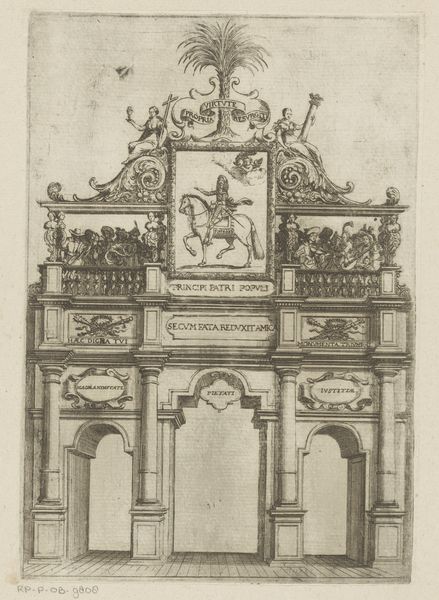
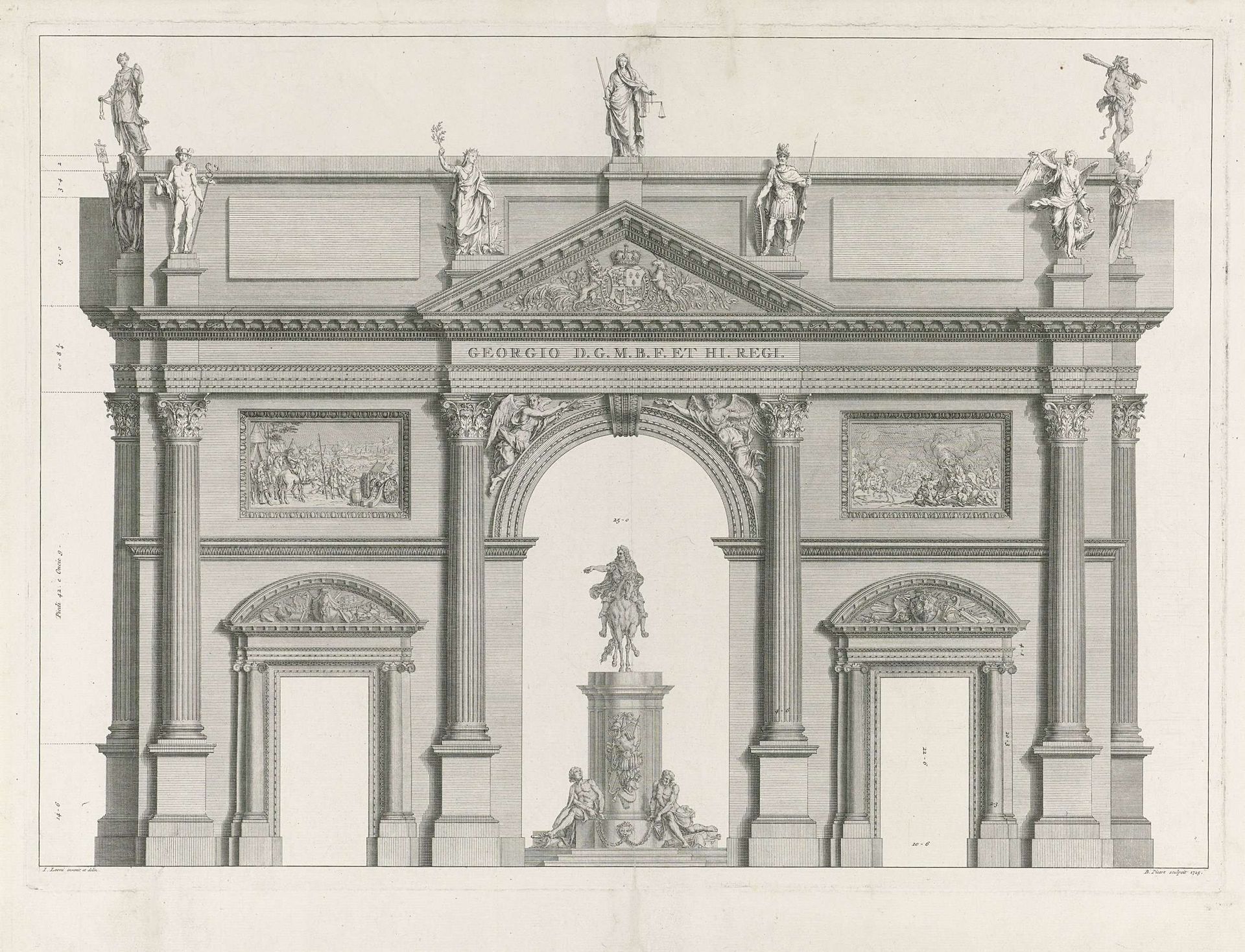
De triomfboog voor George I van Groot-Brittannië

Bernard Picart
1673 - 1733Location
RijksmuseumListen to curator's interpretation
Curatorial notes
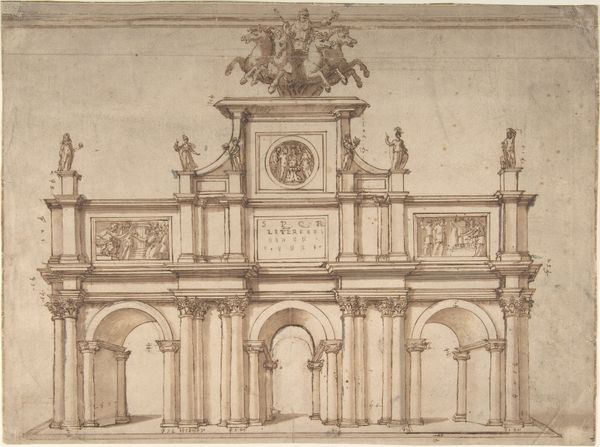
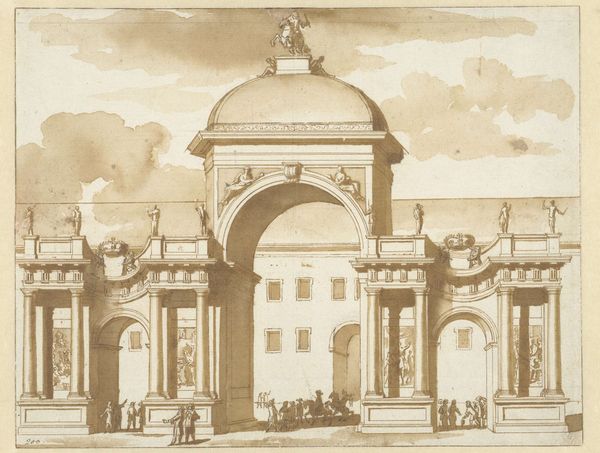
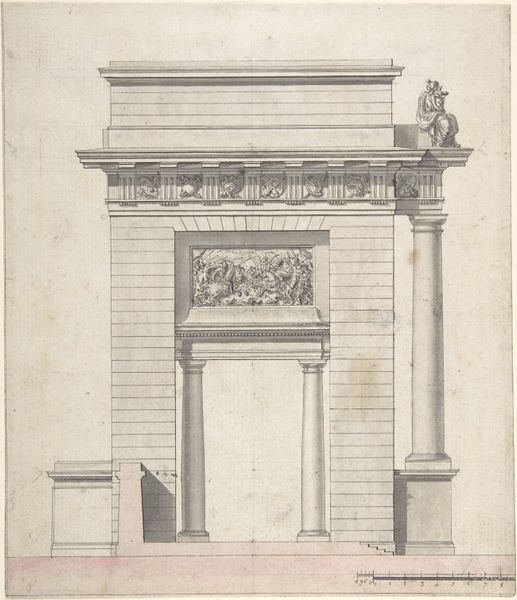
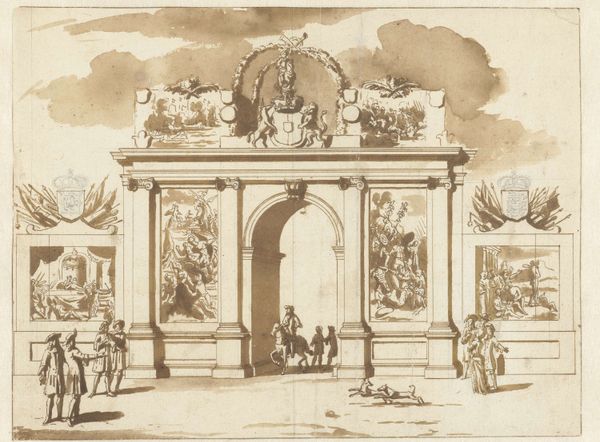
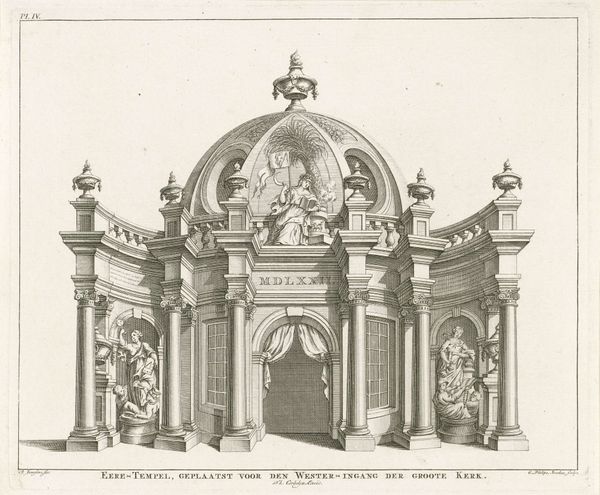
Bernard Picart's etching depicts a triumphal arch for George I of Great Britain, showcasing a classical architectural style adorned with symbolic figures and reliefs. Dominating the arch are representations of Justice, Victory, and Fame, all classical motifs meant to celebrate and legitimize power. These aren't new; the imagery is as old as the Roman Empire, where triumphal arches were erected to commemorate military victories and honor emperors. The figure of Justice, often depicted with scales and a sword, harkens back to ancient Roman depictions of Justitia, embodying moral rectitude. Victory and Fame, frequently winged figures bearing laurel wreaths or trumpets, also have roots in classical antiquity. We can see the Victory motif recurring throughout the Renaissance, when it was recontextualized to represent civic pride. The persistence of these symbols over centuries reveals a deep-seated cultural desire to connect new power with the past, tapping into the collective memory of authority and accomplishment. The emotional impact is substantial, conveying a sense of awe, legitimacy, and enduring power.