1652
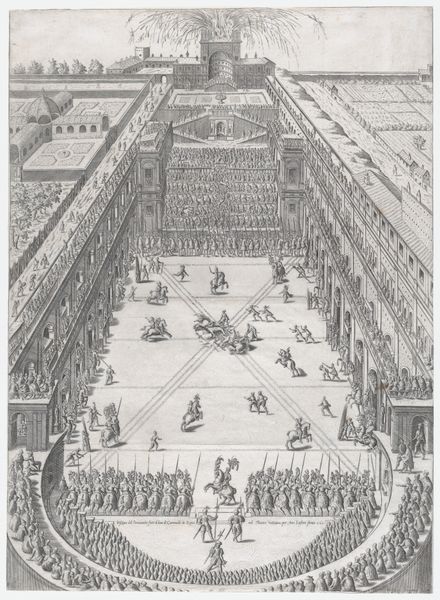
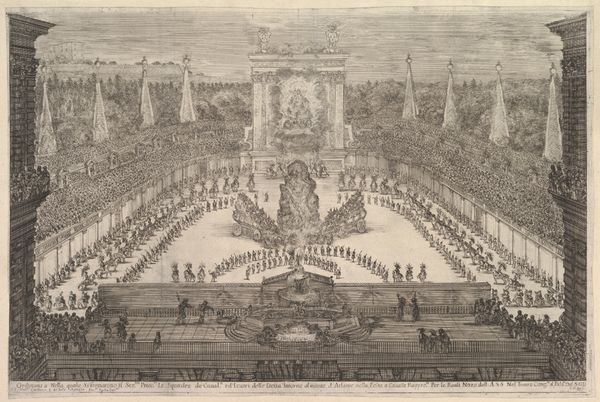
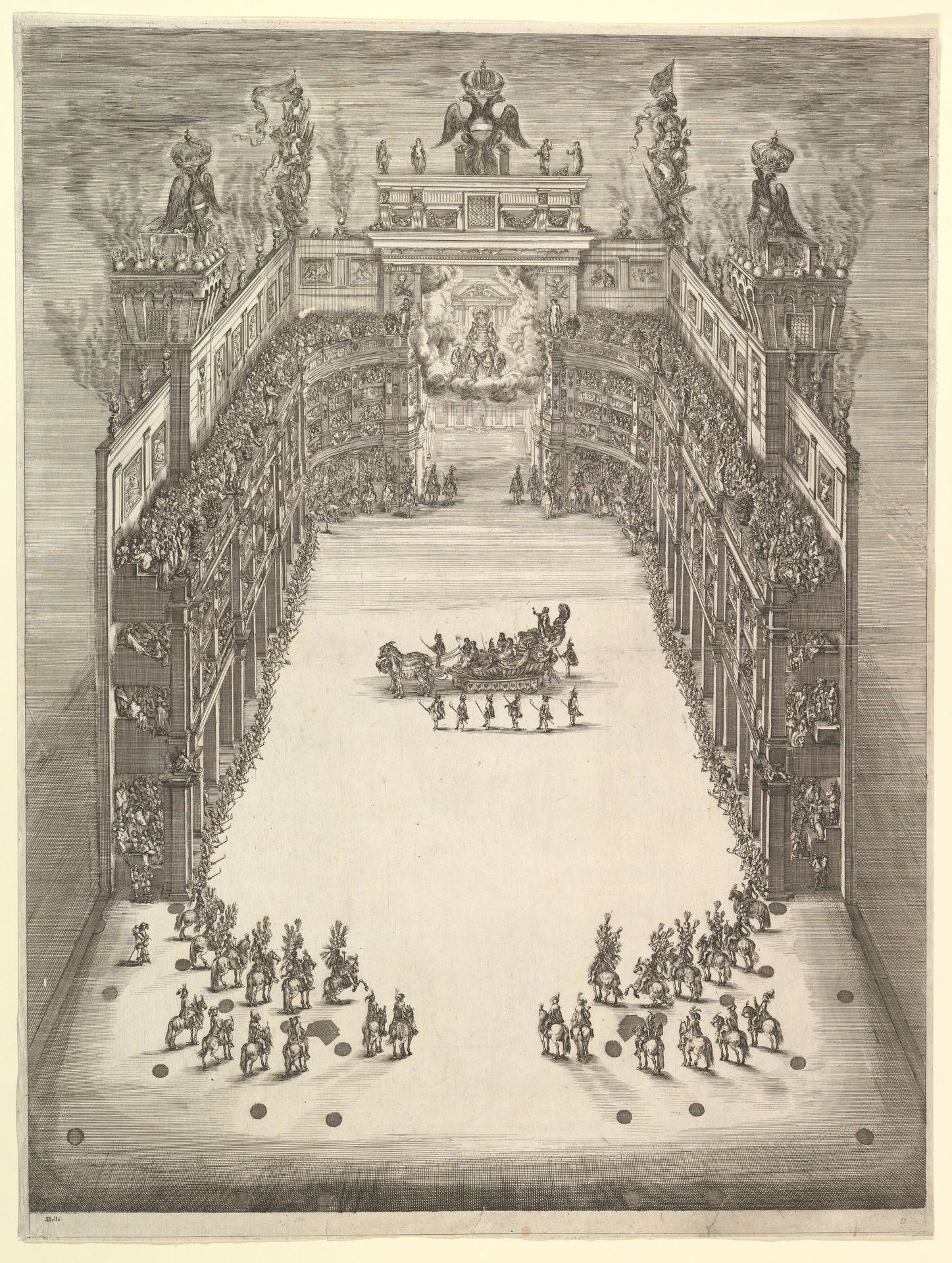
Theater at Modena, seen from above and filled with spectators, with a triumphal car at center and horses in formation at lower left and right, from 'La Gara delle Stagioni'

Stefano della Bella
1610 - 1664
The Metropolitan Museum of Art
Metropolitan Museum of Art, New York, NYListen to curator's interpretation
Curatorial notes
Stefano della Bella created this print, *Theater at Modena*, sometime in the mid-17th century, capturing the spectacle of courtly entertainment. At this time, theater was inseparable from the display of power and wealth. Consider the scene: spectators fill the stands, their presence as crucial to the event as the performance itself. But who are these spectators? Likely, they represent a narrow segment of society: the nobility and wealthy merchant class. Their privileged position underscores the rigid social hierarchies of the time, where access to culture and entertainment was a marker of status. The triumphal car and the horses in formation—elements of the performance—serve as symbols of power and order. It’s a world carefully constructed to reinforce existing social structures. What happens to those left outside of the frame? Della Bella's print invites us to consider the theater, and its audience, as a stage for social and political performance. The print is a window into a world where identity was not just personal, but a product of social standing.