

1889
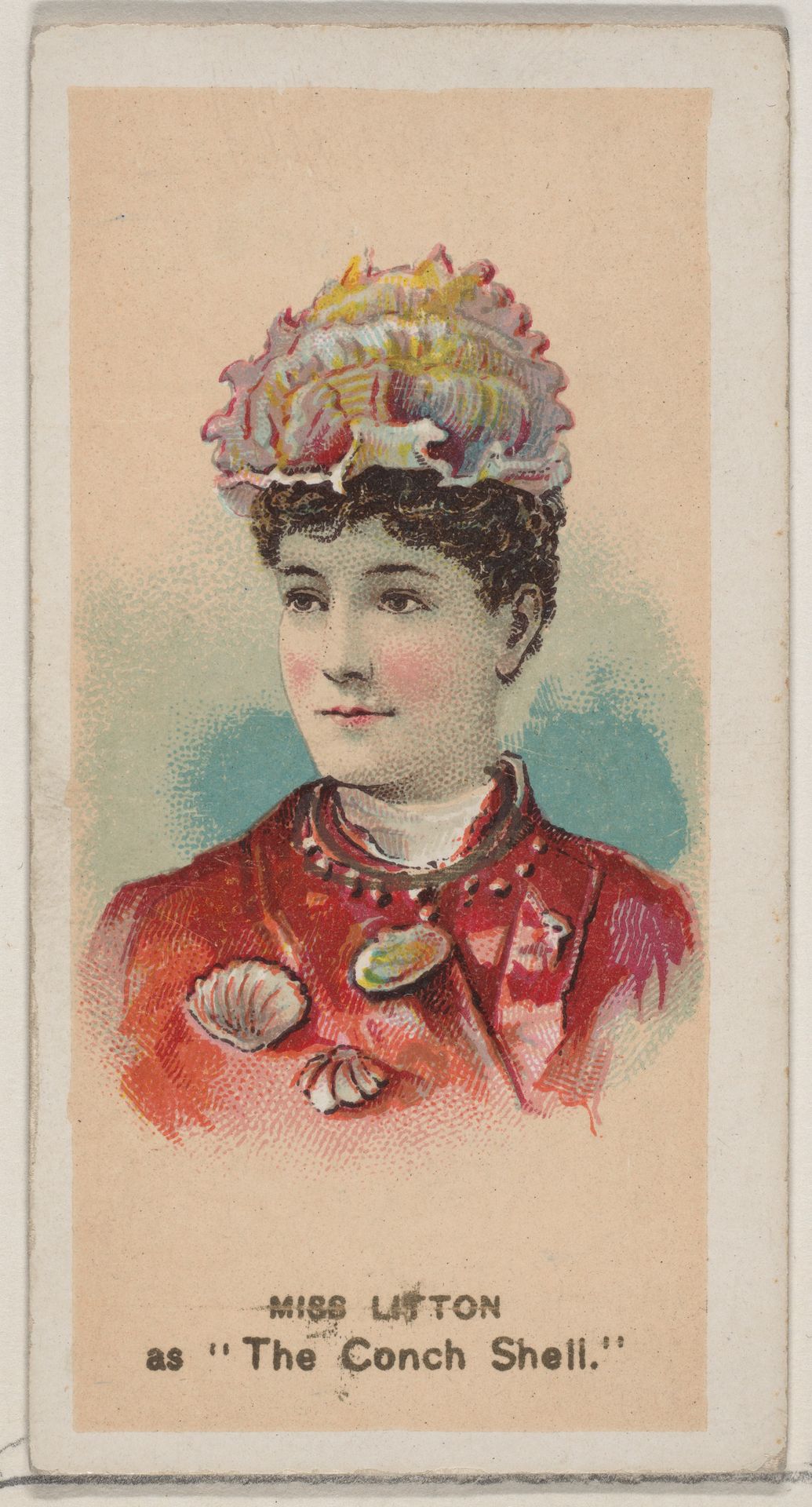
Miss Litton as "The Conch Shell," from the series Fancy Dress Ball Costumes (N73) for Duke brand cigarettes

W. Duke, Sons & Co.
1870 - 1920The Metropolitan Museum of Art
Metropolitan Museum of Art, New York, NYListen to curator's interpretation
Curatorial notes
Editor: Here we have “Miss Litton as ‘The Conch Shell’,” a colored-pencil print from 1889, made for Duke brand cigarettes. It’s… odd, but intriguing! All the shells make it quite textural. How should we interpret this? Curator: As a materialist, my interest lies in unpacking the conditions of its production and consumption. This isn't high art; it's commercial ephemera, mass-produced as a marketing tool. The subject, Miss Litton, is secondary to the commodity being advertised. Editor: So, you're saying the *how* and *why* it was made matters more than what it depicts? Curator: Precisely. The chromolithography, that allowed for mass color printing, transformed images into widely circulated objects. Duke Cigarettes harnessed new technologies to embed these images within everyday habits of consumption. Editor: So it's not about the art so much as the…packaging? The delivery method? Curator: It’s about acknowledging that art doesn't exist in a vacuum. The labor involved in creating and distributing these cards, the societal implications of tobacco consumption, even the aesthetic choices made to entice consumers—all are intertwined. Consider Japonisme here; why are Eastern motifs being incorporated, and what purpose does that serve? Editor: Ah, okay! It's a complex web of manufacturing, marketing, and cultural influence. Thinking about it, Miss Litton’s expression seems almost irrelevant; she is part of the advertisement machinery. Curator: Exactly! By shifting our focus to production, distribution, and consumption, we expose the artifice and power dynamics inherent in this image. Editor: That's a fascinating approach! I will never look at advertisements the same way again. Thank you for pointing me in this direction. Curator: It changes everything, doesn’t it? Considering art as an active part of social processes makes the interpretation more fruitful.