About this artwork
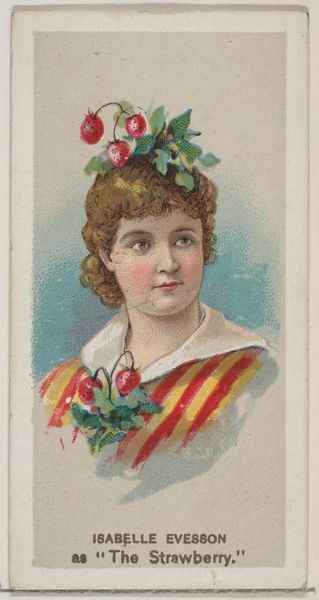
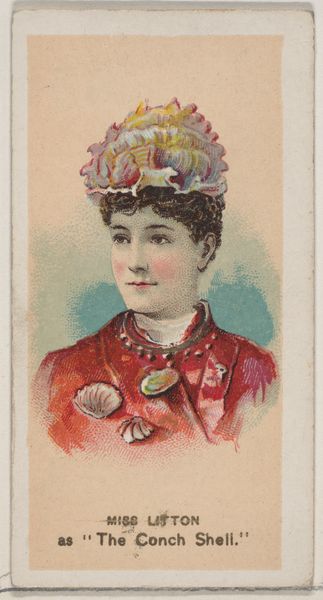
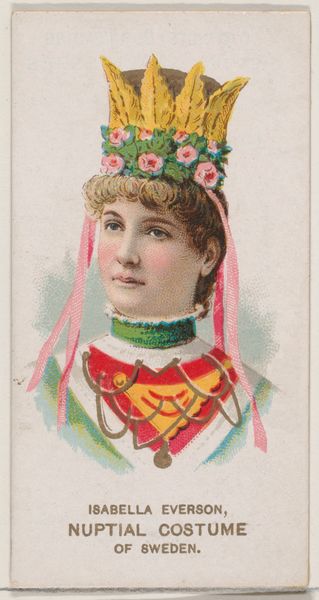
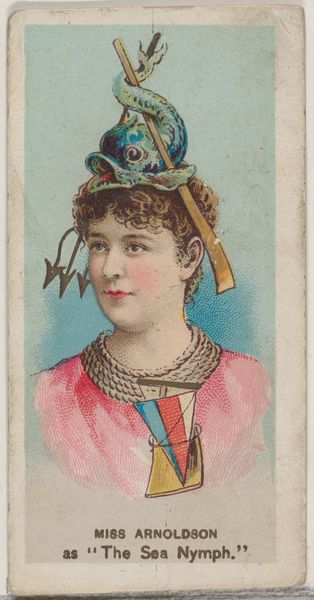
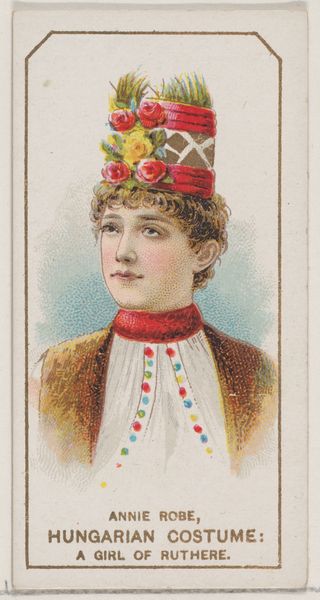
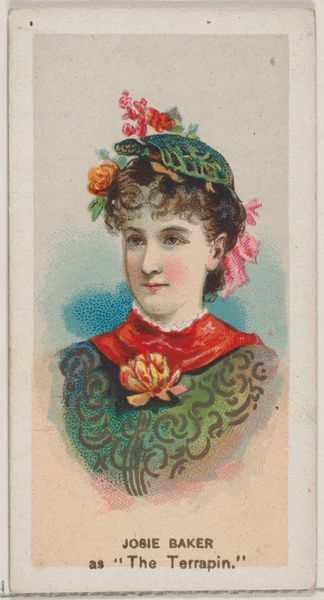
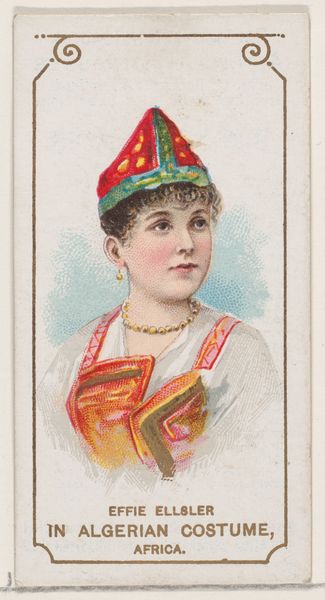
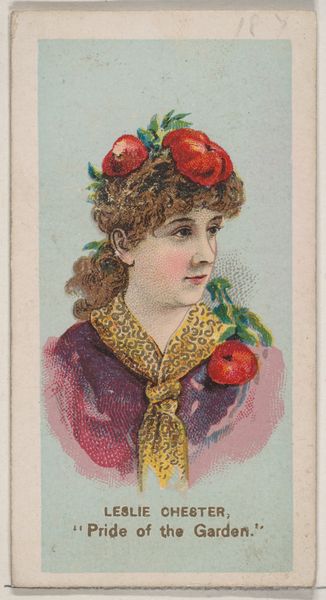
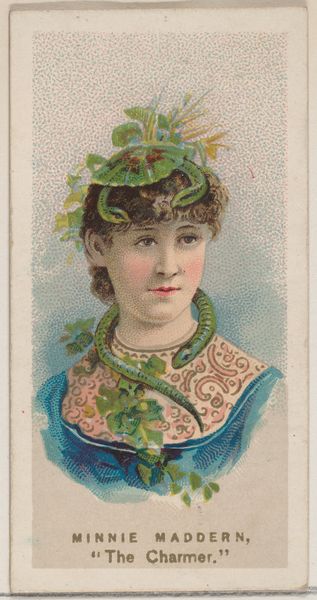
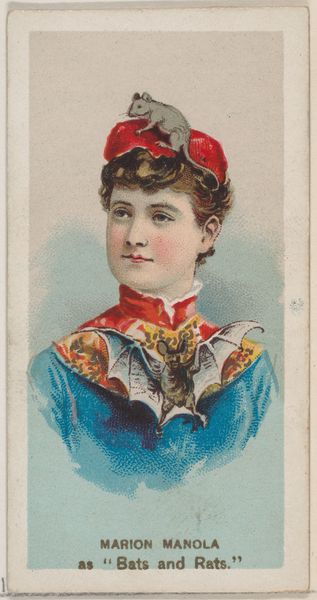
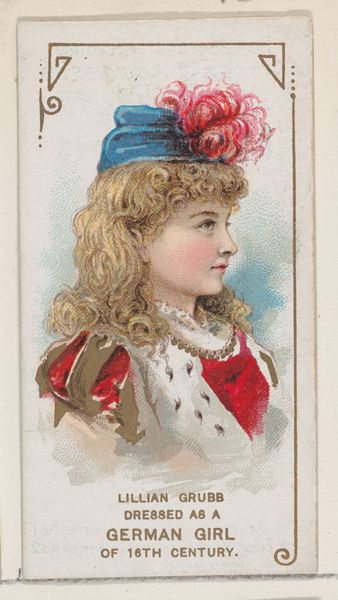
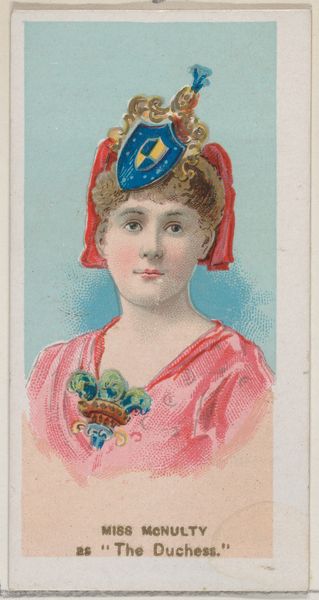
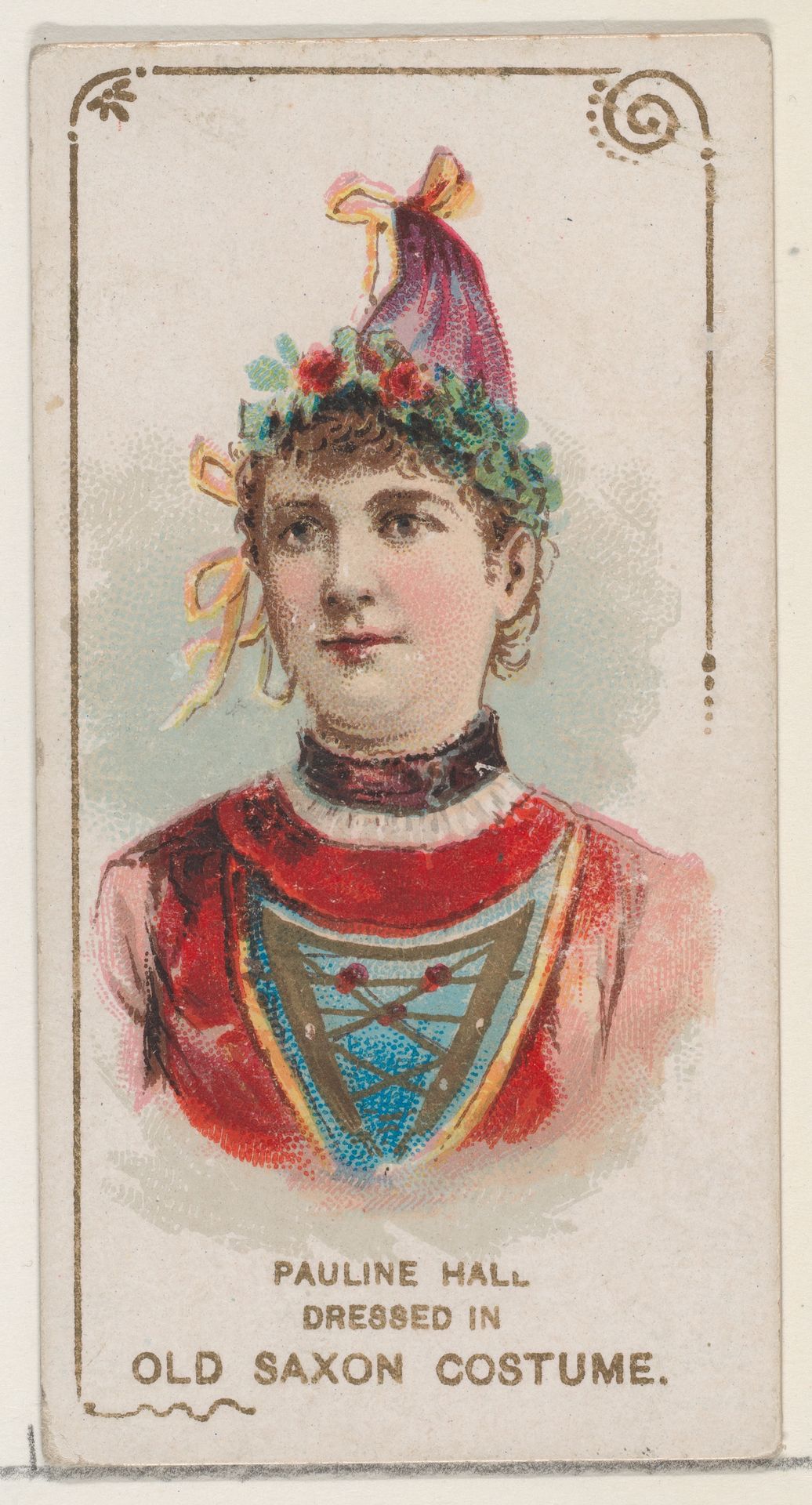
This is a lithograph of Pauline Hall dressed in old Saxon costume, created by W. Duke, Sons & Co. During the late 19th century, mass media commercial images often reinforced racial and gender stereotypes, defining and limiting the identities of those represented. Here we see Pauline Hall, a celebrity of her time, exoticized in a 'Saxon' costume for the consumption of a predominantly white, male audience. The costume flattens the complexities of Saxon identity into a marketable image for Duke Cigarettes. Such images played a role in constructing and perpetuating societal norms. By distributing these cards with their products, companies like Duke reinforced a sense of cultural hierarchy, influencing consumer perceptions and promoting a particular vision of beauty and desirability. This image prompts us to consider the power dynamics inherent in representation and the role of art in shaping our understanding of identity.
Pauline Hall Dressed in Old Saxon Costume, from the set Actors and Actresses, First Series (N70) for Duke brand cigarettes
1888 - 1889

W. Duke, Sons & Co.
1870 - 1920
The Metropolitan Museum of Art
Metropolitan Museum of Art, New York, NYArtwork details
- Medium
- drawing, coloured-pencil, print
- Dimensions
- Sheet: 2 3/4 x 1 1/2 in. (7 x 3.8 cm)
- Location
- Metropolitan Museum of Art, New York, NY
- Copyright
- Public Domain
Tags
Comments
Share your thoughts
About this artwork
This is a lithograph of Pauline Hall dressed in old Saxon costume, created by W. Duke, Sons & Co. During the late 19th century, mass media commercial images often reinforced racial and gender stereotypes, defining and limiting the identities of those represented. Here we see Pauline Hall, a celebrity of her time, exoticized in a 'Saxon' costume for the consumption of a predominantly white, male audience. The costume flattens the complexities of Saxon identity into a marketable image for Duke Cigarettes. Such images played a role in constructing and perpetuating societal norms. By distributing these cards with their products, companies like Duke reinforced a sense of cultural hierarchy, influencing consumer perceptions and promoting a particular vision of beauty and desirability. This image prompts us to consider the power dynamics inherent in representation and the role of art in shaping our understanding of identity.
Comments
Share your thoughts