About this artwork
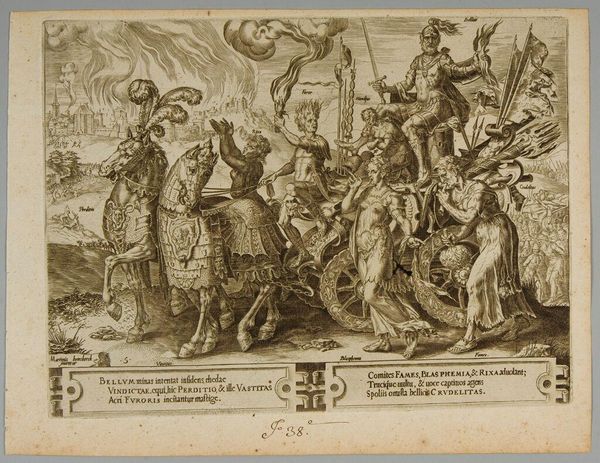
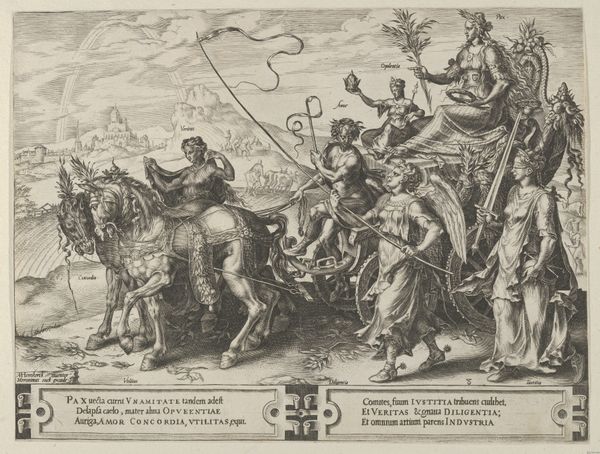
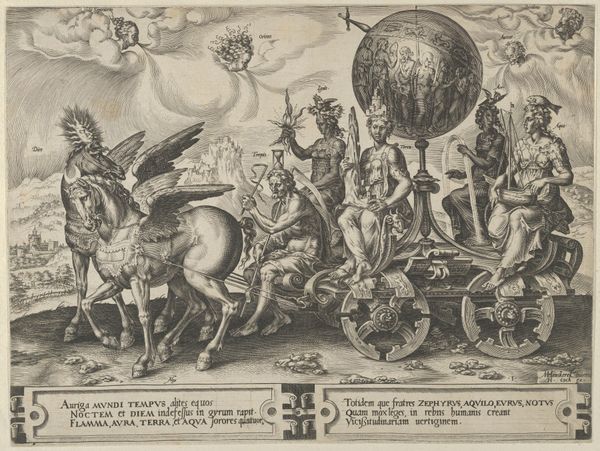
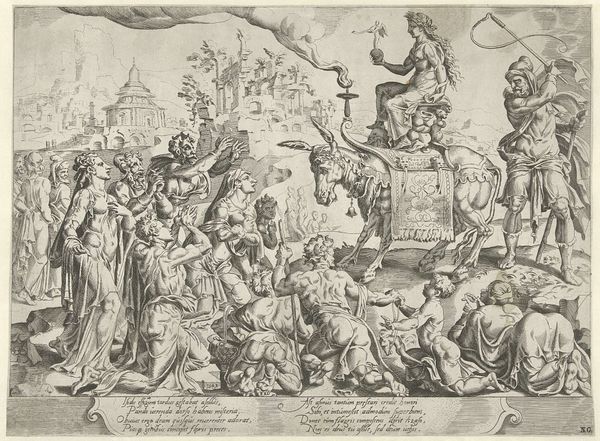
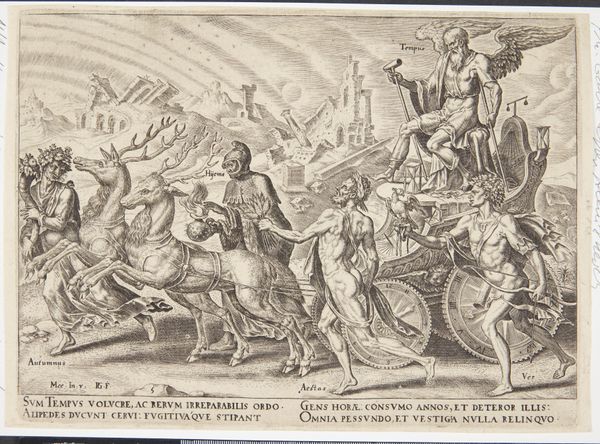
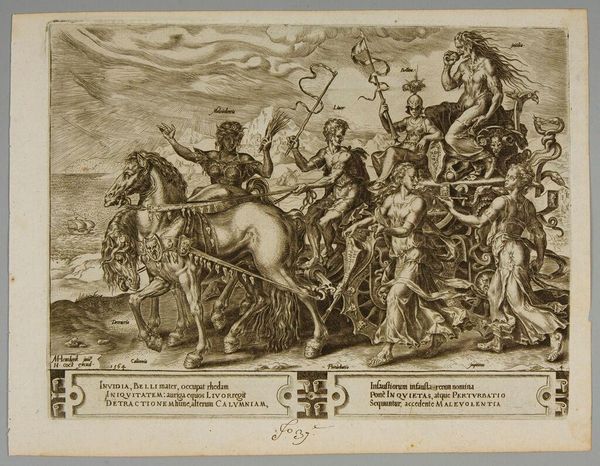
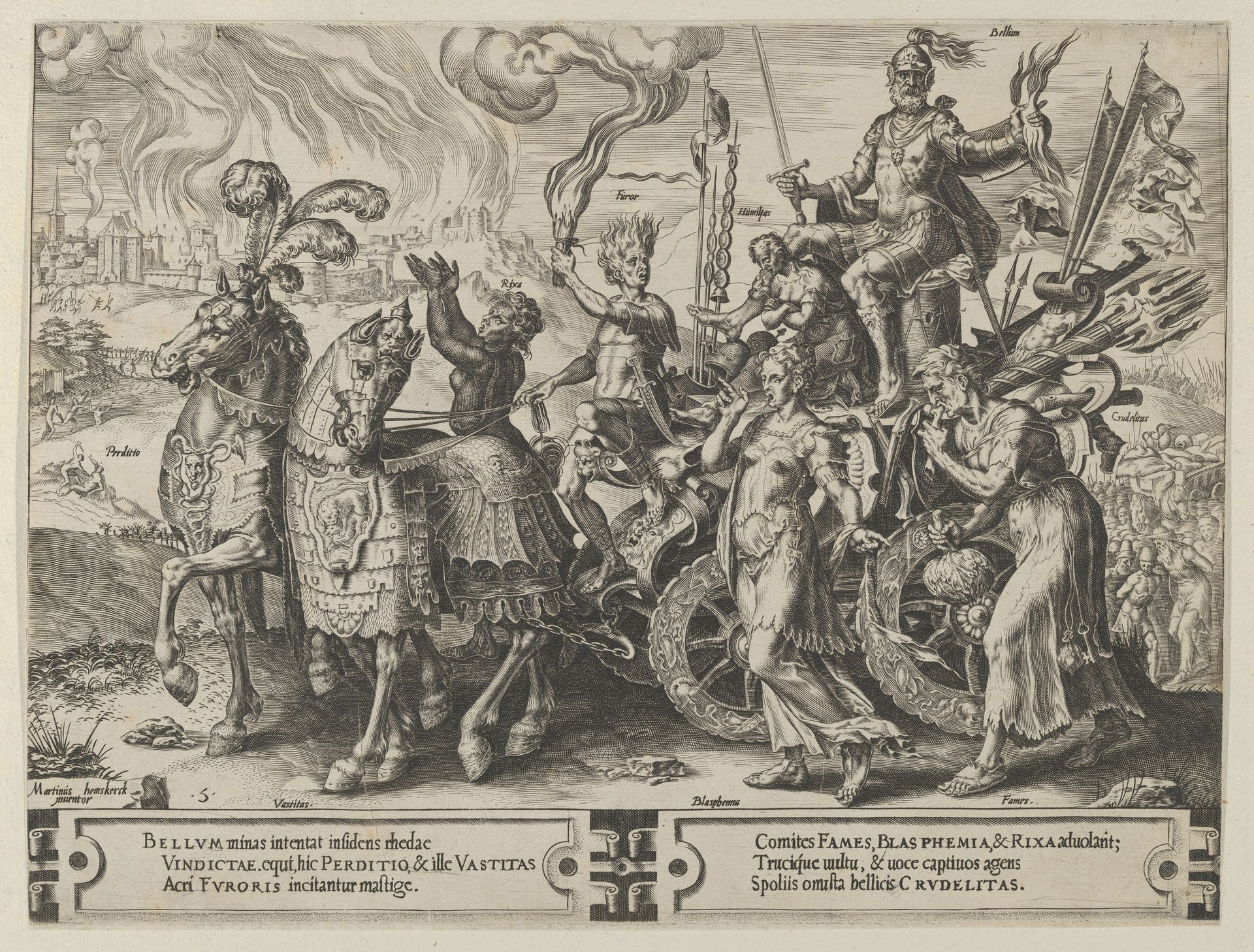
Cornelis Cort created this engraving, ‘The Triumph of War,’ sometime in the 16th century. It’s a print, of course, made by cutting lines into a metal plate, inking it, and running it through a press to transfer the image to paper. Consider the labor involved. The artist meticulously carved every detail—the textures of the horses’ armor, the chaotic swirl of figures, and the distant inferno. These linear elements make up the composition, the lines being the very structural components of the artwork. It’s a dark scene, yet the method of production allowed for many copies to be made and widely distributed. The print medium also served as a means to disseminate ideas widely during the Renaissance. Here, Cort critiques war by illustrating its destructive nature. Though seemingly glorifying military might, the allegory is clear, with war leading to famine, blasphemy, and strife. The artist is using the very means of technological advancement to make a critical statement. In the end, that’s a reminder that materials, processes, and social context are all crucial for a full understanding.
The Triumph of War, from The Cycle of the Vicissitudes of Human Affairs, plate 5
1564


Artwork details
- Medium
- drawing, print, engraving
- Dimensions
- Sheet: 8 7/8 × 11 5/8 in. (22.5 × 29.6 cm)
- Location
- Metropolitan Museum of Art, New York, NY
- Copyright
- Public Domain
Tags
Comments
Share your thoughts
About this artwork
Cornelis Cort created this engraving, ‘The Triumph of War,’ sometime in the 16th century. It’s a print, of course, made by cutting lines into a metal plate, inking it, and running it through a press to transfer the image to paper. Consider the labor involved. The artist meticulously carved every detail—the textures of the horses’ armor, the chaotic swirl of figures, and the distant inferno. These linear elements make up the composition, the lines being the very structural components of the artwork. It’s a dark scene, yet the method of production allowed for many copies to be made and widely distributed. The print medium also served as a means to disseminate ideas widely during the Renaissance. Here, Cort critiques war by illustrating its destructive nature. Though seemingly glorifying military might, the allegory is clear, with war leading to famine, blasphemy, and strife. The artist is using the very means of technological advancement to make a critical statement. In the end, that’s a reminder that materials, processes, and social context are all crucial for a full understanding.
Comments
Share your thoughts