About this artwork
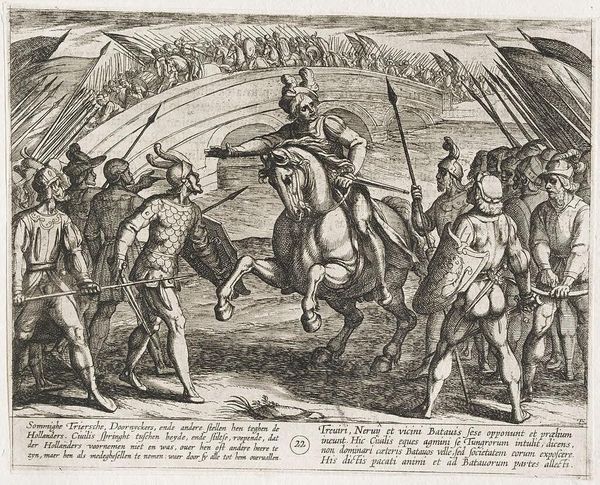
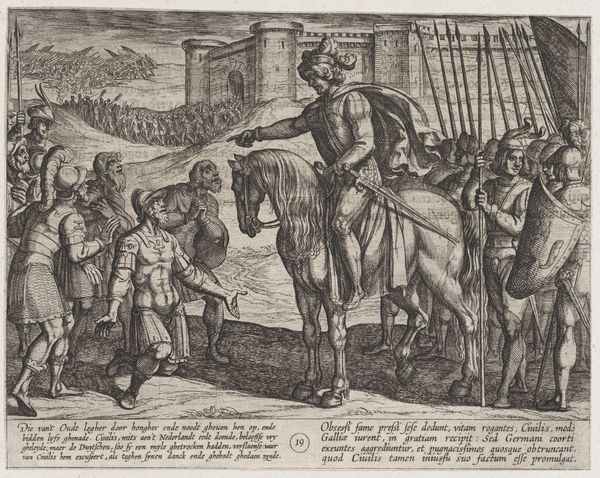
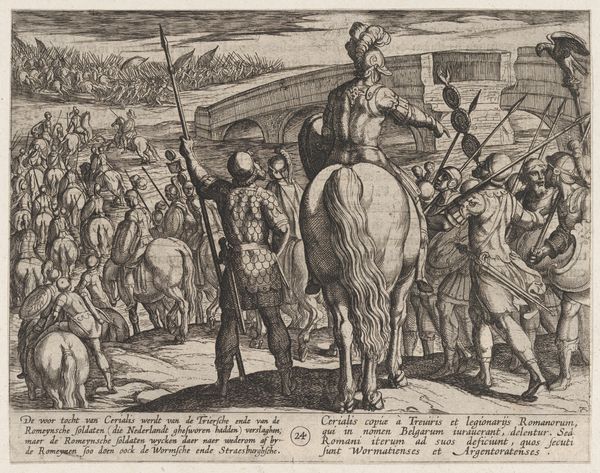
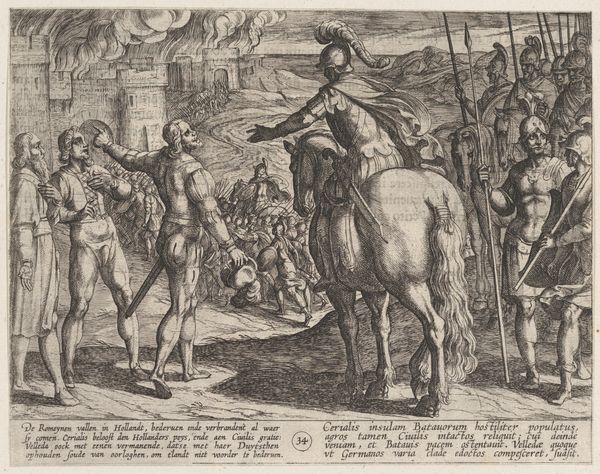
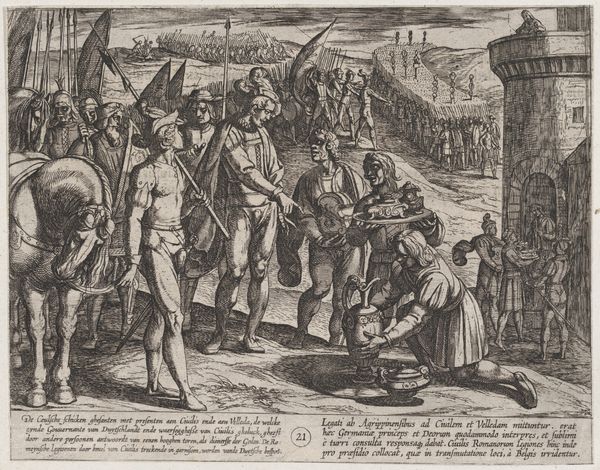
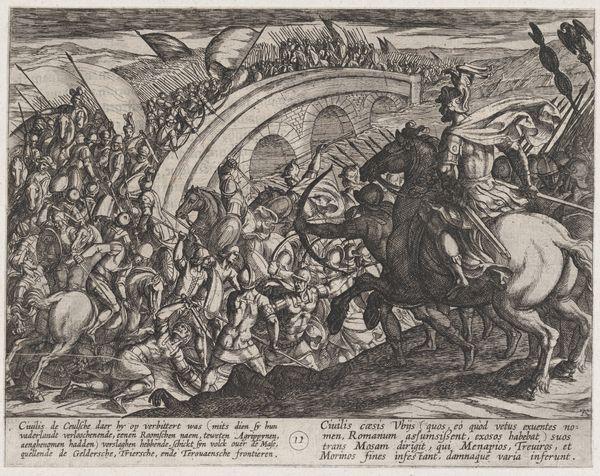
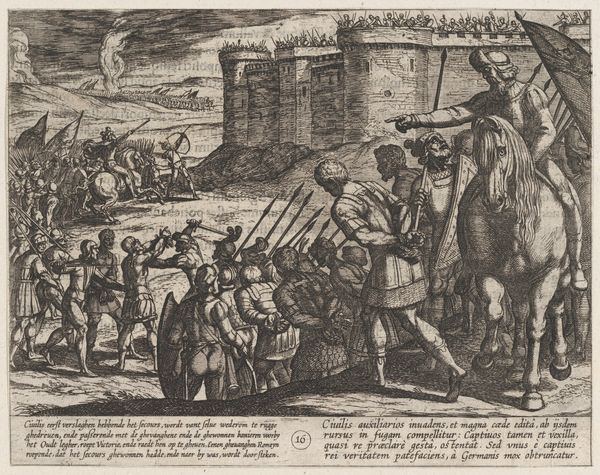
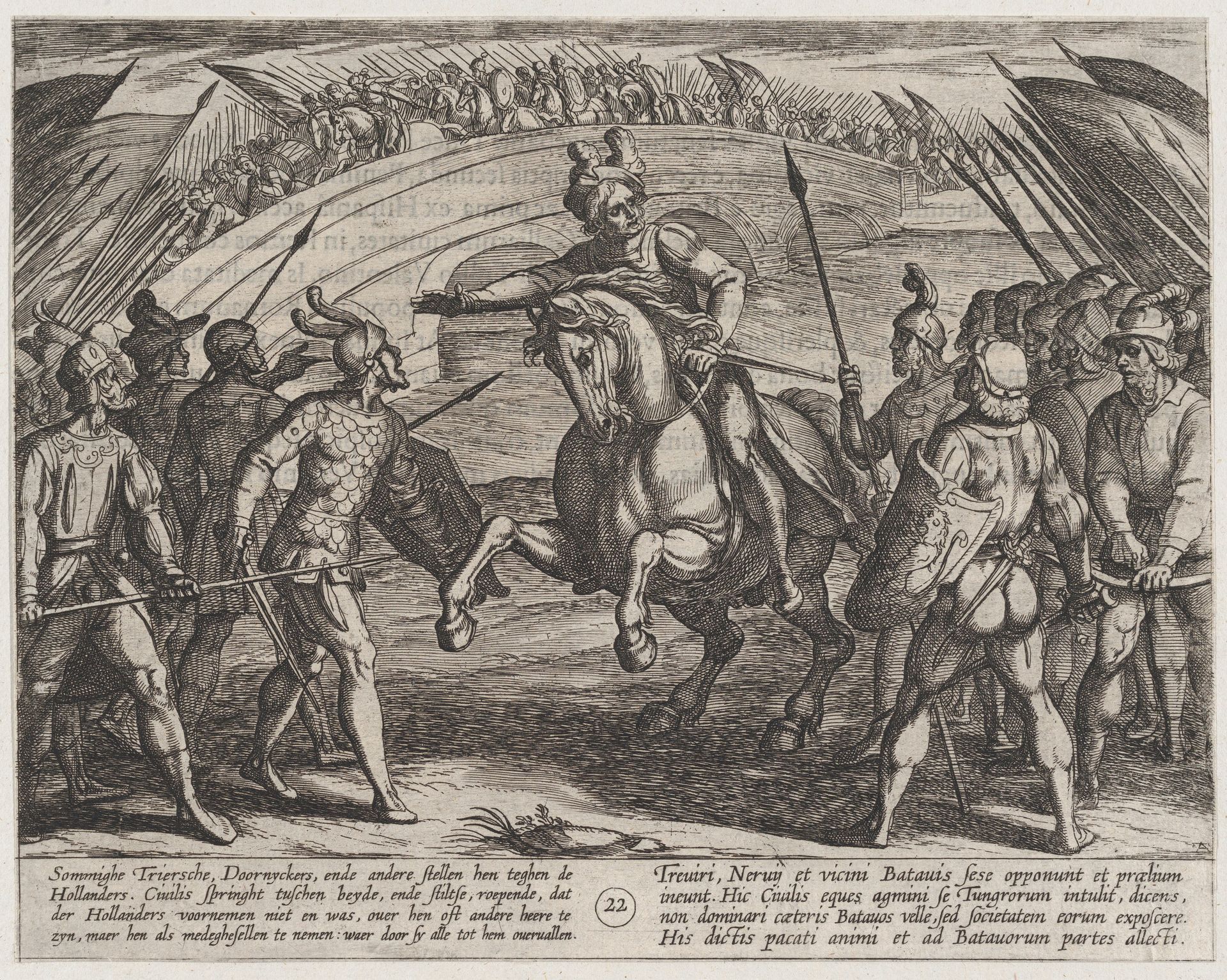
Antonio Tempesta created this print, "Civilis Separates German and Dutch Troops," around 1612 as part of a series on the Batavian revolt against Rome. The image presents a moment of high drama, steeped in the politics of its time. The series reflects the Dutch Republic's struggle for independence from Spain, drawing parallels with the ancient Batavians' fight against Roman rule. It's fascinating how history becomes a mirror, reflecting contemporary issues of identity and resistance. The artist casts the Batavians as heroic figures, skillfully manipulating historical narratives to bolster the Dutch cause. Consider the emotional weight of such imagery during a time of war. This wasn't just history; it was a call to arms, a way of forging a national identity through a carefully constructed vision of the past. The print participates in the construction of national identity and the complexities of historical narratives, filtered through the lens of contemporary struggles.
Plate 22: Civilis Separates German and Dutch Troops, from The War of the Romans Against the Batavians (Romanorvm et Batavorvm societas)
1611 - 1612


Artwork details
- Medium
- drawing, print
- Dimensions
- Sheet: 6 7/16 × 8 1/8 in. (16.4 × 20.7 cm)
- Location
- Metropolitan Museum of Art, New York, NY
- Copyright
- Public Domain
Tags
Comments
Share your thoughts
About this artwork
Antonio Tempesta created this print, "Civilis Separates German and Dutch Troops," around 1612 as part of a series on the Batavian revolt against Rome. The image presents a moment of high drama, steeped in the politics of its time. The series reflects the Dutch Republic's struggle for independence from Spain, drawing parallels with the ancient Batavians' fight against Roman rule. It's fascinating how history becomes a mirror, reflecting contemporary issues of identity and resistance. The artist casts the Batavians as heroic figures, skillfully manipulating historical narratives to bolster the Dutch cause. Consider the emotional weight of such imagery during a time of war. This wasn't just history; it was a call to arms, a way of forging a national identity through a carefully constructed vision of the past. The print participates in the construction of national identity and the complexities of historical narratives, filtered through the lens of contemporary struggles.
Comments
Share your thoughts