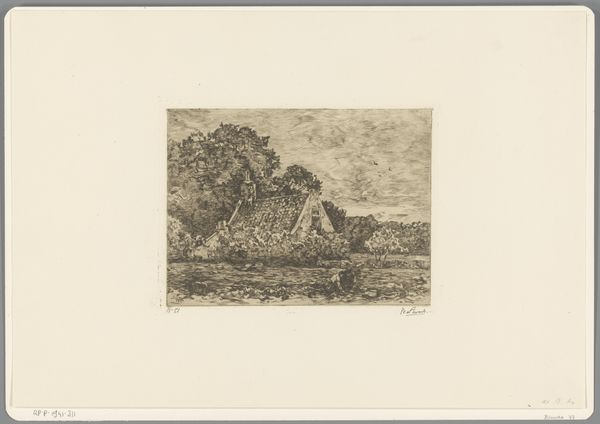
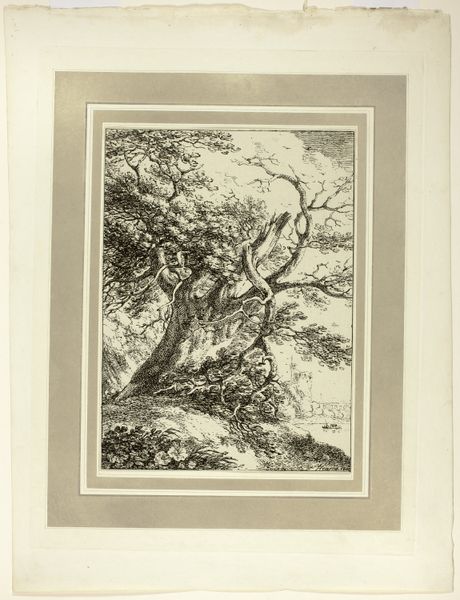
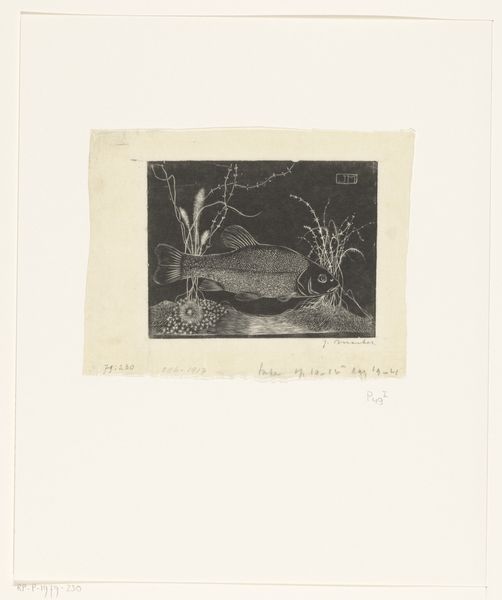
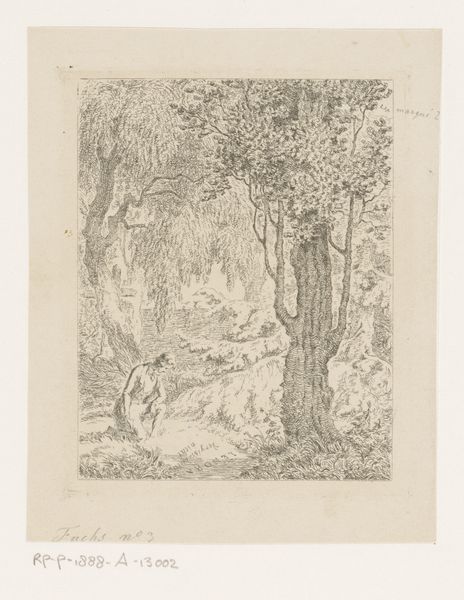
drawing, print, etching
#
drawing
#
rhythmical white colour
#
pale colours
#
natural tone
# print
#
etching
#
light coloured
#
landscape
#
repetition of white
#
white palette
#
white focal point
#
tonal art
#
repetition of white colour
#
naturalism
#
remaining negative space
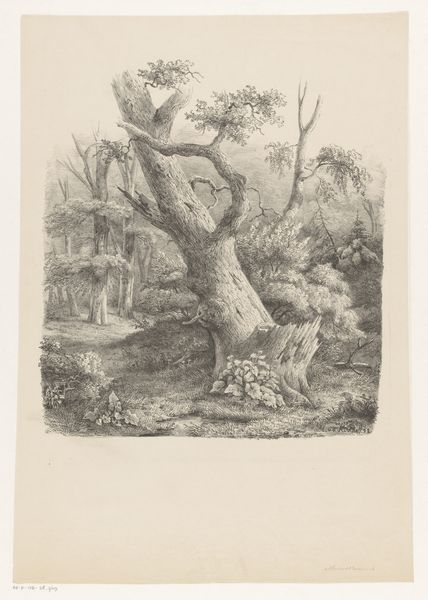
Dimensions: height 295 mm, width 210 mm
Copyright: Rijks Museum: Open Domain
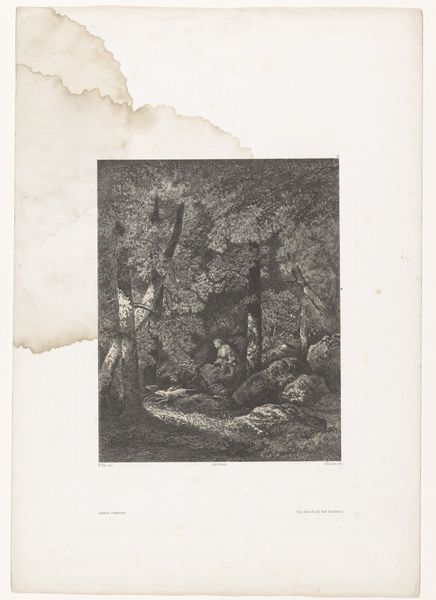
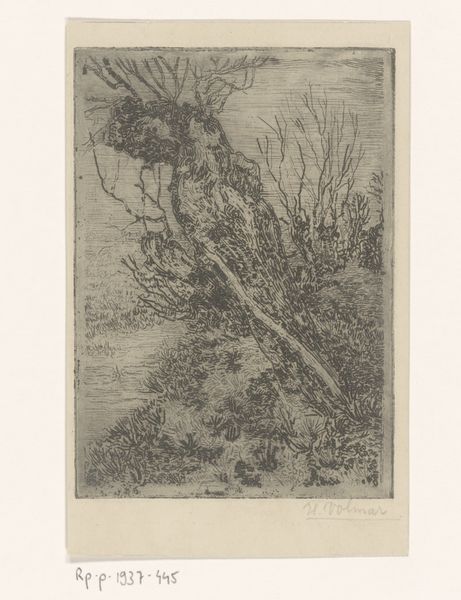
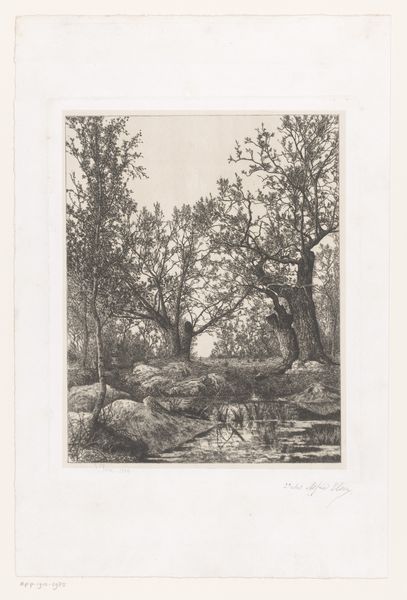
Editor: This etching from 1868, titled "Bats in a Tree" by Johannes Gerardus Keulemans, depicts exactly that: a tree absolutely teeming with bats. It's fascinating, and perhaps a bit unsettling. What catches your eye when you look at it? Curator: What intrigues me is the deliberate choice of the bat as the central figure. Throughout history, across cultures, bats are rarely neutral. Consider the symbolic weight carried by this creature. Editor: Could you elaborate on that weight? Curator: Certainly. Bats are nocturnal. What associations arise from darkness? Mystery, fear, the unknown. Simultaneously, in some traditions, they symbolize good fortune, even rebirth. Keulemans’ work makes us consider the duality inherent in the natural world, and the emotional complexities that emerge when we project our anxieties and aspirations onto non-human forms. The bats almost become stand-ins for aspects of the human psyche. Notice also, the tree itself. A gathering place, but here transformed into something a little ominous. Do you feel that tension? Editor: Absolutely. I hadn't considered the duality so explicitly. The tree as a meeting point made me only consider how a "tree of life" represents stability and connection. I suppose it could suggest disruption if seen with this dichotomy in mind. Curator: Indeed, this piece encourages us to confront contrasting elements within the symbols around us, prompting reflection on how we project our perceptions onto the world. Editor: This exploration has changed my interpretation significantly! Thank you. Curator: My pleasure, and thanks for raising the important questions about how these animals populate both the natural and human imagination.
Comments
No comments
Be the first to comment and join the conversation on the ultimate creative platform.
 Collect
 React
React Comment
More like this