

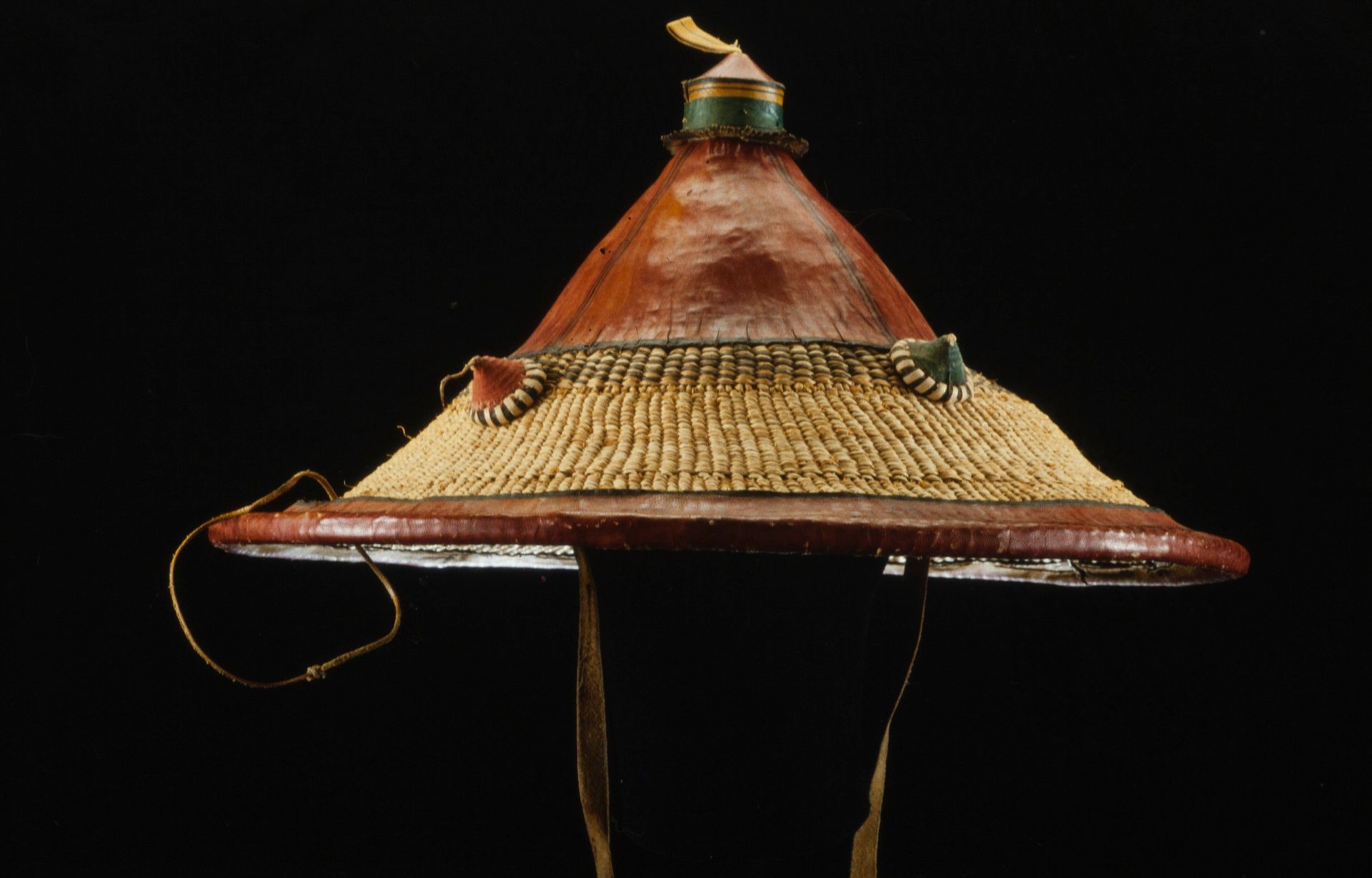
c. 20th century
Hat


Listen to curator's interpretation
Curatorial notes
Editor: So, this is a textile "Hat" by the Tuareg people, dating back to the 20th century. It looks ceremonial, almost regal. It definitely gives off a sense of status. What can you tell me about it? Curator: Looking at this "Hat", I immediately consider the complex societal structures of the Tuareg people, where such an object likely signified much more than mere head covering. Considering it was crafted in the 20th century, a period marked by colonial influence and resistance across Africa, we must ask: How did this hat function as a symbol of identity and autonomy within a changing world? Did its ornate design serve to reinforce traditional hierarchies, or perhaps even challenge colonial power structures? Editor: I hadn't thought about it in terms of resistance, but that makes sense. The attention to detail feels like a deliberate statement. Curator: Exactly! And think about who would have worn this. What role did that person play within their community? Consider gender too - who are the craftspeople and who the wearers and what roles did they hold? The textile itself – the materials and the labor – speaks to complex networks of production and exchange. Can we consider this an expression of cultural preservation in the face of outside pressures? Editor: So, it's less about the object itself and more about the stories and the power dynamics it represents? Curator: Precisely! This hat becomes a focal point for understanding broader socio-political realities, allowing us to question dominant narratives and explore marginalized voices. It’s about reclaiming agency through the lens of art history and cultural studies. Editor: That really changes how I see it. It’s not just a hat; it’s a statement. Curator: Yes, art becomes a site for dialogue, revealing deeper understandings of identity, resistance, and cultural negotiation. Hopefully, that understanding will stay with us.