assemblage, photography, sculpture
#
still-life
#
assemblage
#
postmodernism
#
sculpture
#
photography
#
black and white theme
#
sculpture
#
black and white
#
men
#
monochrome
Copyright: Fabio de Sanctis,Fair Use
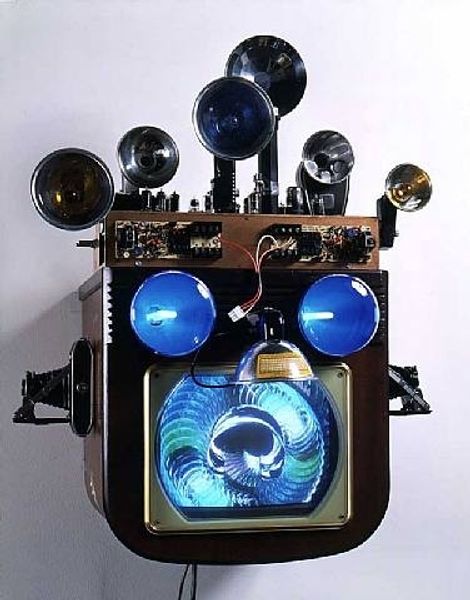
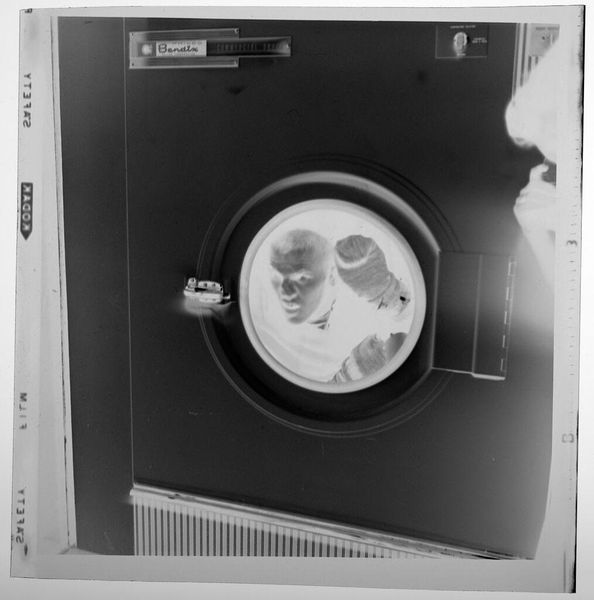
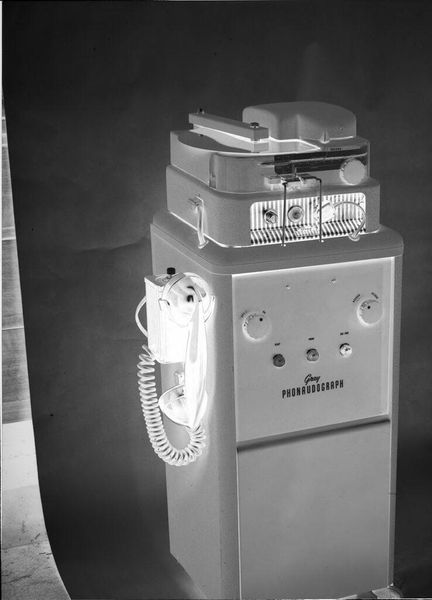
Curator: What a striking piece! Immediately, I'm struck by the somewhat anthropomorphic nature of these forms—sort of robotic twins in mourning. Editor: Indeed. We are looking at "I Gemelli Cantori," or "The Singing Twins," created in 1968 by Fabio de Sanctis. It's a fantastic example of assemblage, pushing the boundaries of sculpture and incorporating elements of still life through photography and found materials. Curator: Found materials are absolutely key here. You can almost trace the lines of where pieces were joined, the sutures of its creation. What kind of materials were used? The surfaces suggest something repurposed, something pre-existing with its own history. Editor: Precisely. De Sanctis was working within the context of postmodernism, and much of his artistic practice investigated the everyday and mass production. This work consists primarily of repurposed loudspeaker components integrated into sculptural forms that may be read as an indictment of technology in service to mass communication. The photographic element flattens the assembled material in the final presentation, compounding an alienating aesthetic experience. Curator: So, in a sense, it's both sculpture and critique. The wires look like lifelines but they tether them to an external source, an apparatus of control or, at least, reliance. The twins almost appear to be crying out, these bizarre funnels conveying unheard or unheard messages. Is there more insight into De Sanctis' thinking about how these forms were received during that tumultuous era? Editor: The piece emerges at the precipice of advanced technological advancement during the postwar period of Italian reconstruction, which provides critical insight. This period engendered optimism towards media and its promise for cultural development, but it equally spawned mass dissent about potential modes of social manipulation. The aesthetic parallels to mourning or weeping you pointed out is, therefore, relevant to the extent the sculpture’s grim expression echoes feelings of cultural disillusionment that pervaded this specific historical setting. Curator: It’s fascinating to consider those contradictions. Looking at the interplay of industrial forms repurposed into something strangely organic is revealing. Editor: It definitely invites viewers to reconsider how objects carry both function and cultural baggage. Thank you for offering the close reading; it only confirms how profoundly contextual art-historical analyses like yours remains instrumental in our collective appreciation!
Comments
No comments
Be the first to comment and join the conversation on the ultimate creative platform.
 Collect
 React
React Comment
More like this