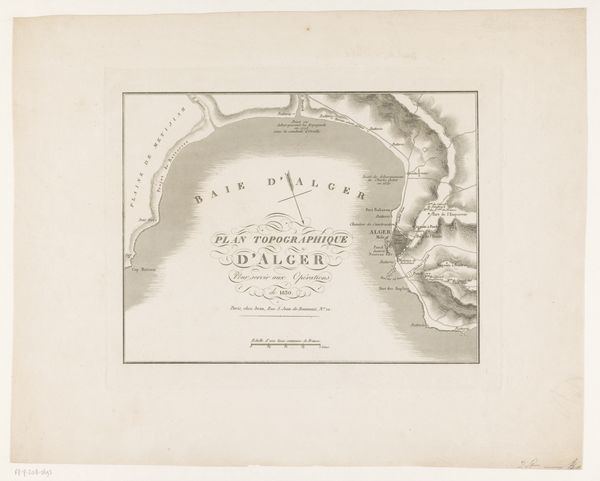
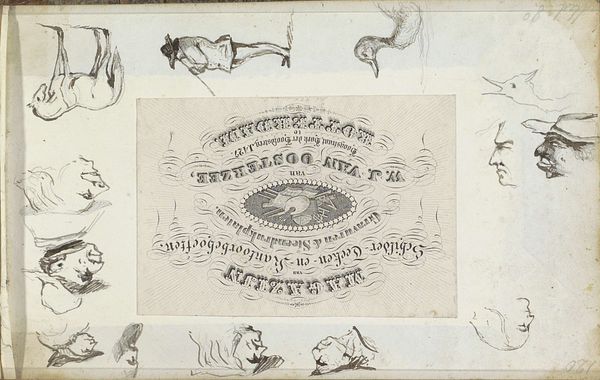
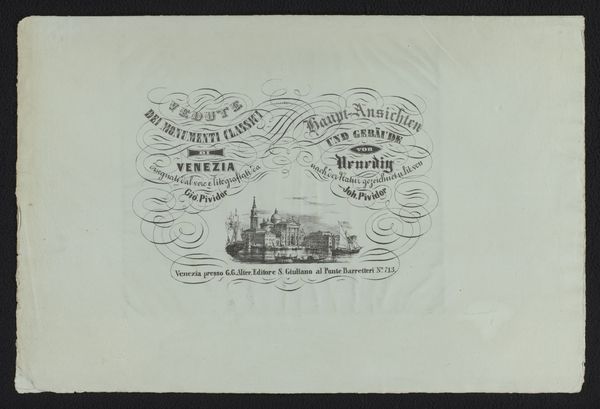
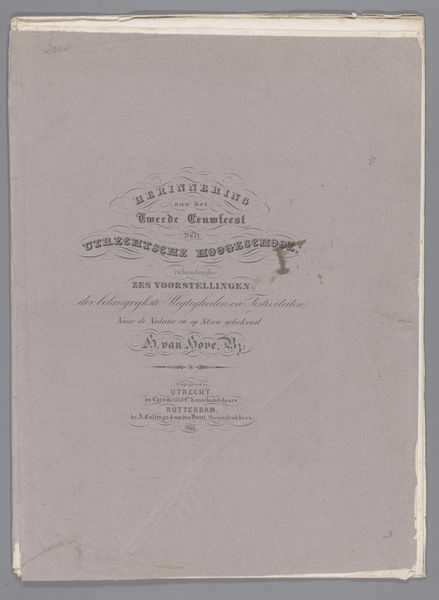
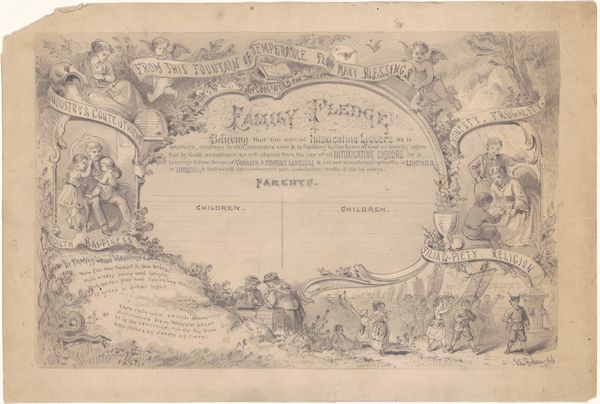
Design for a trade publication titled: "Historical Copies Chronographically Arranged", by R. W. Hume; J. W. Schermerhorn & Co., 14 Bond Street, N. Y. 1800 - 1900
0:00
0:00


drawing, print, typography, poster
#
drawing
# print
#
typography
#
geometric
#
poster
#
calligraphy
Copyright: Public Domain
This is Robert William Hume's design for a trade publication titled "Historical Copies Chronographically Arranged". In nineteenth-century America, the burgeoning publishing industry played a crucial role in shaping cultural narratives and disseminating knowledge, but it also reflected the social stratification of the time. Hume's design offers insight into the era's perception of history as a commodity. The emphasis on chronological arrangement suggests a desire for order. This was a prevalent theme which aligned with efforts to categorize and understand a rapidly changing world. The design itself, with its ornamental lettering and structured layout, speaks to the aesthetic values of the period, which were strongly influenced by class and education. Publications like this catered to a specific demographic, reinforcing existing hierarchies of knowledge and access. The act of arranging historical copies chronographically reflects a desire to control the narrative. It presents a version of history that's curated and packaged for consumption. Consider what stories are told, and whose voices are amplified through such publications.
Comments
No comments
Be the first to comment and join the conversation on the ultimate creative platform.
 Collect
 React
React Comment
More like this