1957
Painting


Listen to curator's interpretation
Curatorial notes
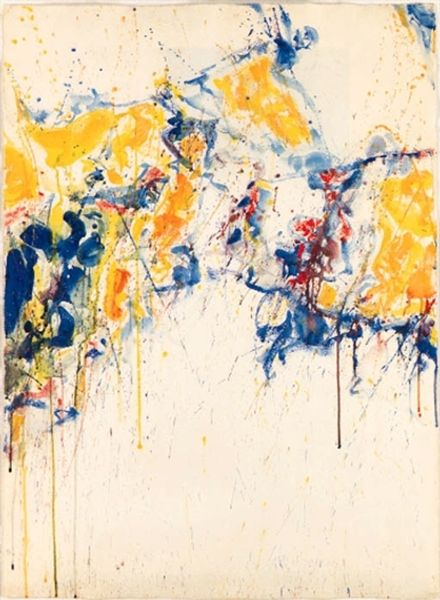
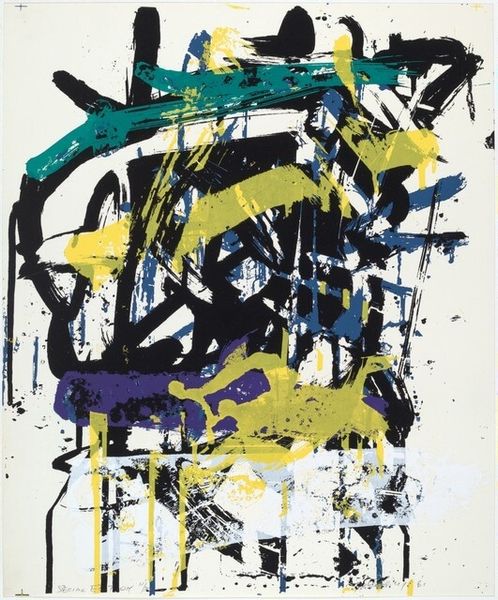
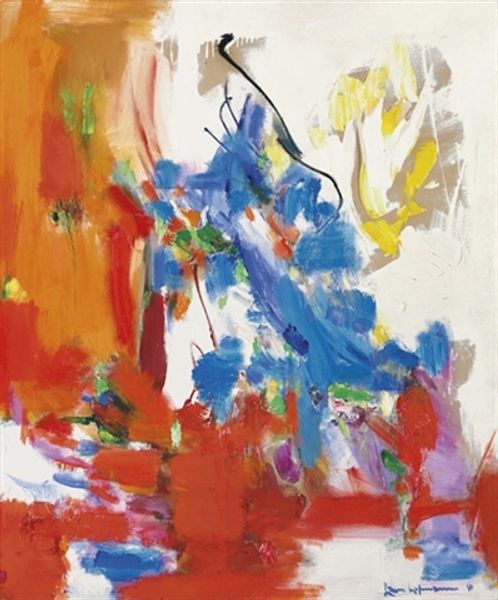
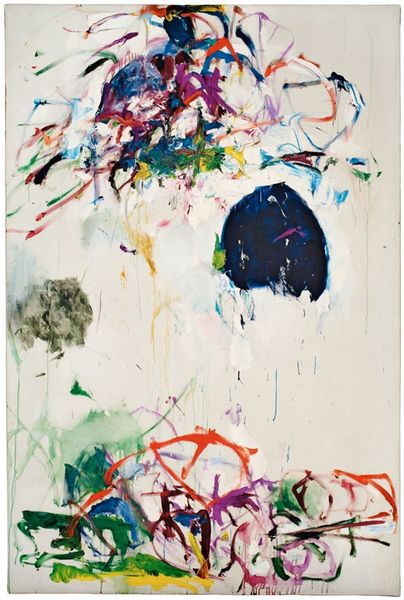
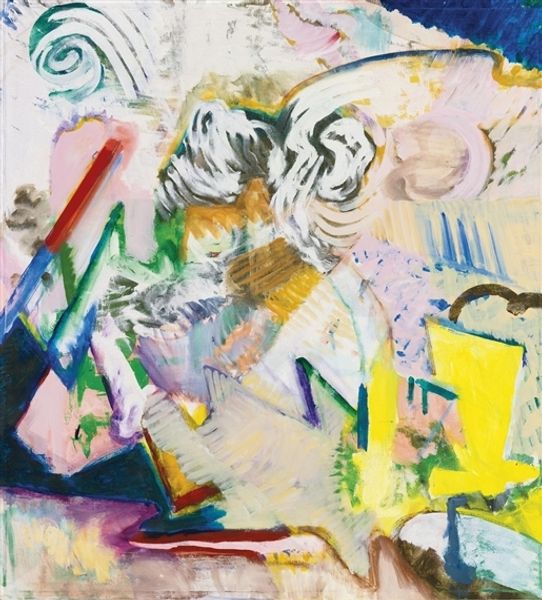
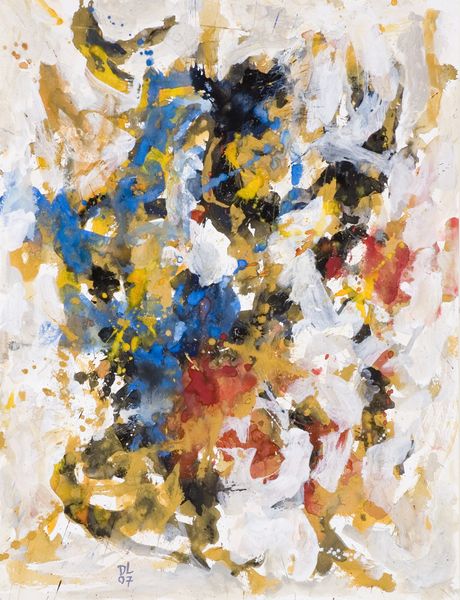
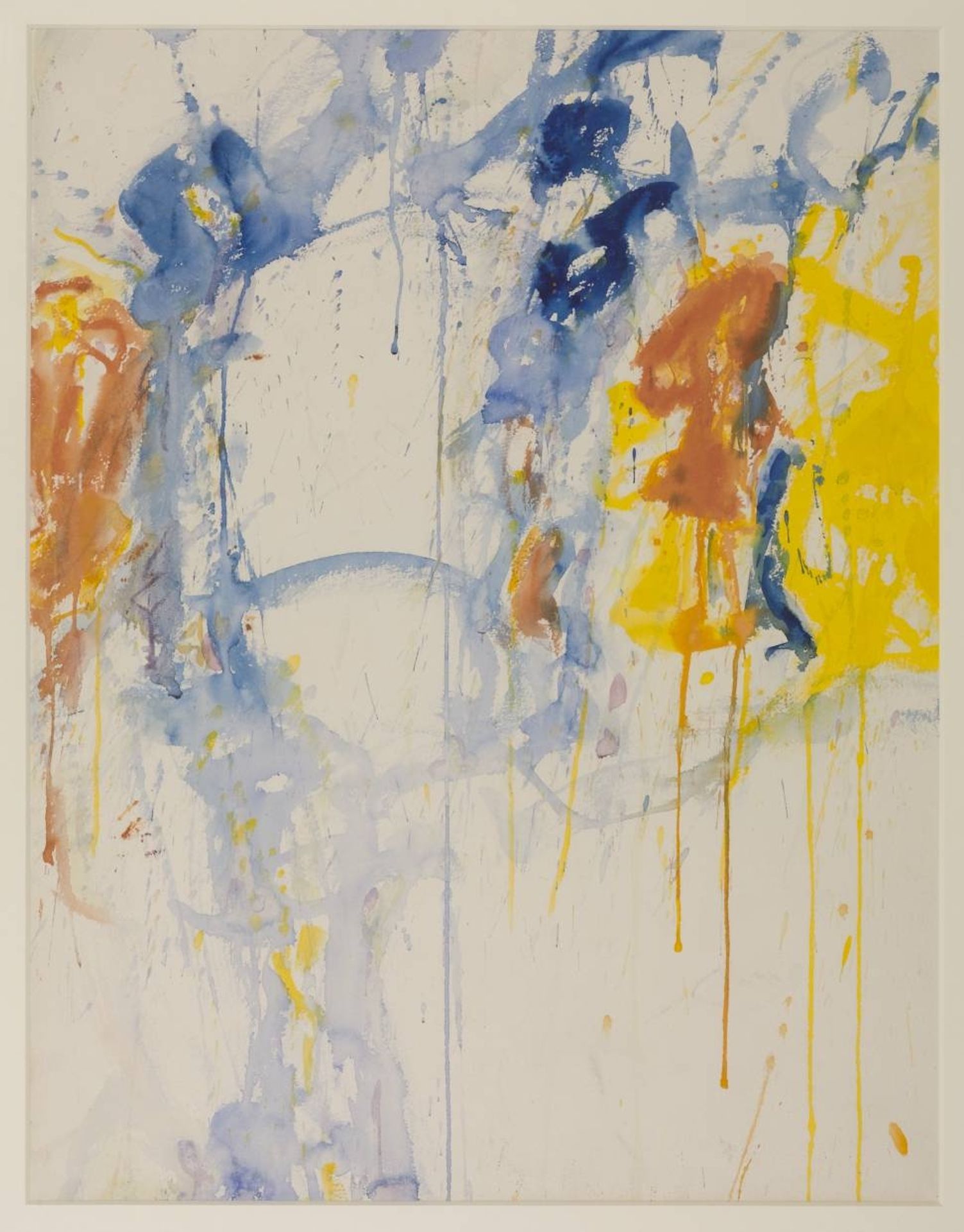
Editor: We're looking at "Painting," created by Sam Francis in 1957. It's an abstract watercolor on paper. What strikes me is its airy quality, almost like looking at a sky filled with fleeting color. How do you interpret this work? Curator: The ethereal quality you've observed is key. Consider the visual language: translucent washes of color allowed to drip and bleed. Francis isn’t just depicting form; he’s evoking feeling. He's playing with the symbolic weight of color – blues often associated with contemplation, yellows with joy or enlightenment. Editor: So, the drips and splatters aren’t accidental? They contribute to the overall meaning? Curator: Precisely. Think about the action painters of the time – Pollock, de Kooning. But Francis takes a different path. Instead of dense layers, he offers a sense of openness, of limitless space. The negative space is just as important as the pigment; it represents potential, possibility. The way Francis articulates the monochrome gives it the feeling of being something far greater. Editor: I see. So, it’s less about a specific subject and more about… suggestion? A feeling evoked through color and form? Curator: Exactly. Each color, each shape, acts as a symbol, unconsciously stirring emotions and memories within us. This painting almost becomes a Rorschach test. What personal symbols do you see within it? How do the colors speak to you? Editor: I guess I see a kind of melancholic joy – the blue is calming, but the yellow brings a sense of hopeful energy. I hadn't thought about the symbolism of the colors before. Curator: And that’s the power of abstract expressionism. It bypasses the conscious mind and speaks directly to the subconscious through universally resonant symbols. Editor: It’s been fascinating to see how an abstract work can be so rich in symbolic meaning. Thank you.