About this artwork
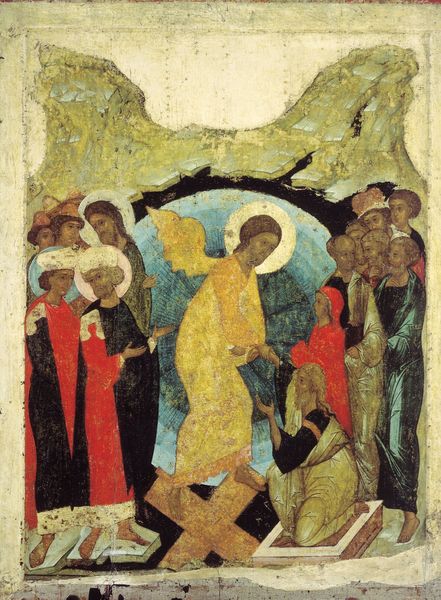
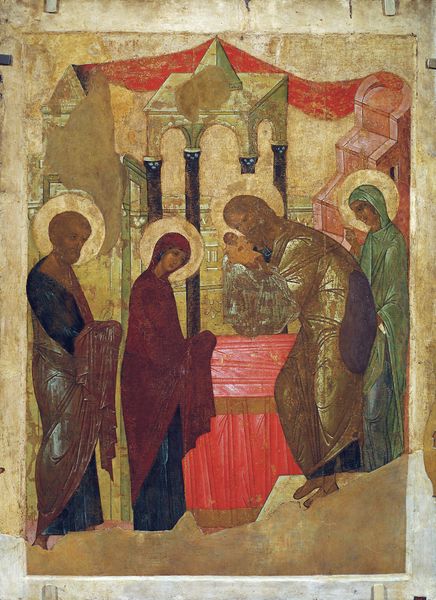
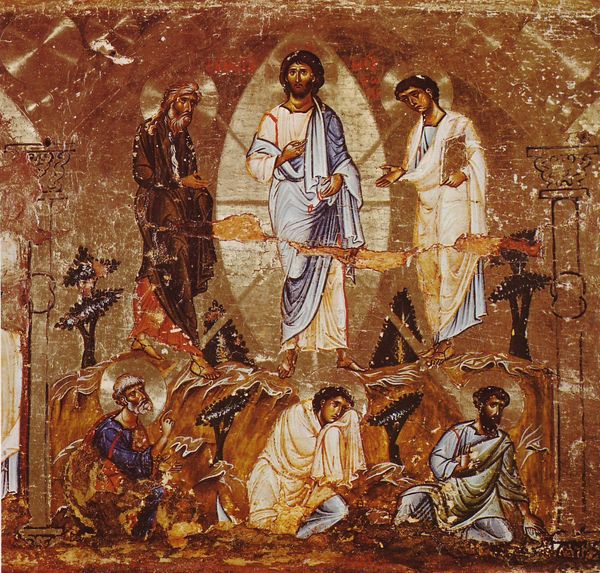
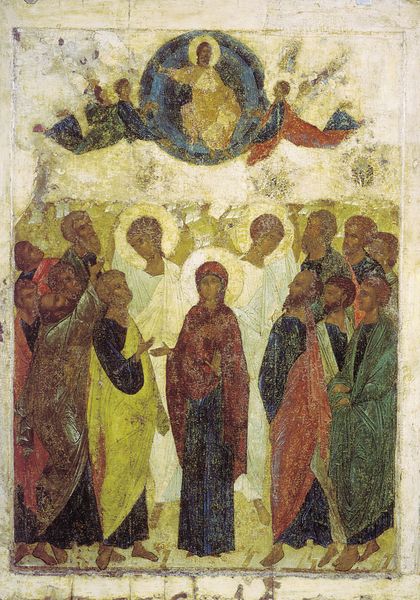
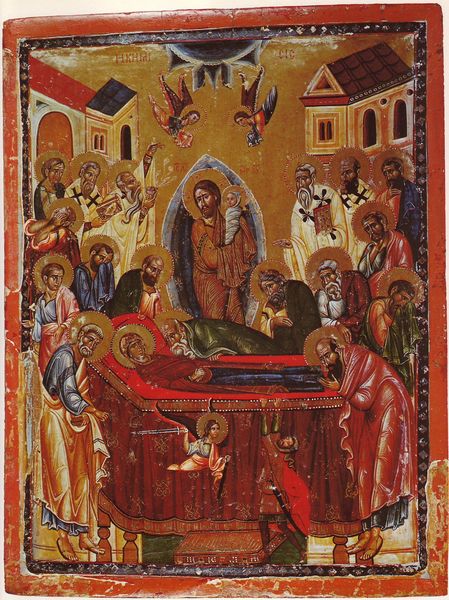
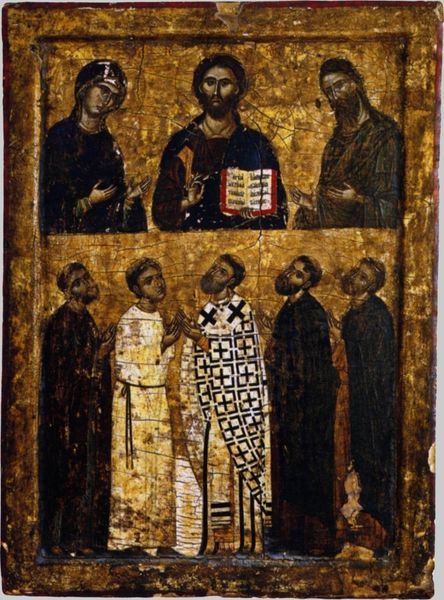
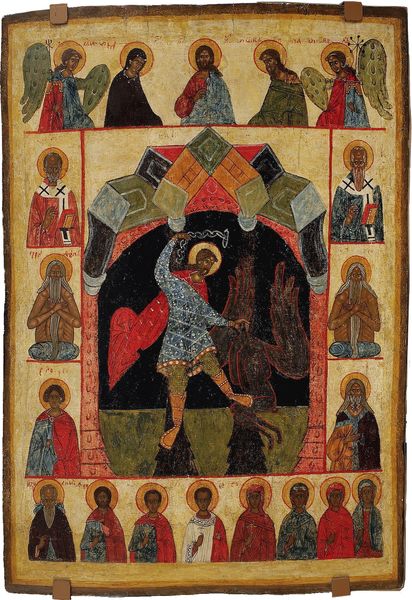
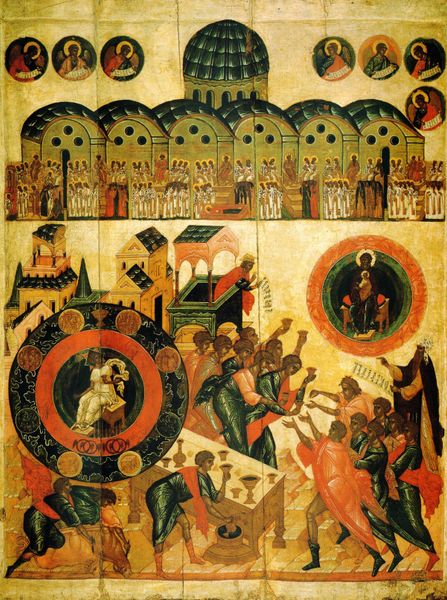
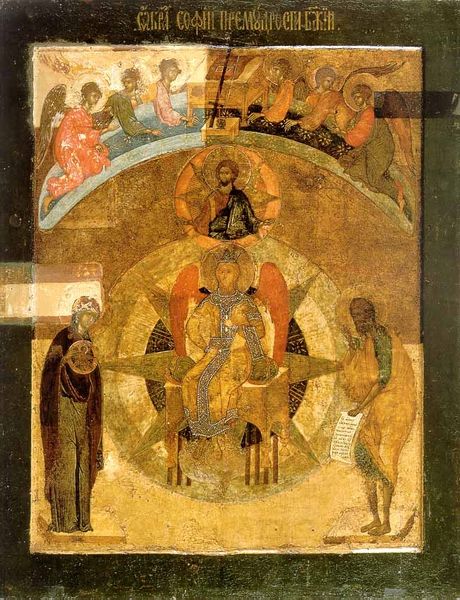
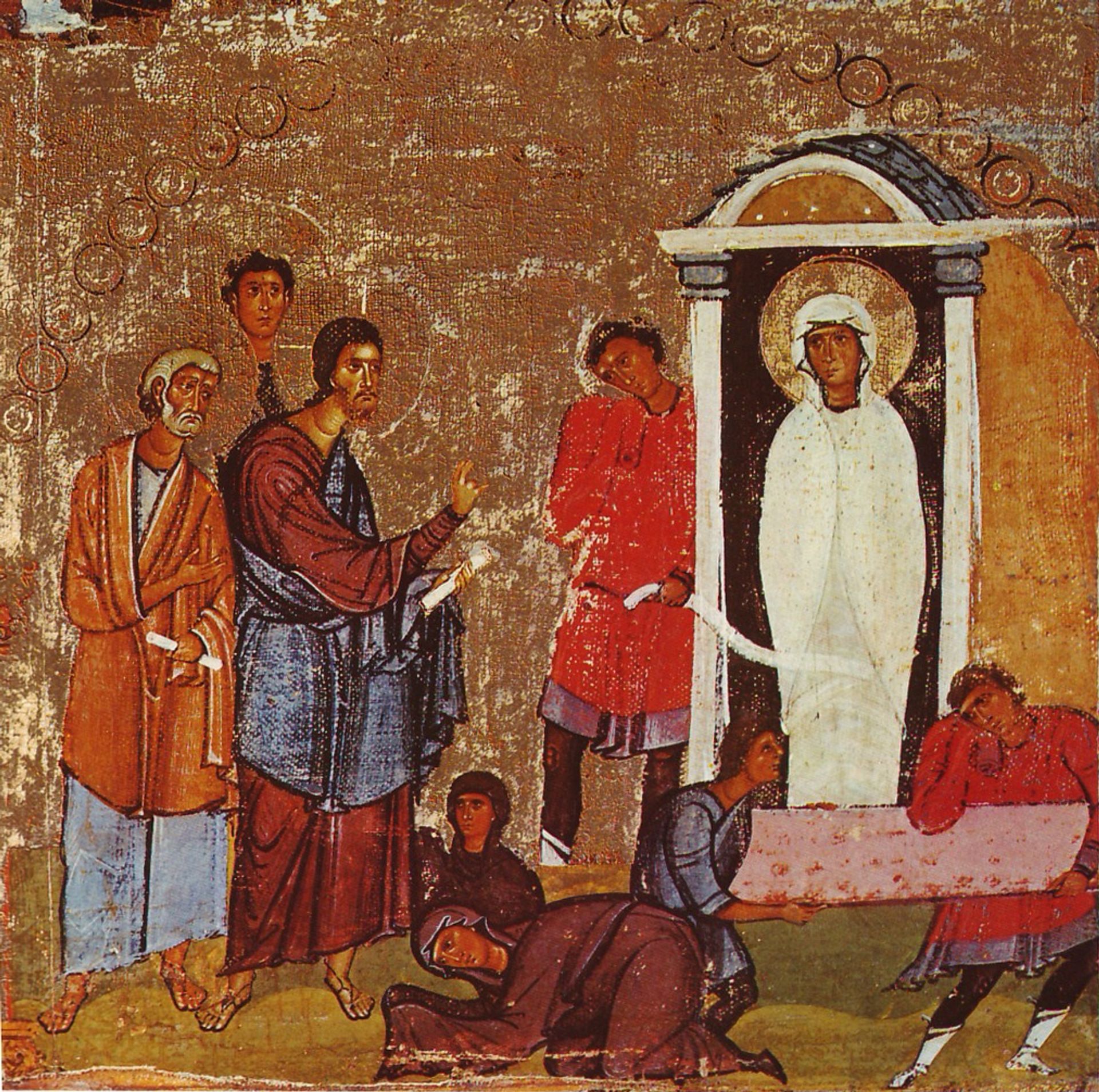
Editor: Here we have Lazarus Miracle, a tempera painting from around the year 1200, made in the Byzantine style, and currently housed at Saint Catherine's Monastery. The muted colors and solemn faces create such a serious tone. What do you see when you look at this piece? Curator: Well, immediately, I see the visual codification of religious doctrine playing out on a public stage. These icons weren't just devotional objects; they were tools used by the Church to communicate specific theological messages to a largely illiterate population. Notice how the figures around Jesus gaze in his direction. Editor: Right, it directs the viewer’s attention as well. But why that particular narrative? What made it important? Curator: The Raising of Lazarus was particularly powerful because it visually demonstrates Christ's power over death. Remember, the social role of religious art was significant in establishing authority. Showing Jesus performing a miracle like this legitimized the church's role as mediator between God and the people. Editor: So it was like, visual propaganda? Curator: You could frame it that way, yes. How does the depiction affect your perception? Editor: I guess knowing that there was a deliberate message helps me look past just the aesthetic. The flatness, which I initially thought was just a stylistic choice, now feels like it serves the story, makes it somehow timeless and universal. Curator: Exactly. These images weren’t about individual expression. They were part of a much larger cultural project. Considering that gives the work a whole new layer of meaning, doesn't it? Editor: Absolutely. It shifts the focus from the personal to the communal. Thanks for pointing that out. Curator: My pleasure. I'm always fascinated by how the study of history adds such richness to a viewing experience.
Lazarus Miracle
1200

Orthodox Icons
@orthodoxiconsLocation
Saint Catherine's Monastery, Mount Sinai, EgyptArtwork details
- Medium
- tempera, painting
- Location
- Saint Catherine's Monastery, Mount Sinai, Egypt
- Copyright
- Orthodox Icons,Fair Use
Tags
Comments
Share your thoughts
About this artwork
Editor: Here we have Lazarus Miracle, a tempera painting from around the year 1200, made in the Byzantine style, and currently housed at Saint Catherine's Monastery. The muted colors and solemn faces create such a serious tone. What do you see when you look at this piece? Curator: Well, immediately, I see the visual codification of religious doctrine playing out on a public stage. These icons weren't just devotional objects; they were tools used by the Church to communicate specific theological messages to a largely illiterate population. Notice how the figures around Jesus gaze in his direction. Editor: Right, it directs the viewer’s attention as well. But why that particular narrative? What made it important? Curator: The Raising of Lazarus was particularly powerful because it visually demonstrates Christ's power over death. Remember, the social role of religious art was significant in establishing authority. Showing Jesus performing a miracle like this legitimized the church's role as mediator between God and the people. Editor: So it was like, visual propaganda? Curator: You could frame it that way, yes. How does the depiction affect your perception? Editor: I guess knowing that there was a deliberate message helps me look past just the aesthetic. The flatness, which I initially thought was just a stylistic choice, now feels like it serves the story, makes it somehow timeless and universal. Curator: Exactly. These images weren’t about individual expression. They were part of a much larger cultural project. Considering that gives the work a whole new layer of meaning, doesn't it? Editor: Absolutely. It shifts the focus from the personal to the communal. Thanks for pointing that out. Curator: My pleasure. I'm always fascinated by how the study of history adds such richness to a viewing experience.
Comments
Share your thoughts