About this artwork
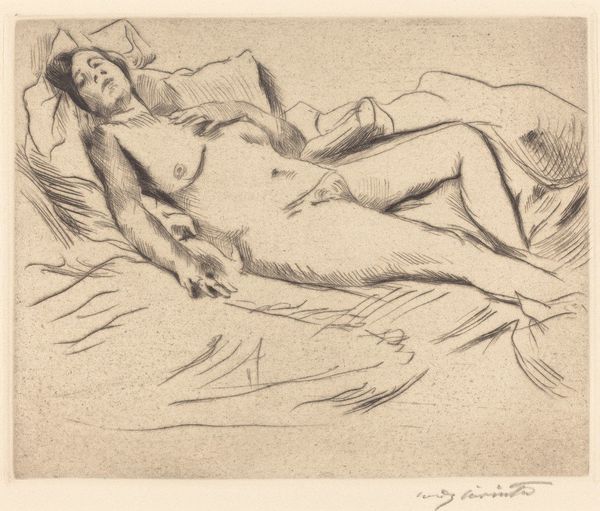
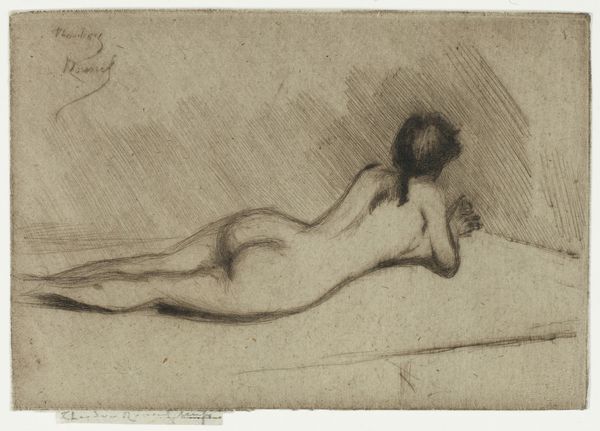
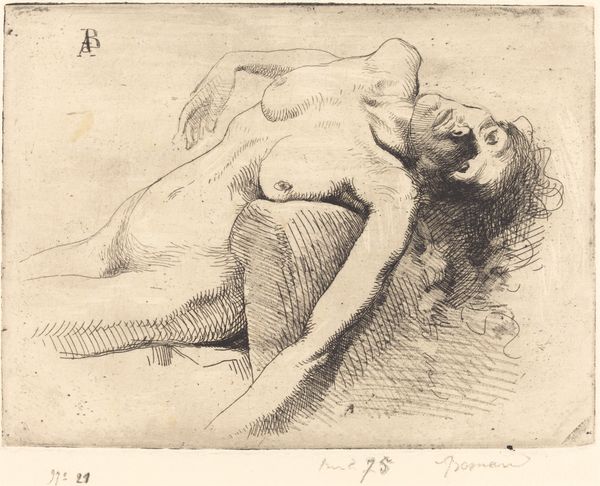
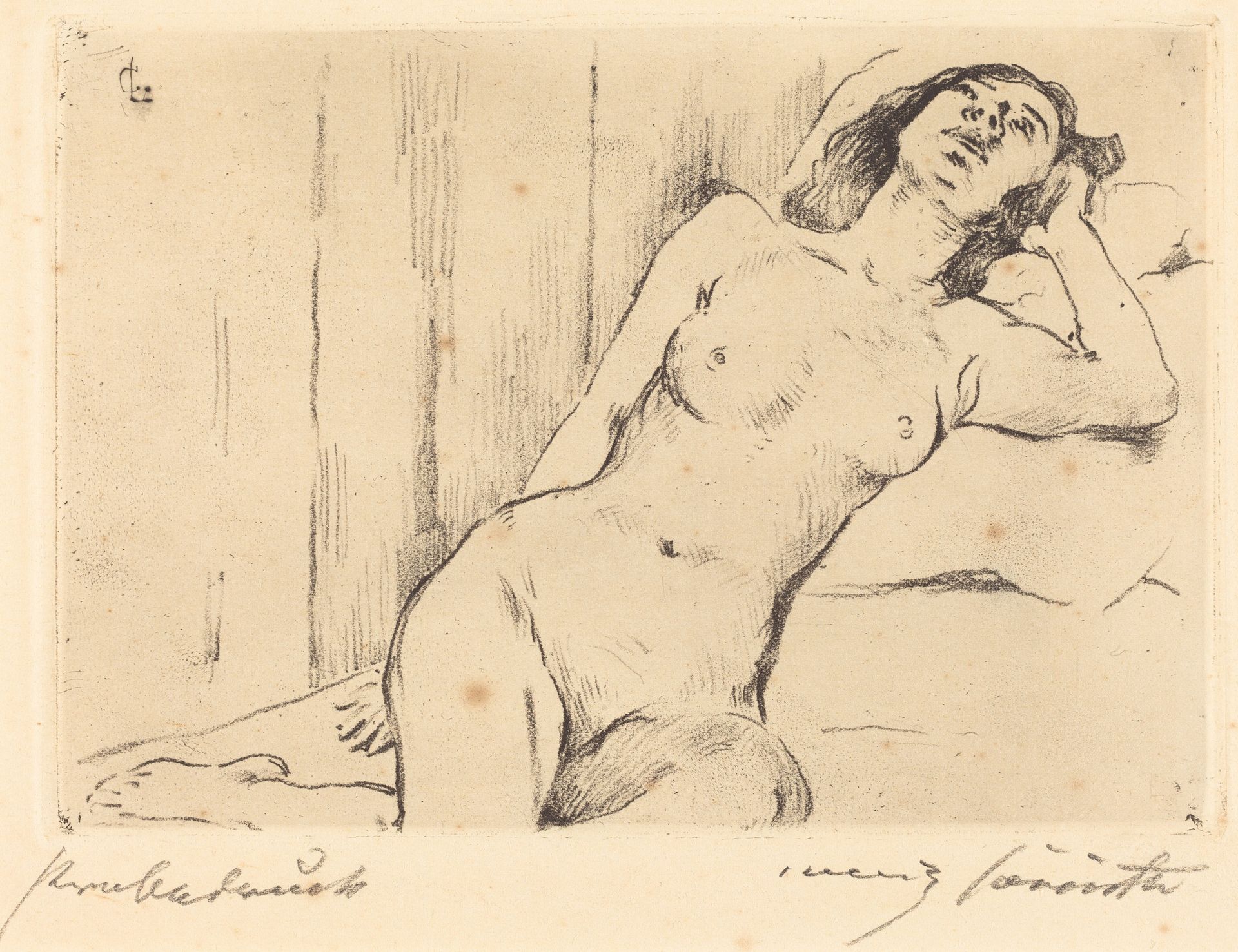
Lovis Corinth made this print, Ruhende Dreiviertel Akt, using etching – it’s all about the line here. The lines feel quick, searching, like he’s trying to pin down not just the shape of the model but something about her presence. Look at the way he’s built up the shadows, with these tight, almost scribbled lines, especially around her belly and under her arm. It’s not about perfect realism, it's more about the feeling of weight, of the body taking up space. The texture is so immediate, like you could almost feel the scratch of the needle on the plate. There’s this really interesting tension between the delicacy of the lines and the robust physicality of the figure. You can see echoes of artists like Kathe Kollwitz in the way Corinth uses line to convey emotion and the raw, unfiltered look at the human form. Art is like a visual conversation, artists riffing off each other across time. It's never just one voice, it’s an ongoing dialogue.
Ruhende Dreiviertel Akt (Reclining Female Nude)
1911


Artwork details
- Medium
- drawing, print, etching, pencil
- Dimensions
- plate: 12.6 x 18 cm (4 15/16 x 7 1/16 in.) sheet: 31.3 x 40.5 cm (12 5/16 x 15 15/16 in.)
- Copyright
- National Gallery of Art: CC0 1.0
Tags
Comments
Share your thoughts
About this artwork
Lovis Corinth made this print, Ruhende Dreiviertel Akt, using etching – it’s all about the line here. The lines feel quick, searching, like he’s trying to pin down not just the shape of the model but something about her presence. Look at the way he’s built up the shadows, with these tight, almost scribbled lines, especially around her belly and under her arm. It’s not about perfect realism, it's more about the feeling of weight, of the body taking up space. The texture is so immediate, like you could almost feel the scratch of the needle on the plate. There’s this really interesting tension between the delicacy of the lines and the robust physicality of the figure. You can see echoes of artists like Kathe Kollwitz in the way Corinth uses line to convey emotion and the raw, unfiltered look at the human form. Art is like a visual conversation, artists riffing off each other across time. It's never just one voice, it’s an ongoing dialogue.
Comments
Share your thoughts