About this artwork
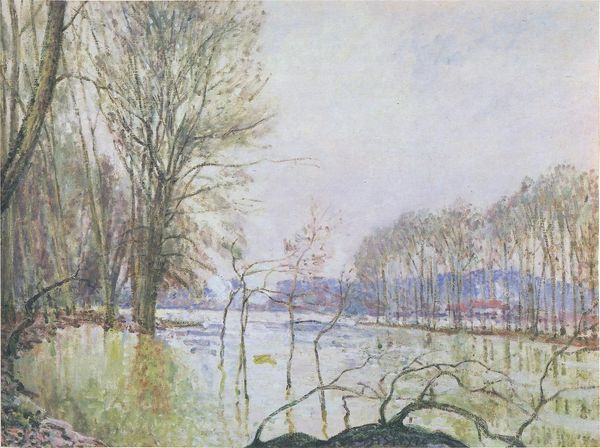
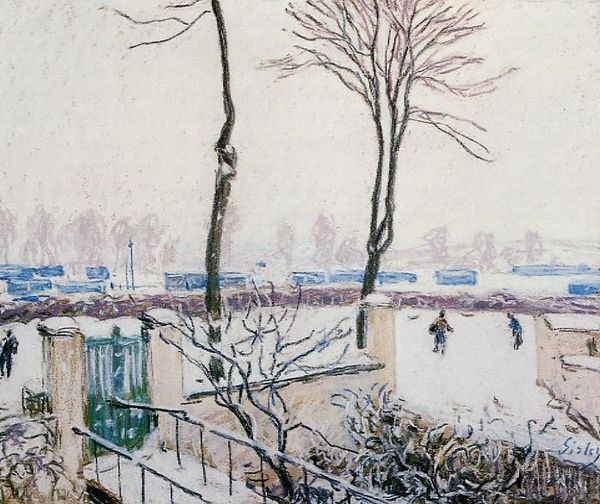
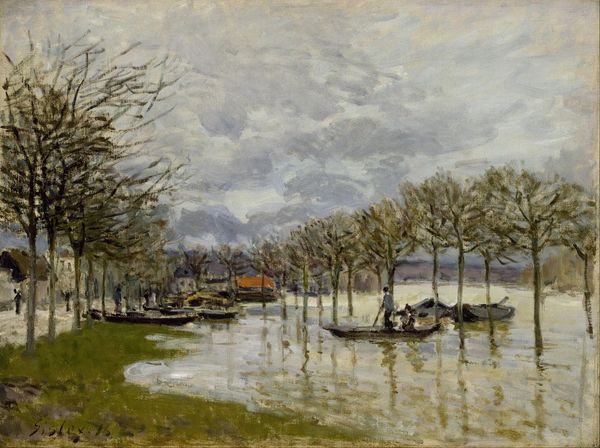
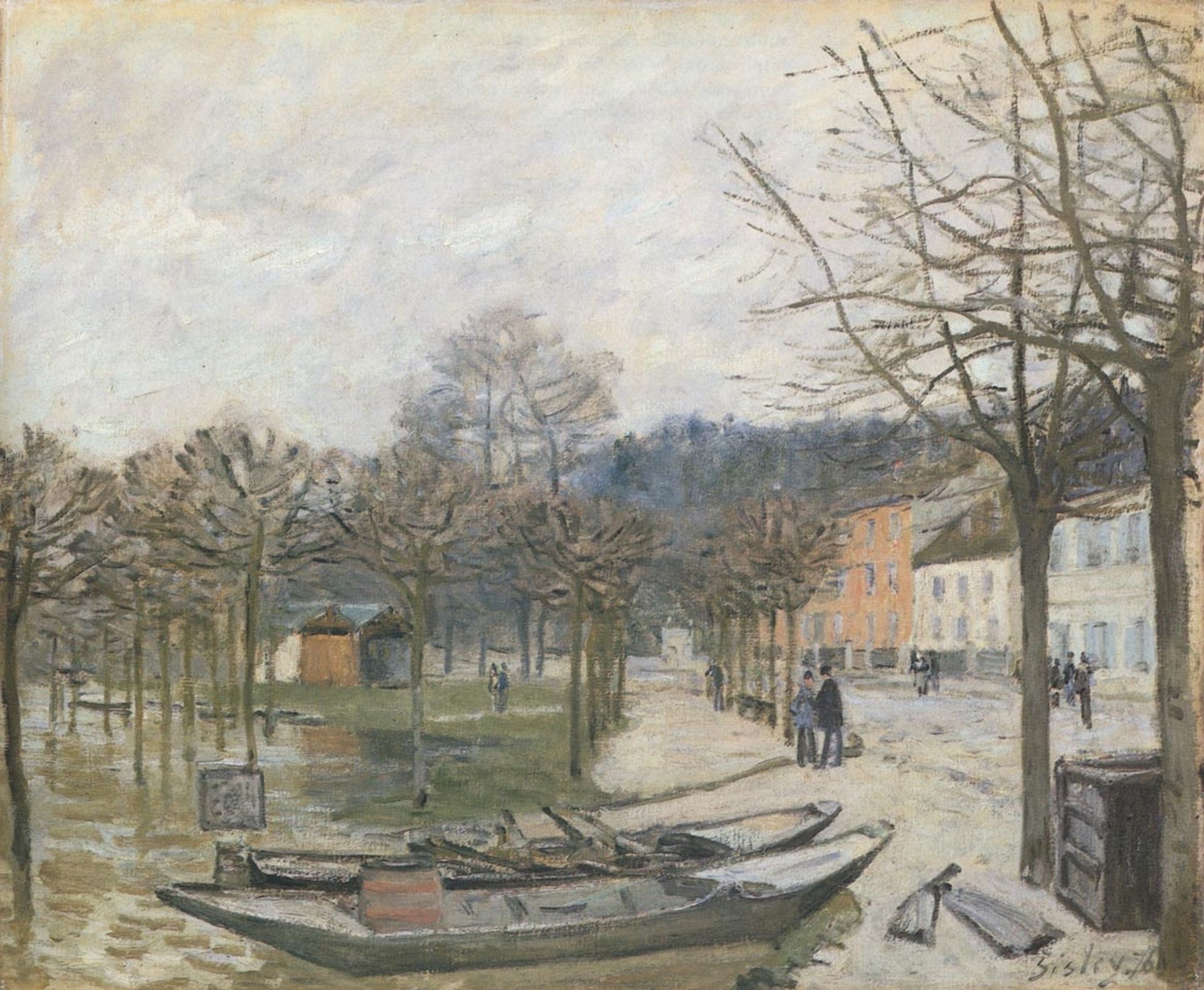
Alfred Sisley, a British artist working in France, painted 'Flood at Port Marly' using oil on canvas. While Sisley exhibited with the Impressionists, he maintained a quiet distance from their social and political radicalism. The late 19th century in France was a time of great social upheaval, as the country grappled with the legacies of colonialism, rapid industrialization, and growing class disparities. Sisley focused on landscapes, often devoid of people, but in 'Flood at Port Marly' we see figures strolling along the walkway and in the distance seemingly unbothered by the flooded landscape. Is this painting an attempt by Sisley to render visible a kind of bourgeois complacency? Sisley’s position as an outsider, both as a British citizen and as someone who never quite fit into the Parisian art scene, perhaps gave him a unique perspective on French society. Unlike some of his contemporaries, Sisley did not depict scenes of urban poverty or industrial blight, focusing instead on the quiet beauty of the French countryside. Yet, in this painting we might ask ourselves, what does it mean to be so unmoved?
Flood at Port Marly
1876

Alfred Sisley
1840 - 1899Location
Fitzwilliam Museum (University of Cambridge), Cambridge, UKArtwork details
- Medium
- painting, oil-paint
- Dimensions
- 46.1 x 55.9 cm
- Location
- Fitzwilliam Museum (University of Cambridge), Cambridge, UK
- Copyright
- Public domain
Tags
Comments
Share your thoughts
About this artwork
Alfred Sisley, a British artist working in France, painted 'Flood at Port Marly' using oil on canvas. While Sisley exhibited with the Impressionists, he maintained a quiet distance from their social and political radicalism. The late 19th century in France was a time of great social upheaval, as the country grappled with the legacies of colonialism, rapid industrialization, and growing class disparities. Sisley focused on landscapes, often devoid of people, but in 'Flood at Port Marly' we see figures strolling along the walkway and in the distance seemingly unbothered by the flooded landscape. Is this painting an attempt by Sisley to render visible a kind of bourgeois complacency? Sisley’s position as an outsider, both as a British citizen and as someone who never quite fit into the Parisian art scene, perhaps gave him a unique perspective on French society. Unlike some of his contemporaries, Sisley did not depict scenes of urban poverty or industrial blight, focusing instead on the quiet beauty of the French countryside. Yet, in this painting we might ask ourselves, what does it mean to be so unmoved?
Comments
Share your thoughts