Dimensions: height 434 mm, width 278 mm
Copyright: Rijks Museum: Open Domain
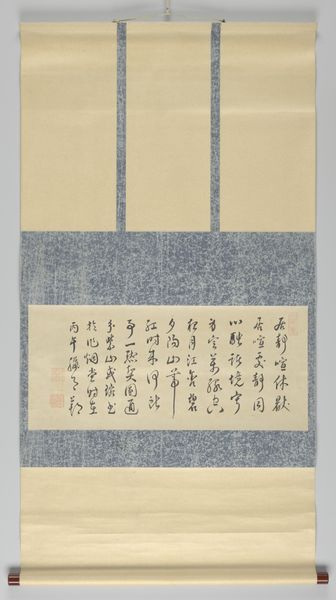
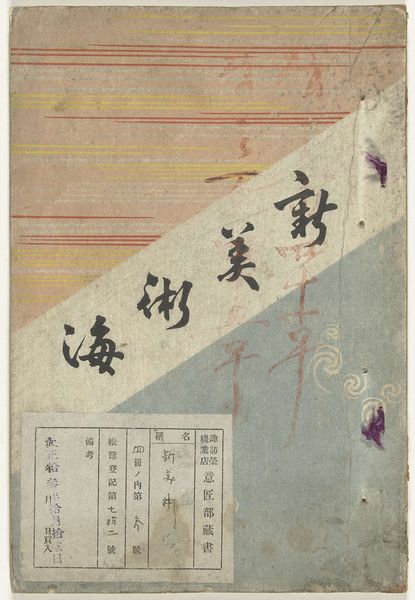
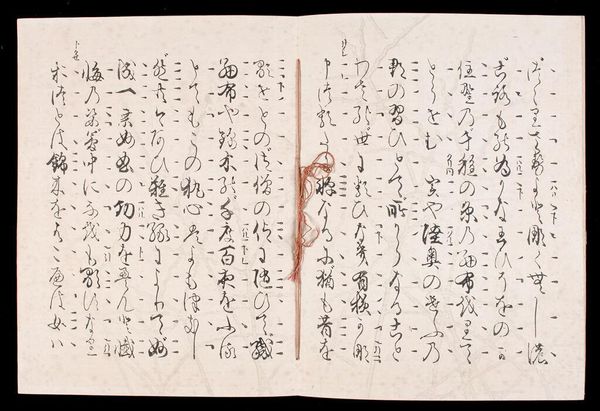
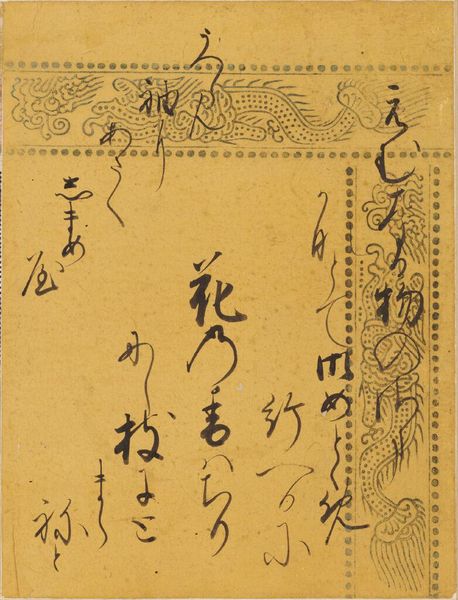
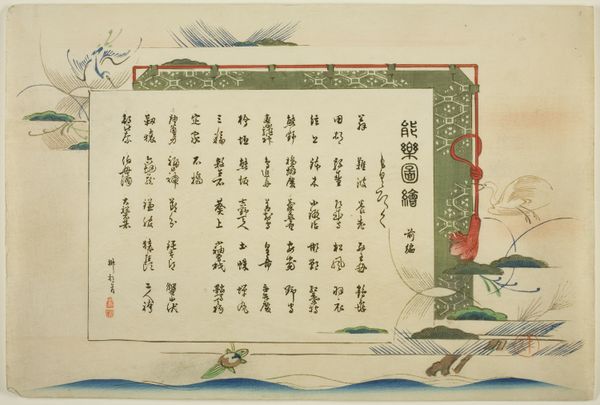
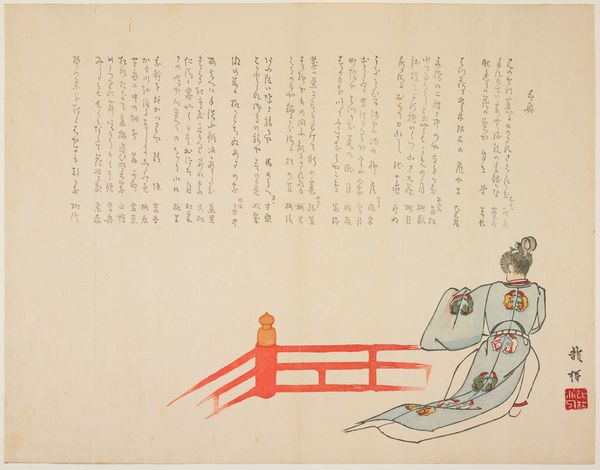
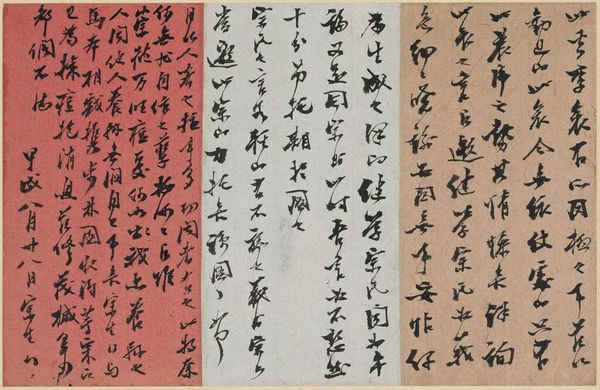
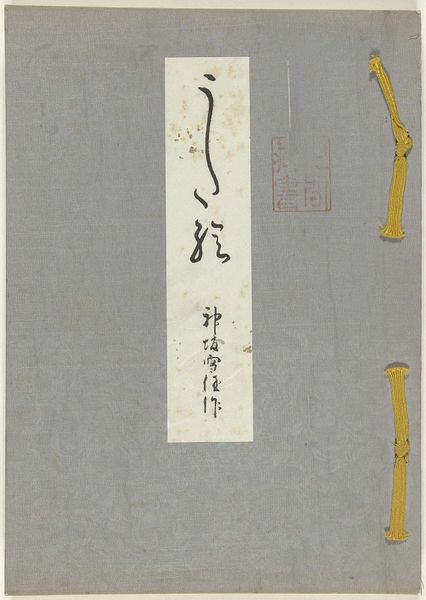
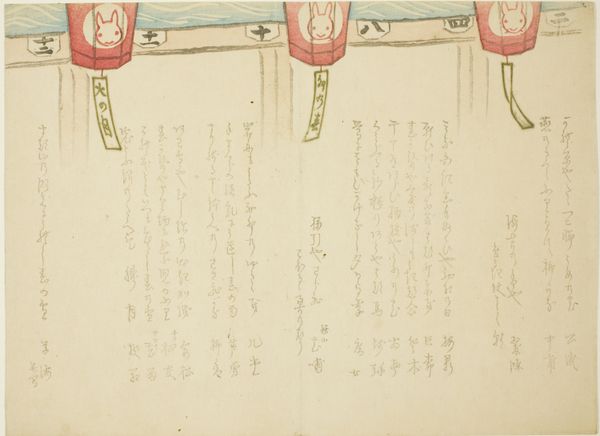
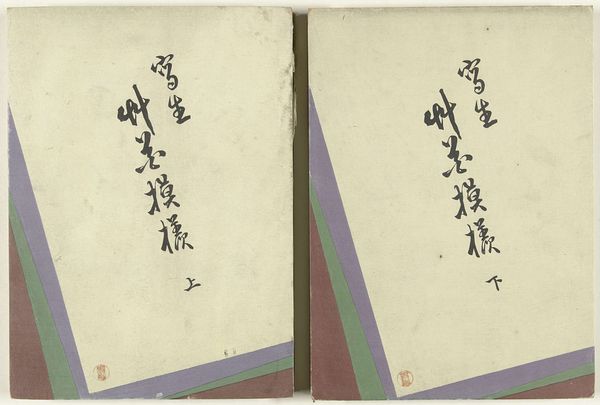
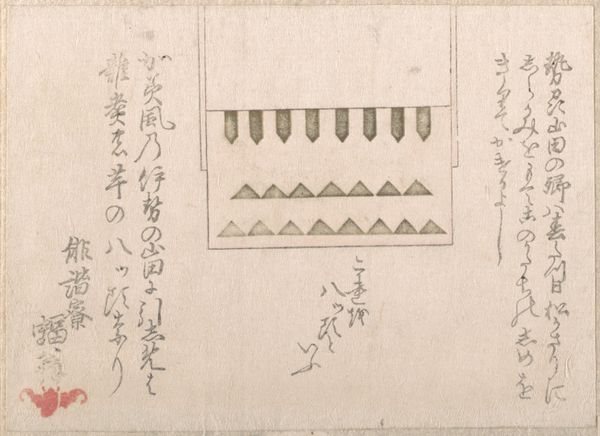
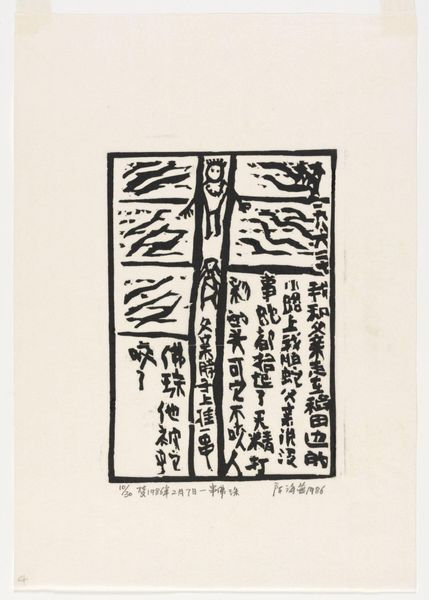
Curator: This intriguing woodblock print is entitled "Inhoudsopgave voor de serie Kabuki juhachiban," attributed to Torii Kiyotada, possibly dating back to 1895. It blends graphic art with textile-like patterns. Editor: My immediate impression is one of organized chaos. The combination of precise lines and layered text creates a vibrant yet slightly perplexing visual experience. Curator: Indeed. Kiyotada's skillful use of line—characteristic of Ukiyo-e—organizes disparate elements. The block prints speak volumes about traditional production methods; the labour-intensive process highlights the connection between artistry and craftsmanship. Consider the meticulous carving involved. Editor: Absolutely. I am captivated by the arrangement of horizontal bands filled with calligraphy. It evokes a sense of structured narrative. The materiality of the paper, the ink, the registration of the colours all contribute to its aesthetic impact. Semiotically, the varying text weights carry different symbolic meanings that guide the viewer's reading. Curator: Further deconstructing it, these Kabuki programs were not solely artistic expressions. The content within promoted social relationships and fostered community among theater-goers who consumed not just the performances, but this carefully crafted ephemera. These programs themselves acted as vehicles for social commentary, political expression, and often satirized contemporary figures. Editor: An insightful connection! I particularly like how the artist blends bold sections with fine detail to create an immersive optical texture. Even absent the play's narratives, the forms offer an abstracted version. Curator: What resonates with me is the sheer volume of woodblock printing and distribution happening during that era. This wasn't some isolated artistic feat. Rather, these were mass-produced items traded by labourers for an active popular audience, making it inherently a consumer-oriented product. Editor: I agree entirely. This image represents more than simply theatre notes; it speaks to an ongoing confluence between traditional craftsmanship, mass-production needs, artistic intention, and its own material reality as well! Curator: Absolutely, a testament to culture-craft relationships during that period! Editor: A confluence of text and form!
Comments
No comments
Be the first to comment and join the conversation on the ultimate creative platform.
 Collect
 React
React Comment
More like this