1620
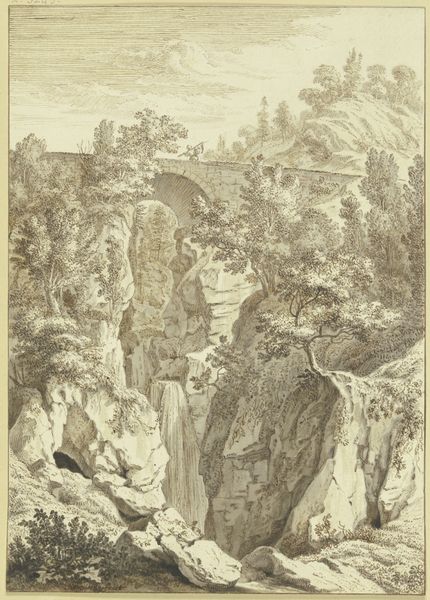
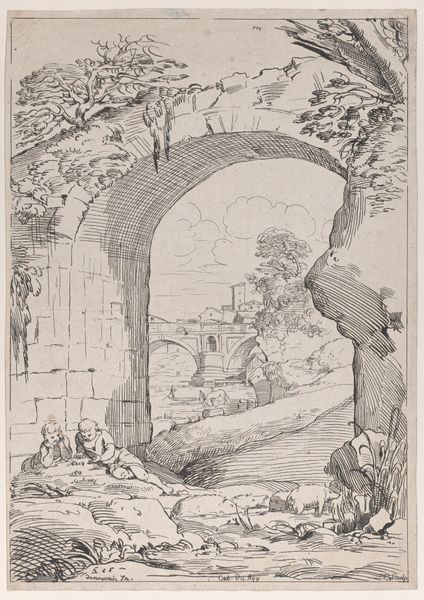
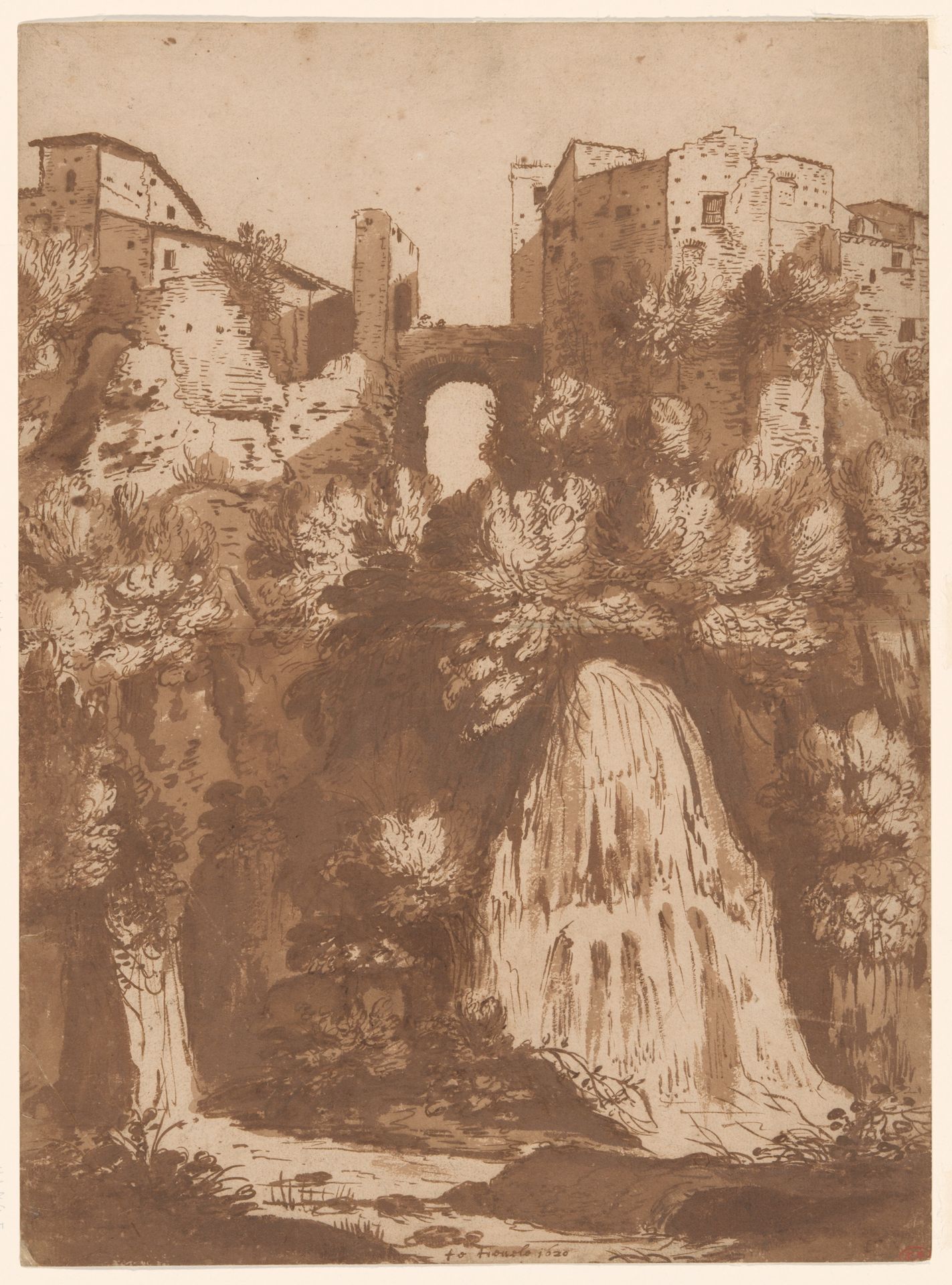
View of Tivoli with the Bridge Over the Anio Waterfall

Cornelis van Poelenburgh
@cornelisvanpoelenburgh
The Art Institute of Chicago
The Art Institute of ChicagoListen to curator's interpretation
Curatorial notes
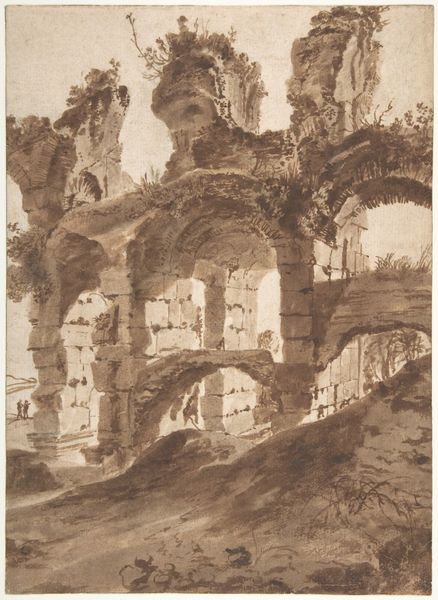
Editor: Right now, we're looking at "View of Tivoli with the Bridge Over the Anio Waterfall" created around 1620 by Cornelis van Poelenburgh. It’s a pen and ink drawing on paper. The monochromatic palette creates a sense of distance and nostalgia. I find myself wondering, what whispers of history do you hear when you look at this piece? Curator: Whispers indeed! It reminds me of those hazy dreams where reality and imagination dance a little jig. Poelenburgh's skill in capturing light with such limited means is astonishing. The landscape, rendered in shades of sepia, invites us into a romantic vision of the Italian countryside, filtered through a distinctly Northern European sensibility. It makes me ponder about the Baroque era’s infatuation with nature, but then I start to wonder, what do *you* think about how the architecture and nature intertwine? Editor: I'm struck by the bridge. It suggests a connection, but also separation, between the viewer and this idyllic world. There's a tension there. The falls seems to erode the foundations of the building and to hint about Nature versus Man. Curator: Beautifully put! It’s a poignant observation about time, nature and humanity. And how fascinating that this picturesque scene—rendered so delicately—hinted at something much grander. When I look at it, the monochromatic rendering amplifies its timelessness. Does that ring true for you? Editor: Definitely! It feels both old and strangely present. I am walking in the Tivoli and sketching right now. I’m now wondering how this influenced other landscape artists from other periods. Curator: Absolutely! It reminds me that even in our digital age, there’s magic in returning to the touch of pen on paper, echoing Poelenburgh's vision. Editor: I think I’ll revisit this one now with a whole new perspective. Curator: That's the wonderful thing about art isn't it? Each time you see something, something else catches your eye, leading to another interpretation, all our own!