About this artwork
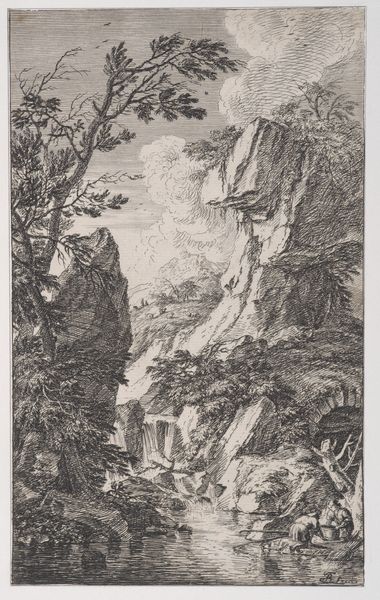
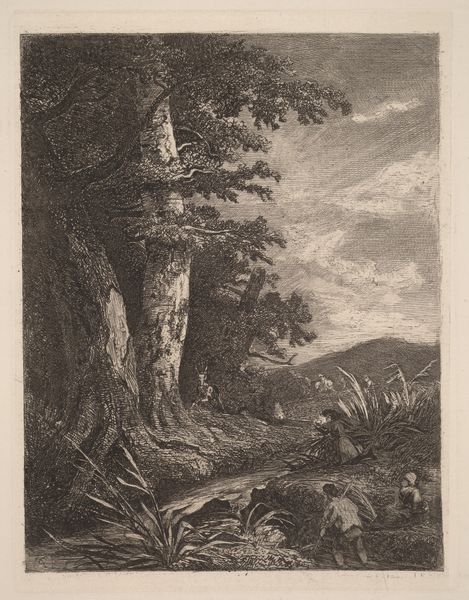
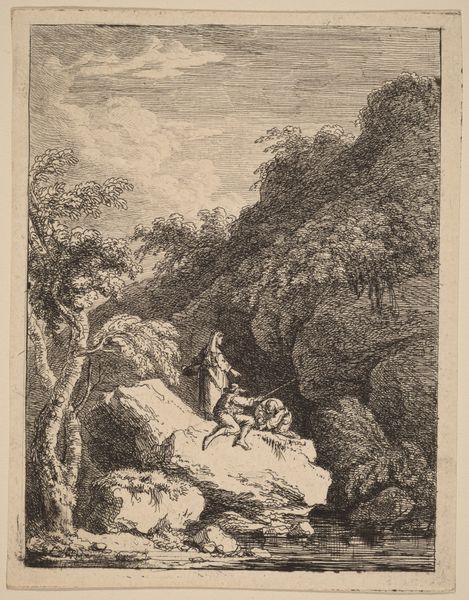
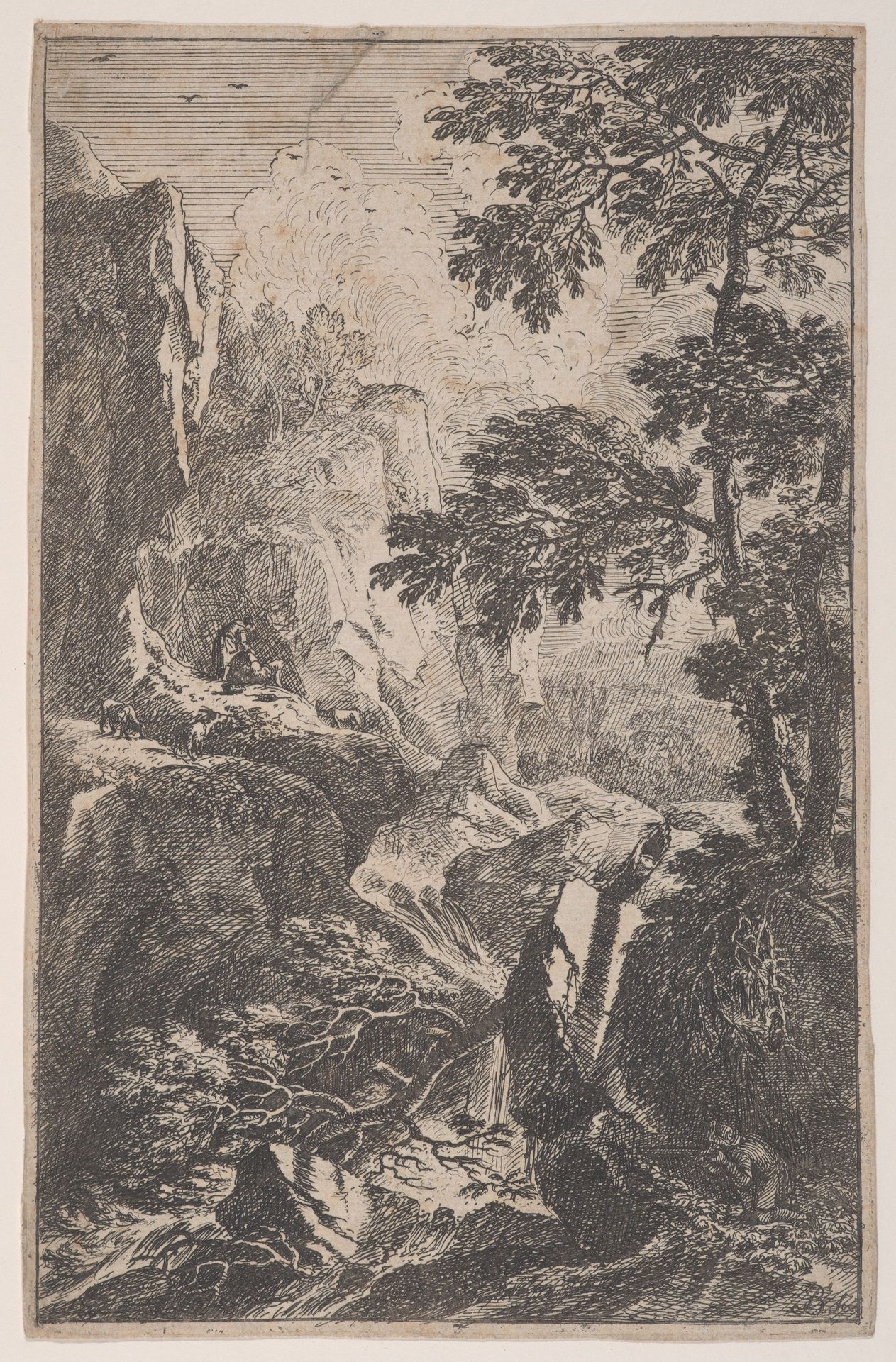
Franz Joachim Beich made this print, “Plate 2,” using etching, a printmaking technique that democratized image production. The process begins with a metal plate covered in a waxy ground. The artist then draws through the ground, exposing the metal. When the plate is dipped in acid, the exposed lines are etched, creating grooves. The ink fills the recessed lines, and the plate is pressed onto paper. The final print carries the image. The etching process creates fine lines and intricate details, evident in the rendering of the rocky landscape and figures. The hunter with his gun, the chamois, and the sweeping trees each demonstrate the artist’s control of the medium. The rough, almost scratchy quality of the lines contributes to the overall atmospheric effect. Etching allowed artists to create multiple copies of their work, making art more accessible to a wider audience. In Beich’s case, it allowed him to disseminate his landscapes ‘in the manner of Salvator Rosa’, referencing a well-known artist and claiming his own place in that lineage. This print underscores how material and process shape both the creation and consumption of art.
Plate 2: a hunter aiming with his gun, kneeling next to a large rock at right, a male figure with three chamois on a rock at left, from 'Landscapes in the manner of Salvator Rosa' (Die Landschaften in Sal. Rosa's)
1695 - 1730

Franz Joachim Beich
1665 - 1745
The Metropolitan Museum of Art
Metropolitan Museum of Art, New York, NYArtwork details
- Medium
- drawing, print, etching, engraving
- Dimensions
- Sheet (Trimmed): 9 5/16 in. × 6 in. (23.7 × 15.3 cm)
- Location
- Metropolitan Museum of Art, New York, NY
- Copyright
- Public Domain
Tags
Comments
Share your thoughts
About this artwork
Franz Joachim Beich made this print, “Plate 2,” using etching, a printmaking technique that democratized image production. The process begins with a metal plate covered in a waxy ground. The artist then draws through the ground, exposing the metal. When the plate is dipped in acid, the exposed lines are etched, creating grooves. The ink fills the recessed lines, and the plate is pressed onto paper. The final print carries the image. The etching process creates fine lines and intricate details, evident in the rendering of the rocky landscape and figures. The hunter with his gun, the chamois, and the sweeping trees each demonstrate the artist’s control of the medium. The rough, almost scratchy quality of the lines contributes to the overall atmospheric effect. Etching allowed artists to create multiple copies of their work, making art more accessible to a wider audience. In Beich’s case, it allowed him to disseminate his landscapes ‘in the manner of Salvator Rosa’, referencing a well-known artist and claiming his own place in that lineage. This print underscores how material and process shape both the creation and consumption of art.
Comments
Share your thoughts