oil-paint
allegories
allegory
oil-paint
landscape
figuration
oil painting
matter-painting
symbolism
surrealism
Copyright: © The Historical Museum in Sanok (Poland) is the exclusive owner of copyrights of Zdzisław Beksiński's works.
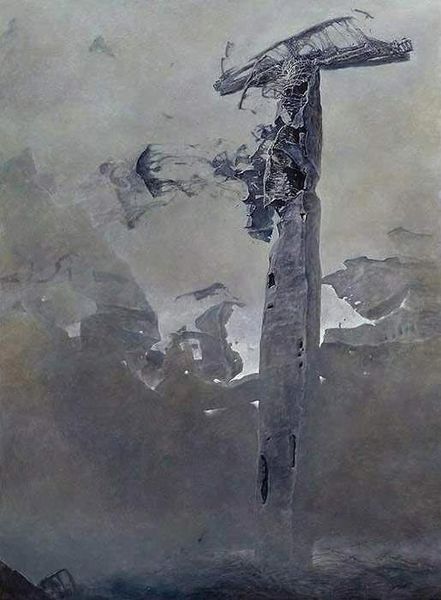
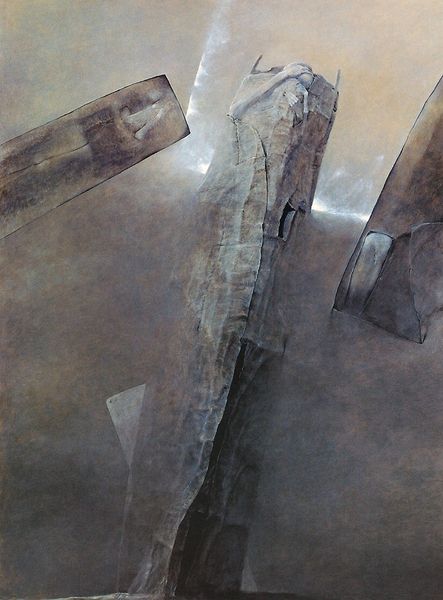
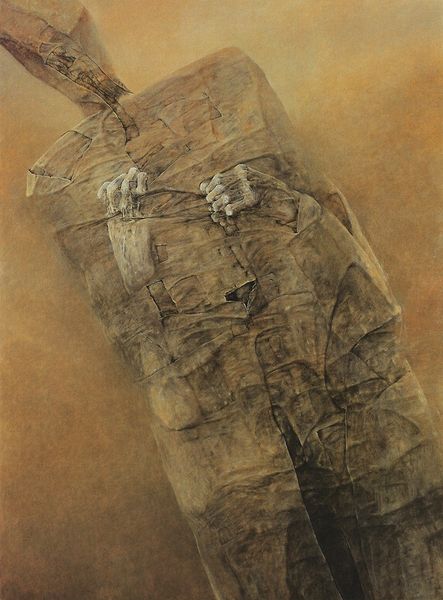
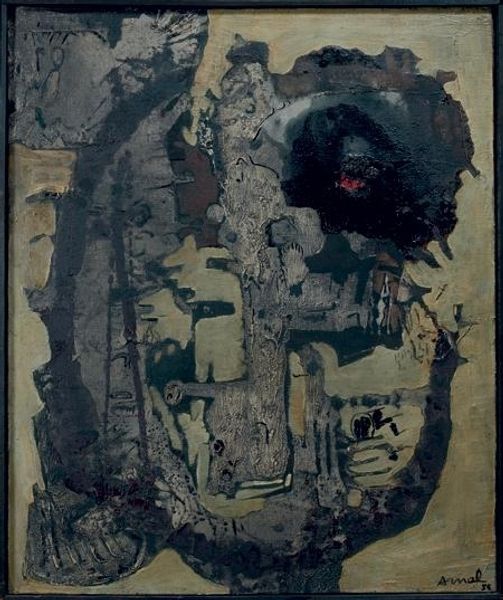
Editor: So, this oil painting is titled "Untitled" by Zdzislaw Beksinski. It feels incredibly desolate and… heavy. I'm immediately struck by how unsettling it is. The figures and objects are obscured, like a forgotten nightmare. How do you interpret this work, especially considering the context of its creation? Curator: Beksinski's works often emerge from a deeply personal and, arguably, traumatic space. Viewing it through a historical lens, one must acknowledge the socio-political backdrop of Poland during the late 20th century – a period marked by political repression, economic hardship, and cultural upheaval. How might those societal pressures influence an artist's creation of such surreal, dystopian landscapes? Editor: That makes sense. There's definitely a sense of societal breakdown within the image. Are you saying it might be a reaction against or commentary on the political landscape of the time? Curator: Precisely. His art arguably serves as a form of resistance, even if subtly so. It challenges the officially sanctioned aesthetic norms, giving voice to anxieties and uncertainties. How does the symbolism used – the decayed structures, distorted figures – convey a specific message in contrast to heroic Socialist Realism? Editor: It's the antithesis of that, completely subverting the idealised images of Socialist Realism. I see the way it challenges authority now. Thanks. Curator: The fascinating public role of art, isn't it? How artists, intentionally or not, engage with their cultural and political climate, and offer alternative, critical perspectives on reality. Food for thought.
Comments
No comments
Be the first to comment and join the conversation on the ultimate creative platform.
 Collect
 React
React Comment
More like this